Go to content

Style Tiles: What They Are, and How They Prevent Miscommunication

Posted on
Posted by
  • Steven Martz
Read time
9 minutes
Tags

INTRODUCTION

Style Tiles are a crucial design exploration tool we use in every brand and website project. They help us establish visual direction before investing time in full designs, preventing miscommunication and ensuring you’re confident in the design approach from the start.

If you’re planning a rebrand or website redesign, understanding the role of Style Tiles will help you know what to expect and how to participate effectively in the design process.


What are Style Tiles?

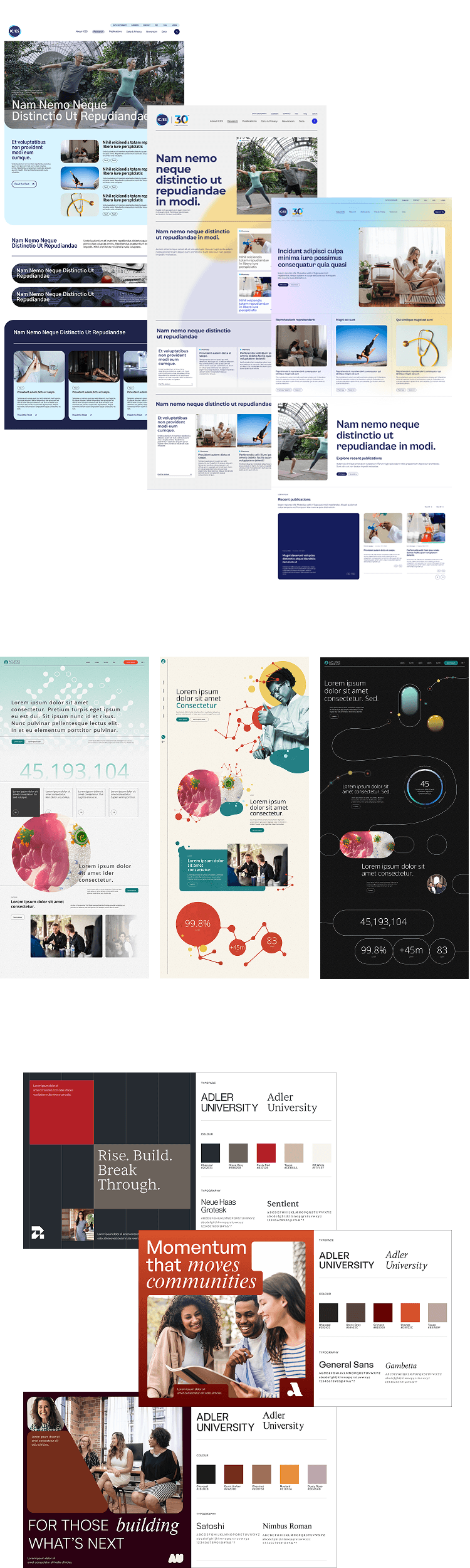
Style Tiles are design concepts that show what your brand or website could look like, without committing to complete designs just yet.

Think of them as a bridge between inspiration and design – a way of testing visual direction options early in the process with more specificity than a mood board.

For website design projects, Style Tiles typically include:

  • Example modules (sections of a web page) designed in different styles
  • Typography treatments for headlines, body text, and UI elements
  • Colour application with varying options
  • Button styles, imagery approach, and overall visual feel
  • Enough context to understand direction, but not final layouts

For brand projects, Style Tiles typically include:

  • 2-5 logo concept directions (although this may be separated)
  • Typography selections and pairings
  • Colour palettes
  • Supporting visual elements (patterns, illustrations, photography style)
  • Examples of how these elements work together (may or may not be a ‘web’ visual)

The key difference: Style Tiles establish direction, not final details. We’re testing visual approaches to see what resonates before designing complete pages or brand systems.

We often describe the “success” of style tiles to clients as a 80-90% confidence in the direction, with the understanding that precise application will change the exact nature of any individual elements they see in the presented concepts.


WHY THEY’RE USEFUL

Why we use Style Tiles in every project

Jumping straight into full designs without aligning on the visual direction first creates risks of finding misalignment later on, and needing more rounds of revision than is ideal.

By testing out options as early in the project as possible, we can share different approaches with our clients that help me them see the best path to take for their brand or website design.

Aligning on Design Approach

Without style tiles, we’re guessing at what will resonate. We might design a complete homepage in a bold, modern style, only to discover you expected something minimal and elegant.

Not taking the time to explore these options first means that time gets wasted redesigning, or worse, you might approve something you’re not excited about because changing course feels too difficult.

Testing Multiple Concepts

Style Tiles let us show you options before committing significant time. We present 2-3 visual directions and see which resonates most. You might have a strong immediate preference, or you might want elements from multiple directions merged together.

Either way, we’re having the style conversation when adjustments are quick and easy. Once we agree on direction, the full design process moves faster because we’re aligned on visual goals, and you’ve had the chance to feel like a part of the solution design, not just being handed something that’s pass/fail.

Finding common language

Discussing concepts before detailed design begins helps us find a shared language early. Words like “modern,” “sophisticated,” “innovative”—they sound clear until five people in a room each picture something different. Working through them in the context of design concepts means we’re not untangling that later.


Timings

When do Style Tiles happen in a project?

Timing depends on project scope and stakeholder structure.

For projects with Research and Discovery Report (RDR) Presentations

If we’re doing comprehensive discovery (common with larger stakeholder groups or complex projects), we often include Style Tiles in the final RDR presentation.

This presentation summarizes the findings of our Research + Discovery phase, while putting forward recommended solutions for the rest of the project.

This works very well for larger teams who need to create alignment before we begin Solution Design, and can be especially useful when there’s an executive layer that isn’t part of the main project team but needs to review major deliverables and milestones.

Getting their sign-off on style direction early means we move into Solution Design confidently.

For projects without RDR Presentations

If the stakeholder group is small or an RDR Presentation isn’t in scope, we move into Style Tiles shortly after the Design Discovery Workshop.

This presentation marks the beginning part of Solution Design, through which our team is identifying and creating solutions to achieve the project brief.


The Design Process

What does the design process look like with Style Tiles?

Style Tiles fall into the design process very early on, as the first step after our Design Discovery Workshop.

During that workshop we extract core info about your brand constraints, discuss identified trends or themes in your industry, and review inspiration sites to get a feel for preferences.

All of this information informs the first round of Style Tiles, during which our team presents 2-3 options for review and feedback.

You review and share what resonates

Feedback often sounds like:

  • “Our brand is most aligned with the bold typography from Option 1, and the colour palette application from Option 2”
  • “Option 3 feels closest, but can we add more breathing room and reduce pattern usage?”
  • “Option 2 is hitting the mark, let’s move forward with that one”

We clarify what can and can’t be merged

It’s very common to want to merge styles from different tiles, and while some elements will work beautifully together, others will clash or contradict each other. Our team will explain what’ possible, and might even show you options in the room as you talk it through together.

Sometimes we’re already working with such a precise and well defined brand, that the creation of these style tiles can be like splitting hairs, with only slight variation of element usage.

For some brands this is ideal to see at a concept level, and for others, we may move more quickly into precise outputs like web or collateral in order to visualize these nuances.

One round of revisions, or straight into High Fidelity Prototypes

Depending on your feedback, we’ll either:

  1. Present a second round of Style Tiles (best for comprehensive feedback that needs further discussion)
  2. Deliver the second round of Style Tiles via email for review and confirmation (best for minor edits)
  3. Move straight into High Fidelity Prototypes of the website design, applying the selected design direction onto the Wireframes (best for minimal feedback, or when we need to design the specifics, not the concept)

EXAMPLE

An Example: Style Tiles in Action

Recently we were working on a project with a client who came to us with a brand, but no brand guidelines. They had a colour palette, a logo, and patterns to work with, but no guidance on how to apply or use their brand elements.

This is the perfect use case for Style Tiles, and for our design team we immediately go in with questions such as: Should cream be a primary background with pink as a pop of colour, or should gold be the accent? How much gold is too much – should it be used for buttons and banners, or only used for thin lines and details? How should the patterns fit in with the overall design?

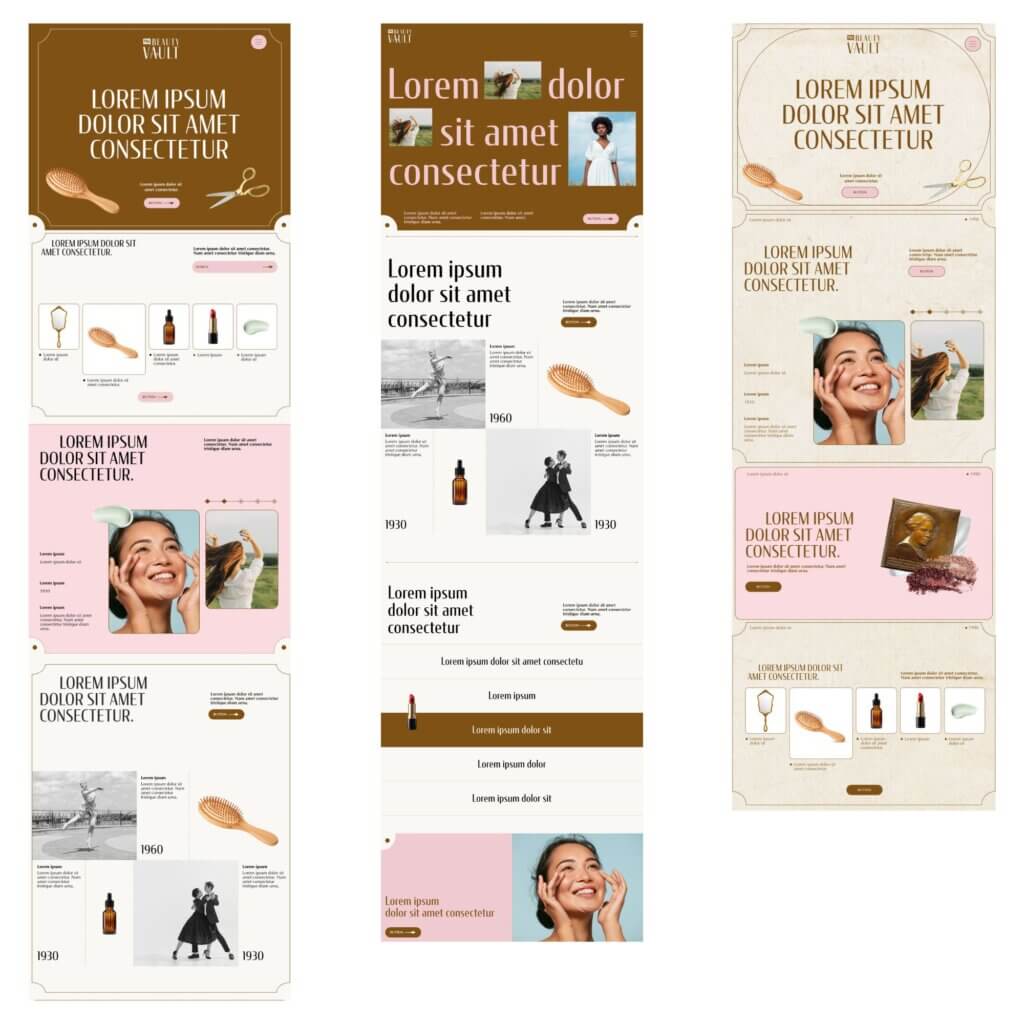
To answer these questions for our client, we created three Style Tiles showing different approaches:

  1. The first tile uses a deep brown and the brand pink for background colours, with pink also carrying through to UI elements like buttons and navigational arrows. Gold brought in the finer details, and a rich paper texture tied the vintage-yet-modern feel together.
  2. The second tile pushes in a more modern direction—a cleaner font and simpler layout that lets the editorial style established in the first tile breathe.
  3. The third tile leans most heavily into the vintage feel, with a deeper cream version of the paper texture and heavier use of gold and pink. Here, the brown steps in as a secondary option for UI elements, sitting over pink backgrounds that add differentiation and pops of colour against the texture.

 

EXAMPLE

With brand elements, but no application guidelines, the Style Tiles gave our client an immediate look at the various ways their brand could be used. They were immediately able to identify their preference, and with a few minor adjustments we entered into website design with confidence and a shared understanding of the language to be used together.

Without Style Tiles we may have misunderstood the best design approach to take after our Design Discovery Workshop and presented a round of website design that didn’t hit the mark, leading to more revisions and frustration than was necessary.

What makes Style Tiles successful

Begin the project by sharing visual references or inspiration

If you’ve been collecting websites or brands you admire, share them! We’d love to understand what you like about the website or brand, and why it’s applicable to your business. Even if you can’t articulate why you like them, references help our designers understand your aesthetic instincts and help us find a common language we can use when referring to design elements throughout our project together.

Trust your gut reaction

The style that makes you think “yes, that’s it” is usually the right one. If you’re forcing yourself to like something because it seems “safe” or “professional,” that’s worth examining.

Be honest about what doesn’t work

“This feels too corporate” or “This doesn’t feel premium enough” or “This is too playful for our audience”—that feedback helps us understand not just what works, but why.

Articulate what you want to merge

If you love elements from multiple tiles, help us understand what specifically resonates. “I love how bold the typography is in Option A, but prefer the restrained color palette in Option B” gives us clear direction.

TL;DR

Overall, Style Tiles create alignment before investment

Style tiles aren’t the fun final reveal brand or website design, but they are one of the most important steps in getting to a design you love.

They give you options, let us test directions, and create shared visual language before we invest significant time in full designs. Plus, they dramatically reduce the risk of misalignment deep into a project.

Understanding tools like Style Tiles is part of understanding how effective design partnerships work. We use them because they lead to better outcomes, for us and for you!