Go to content

Intellifi

INTRODUCTION

Building a Future-Ready Brand for Intellifi

CMLS Financial, one of the largest traditional mortgage lenders in Canada, needed a fresh approach. They were spinning off a division focused on providing innovative solutions to the wider industry—offering services to competitors, something relatively unheard of in the mortgage space. This new venture, Intellifi, needed to position itself as a leader in lending technology, service, and expertise, while appealing to both sophisticated institutions and everyday consumers.

Intellifi’s mission was clear: make lending simple by providing cutting-edge technologies and services that streamline the process. But to stand out, they needed a new brand that was as innovative as their solutions. That’s where we came in.

OBJECTIVES

Defining the Goals

Our engagement with Intellifi had two primary objectives:

  • Build a New Brand Identity: One that would signal trust, innovation, and accessibility to a diverse audience—from finance professionals to tech-savvy institutions, all while feeling approachable for mom-and-pop businesses.
  • Design a Seamless Website: Creating a user-friendly digital experience that reflects Intellifi’s forward-thinking approach, while serving as a valuable resource for users seeking technology-driven lending solutions.

Our approach involved developing a full brand strategy, messaging, visual identity, and website design that would highlight the innovative, efficient, and reliable nature of Intellifi.
Creative Direction: Evolving with Purpose

Intellifi needed a brand that reflected their unique position in the market: a data-driven, technology-powered firm about to make waves in the lending industry. We started by crafting a brand story that captured their mission of democratizing technology and providing lending solutions with increased accessibility.

We developed a brand voice that was forward-looking, professional, and human. It needed to speak confidently to industry veterans while feeling inviting to newer players in the market. The messaging positioned Intellifi as both a reliable partner and an innovative force—an organization driven by experience but not afraid to push boundaries.


Technology: A Platform Built for Growth

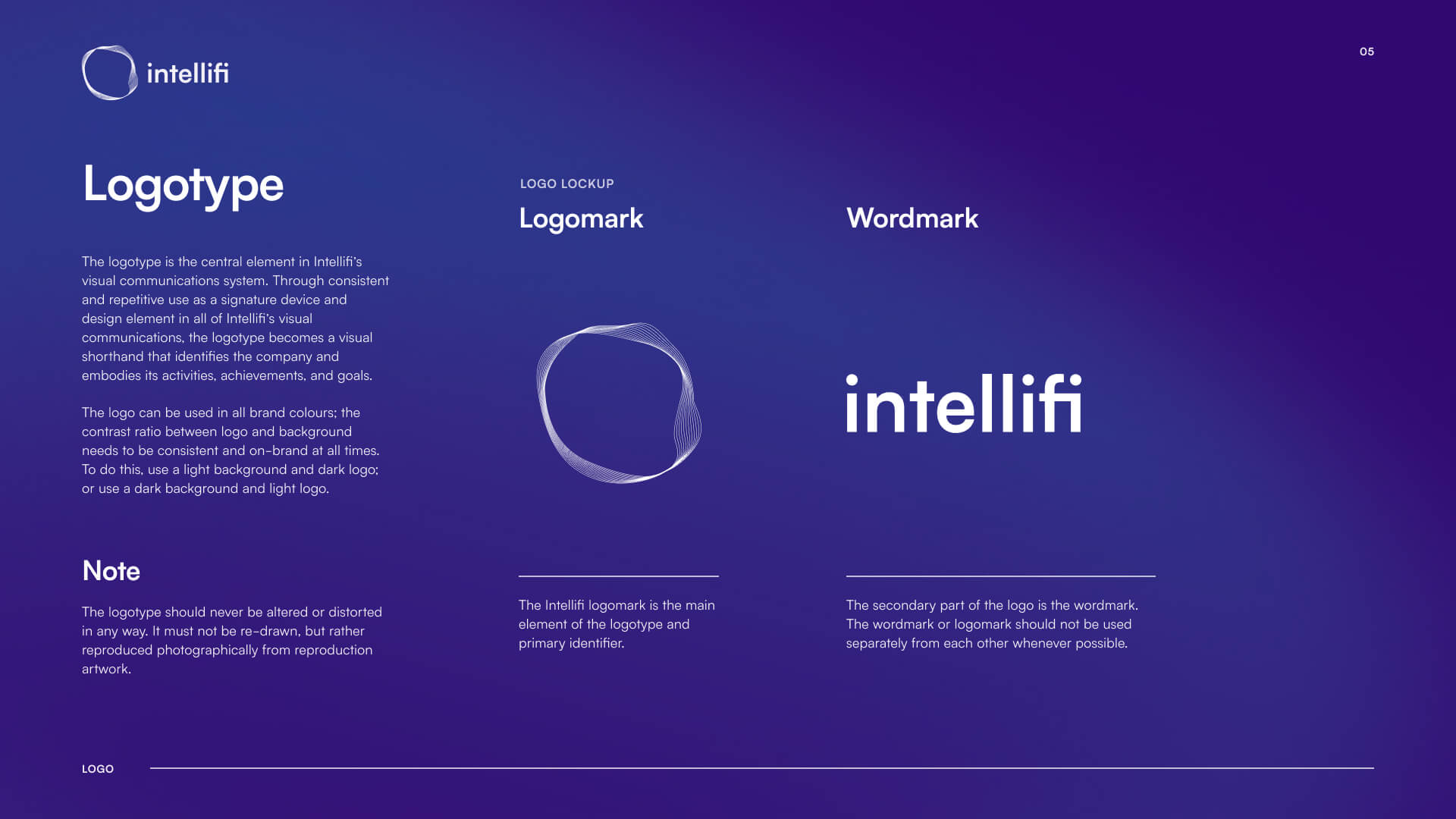
The creative direction for Intellifi’s visual identity was built around a single guiding principle: progress. We wanted the brand to feel living, evolving, and in constant motion—reflecting the pioneering spirit of the company itself.

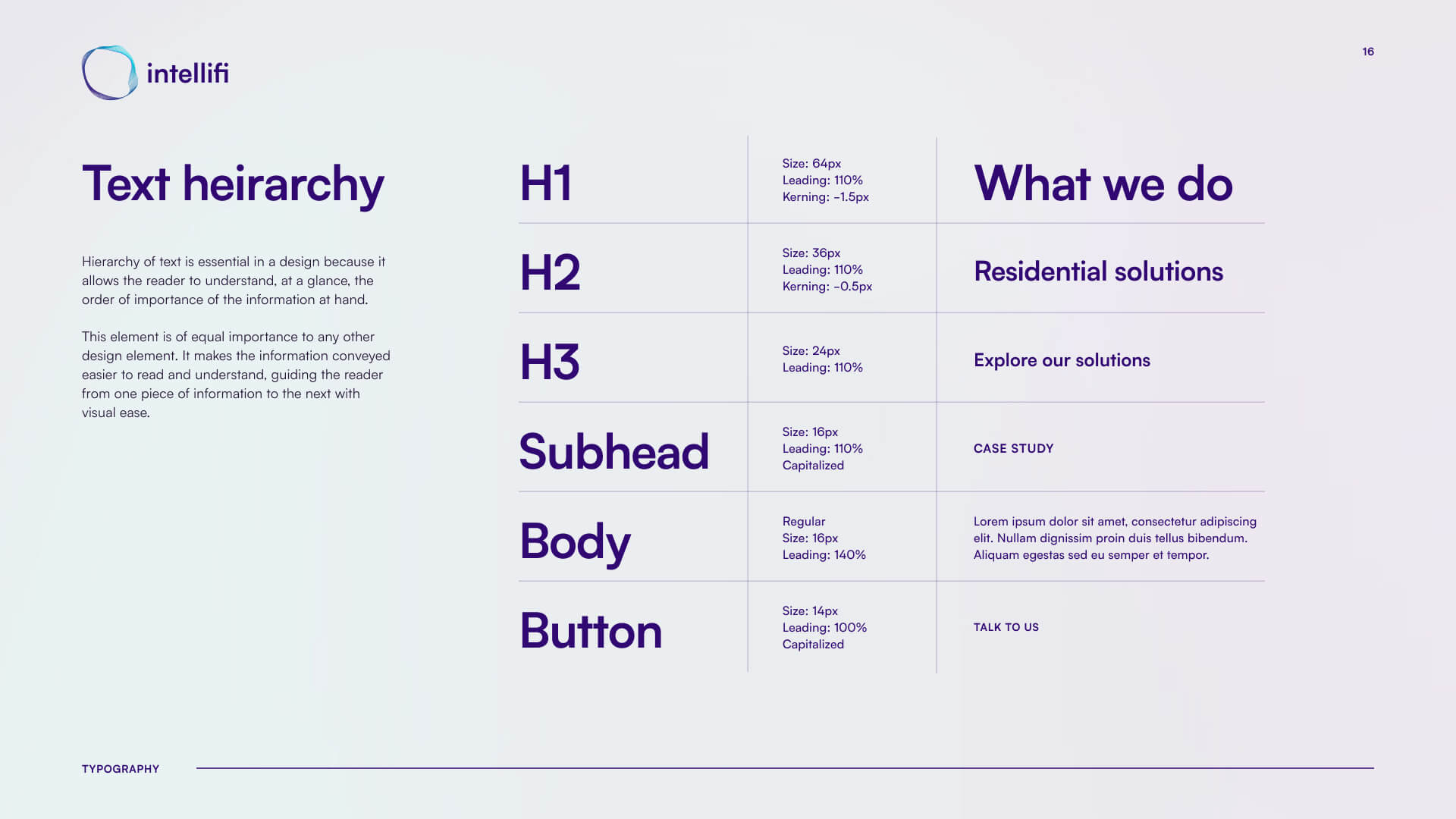
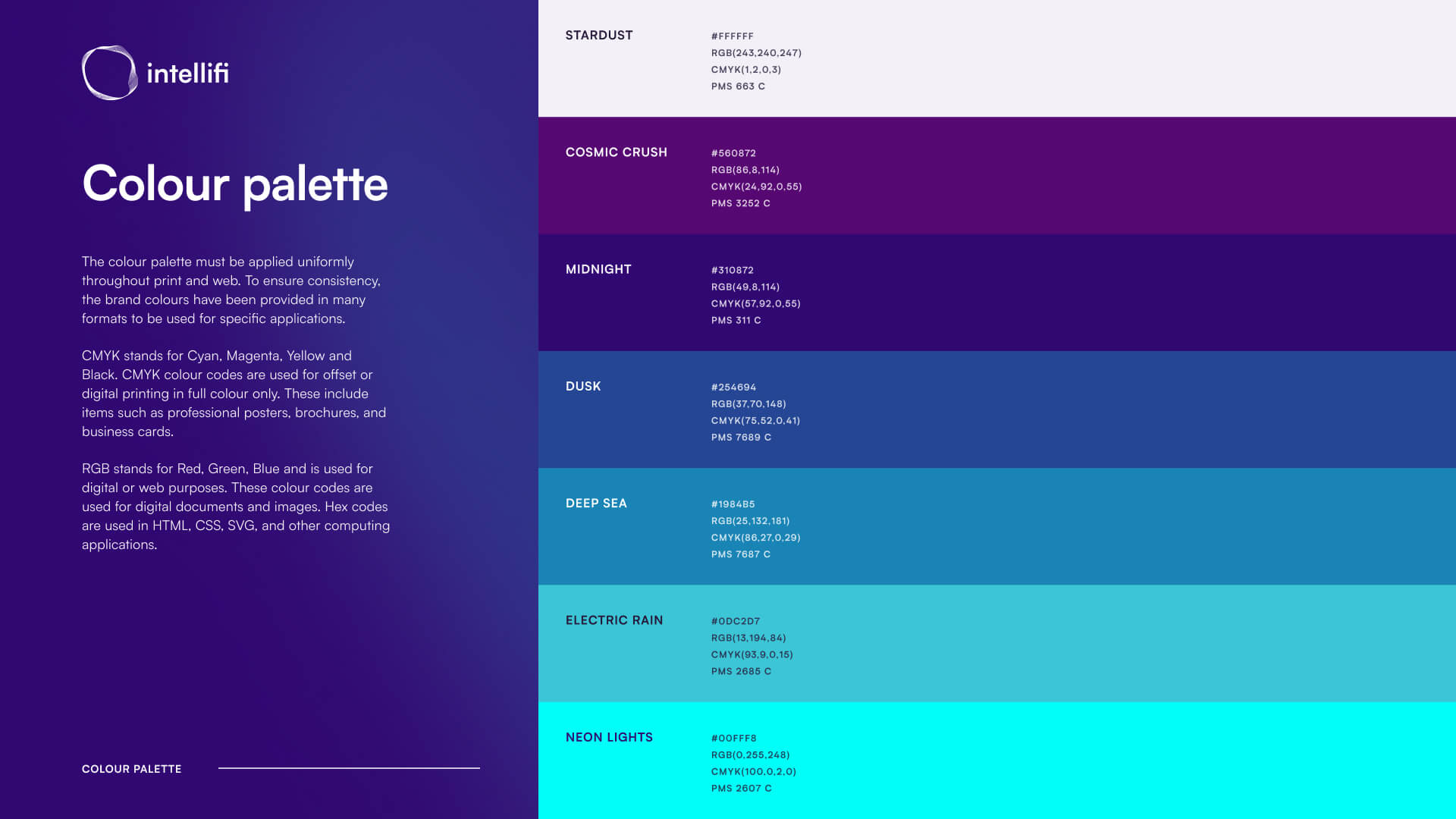
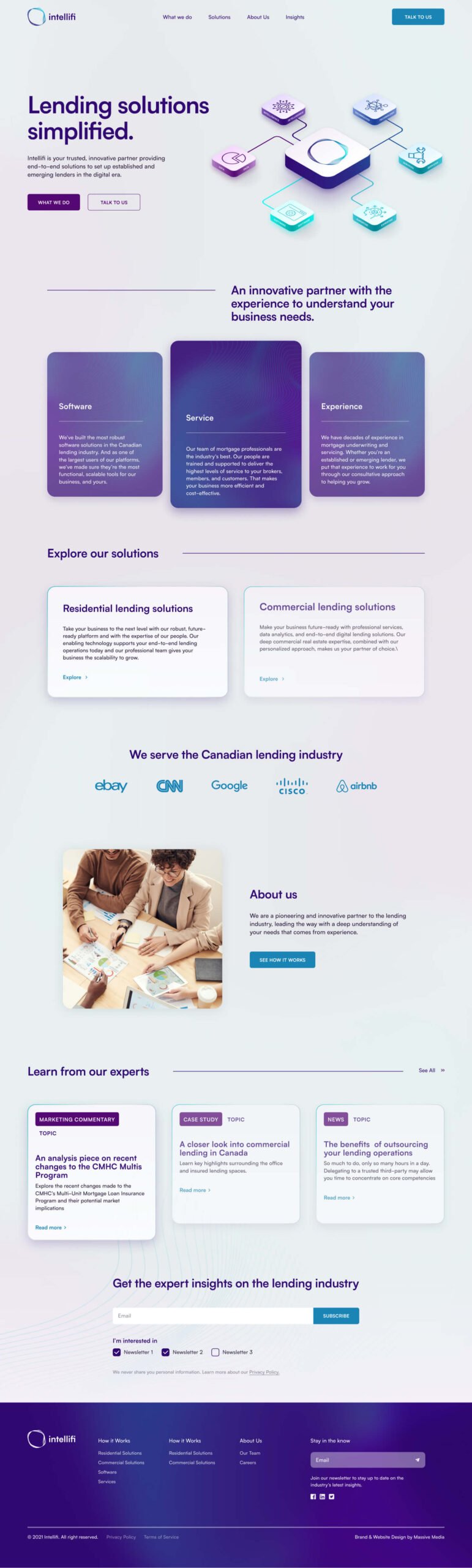
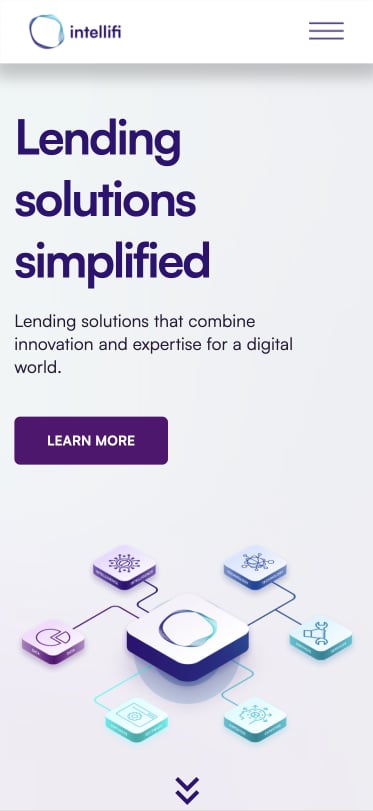
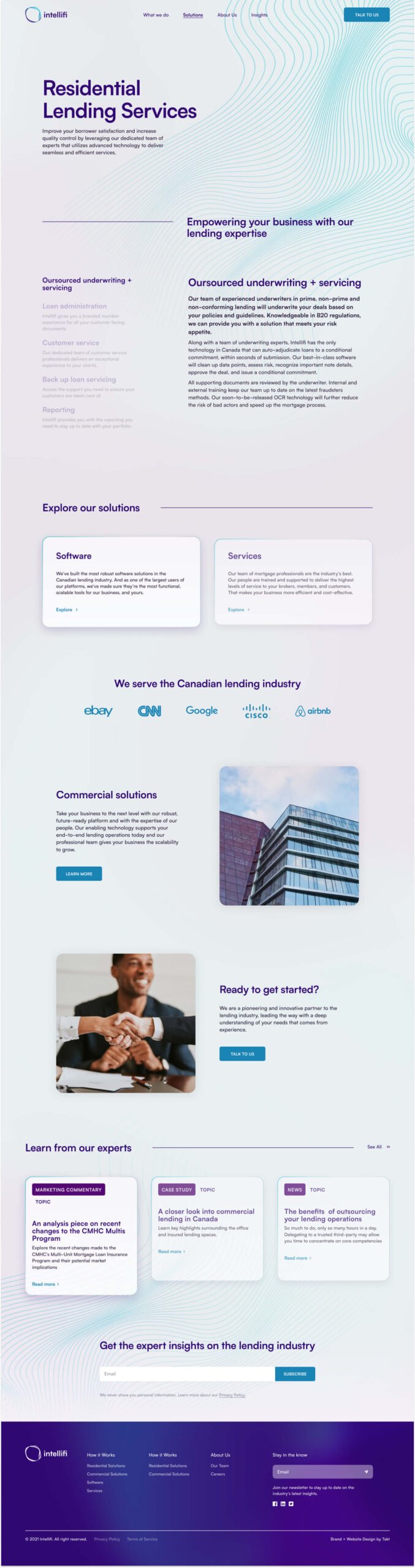
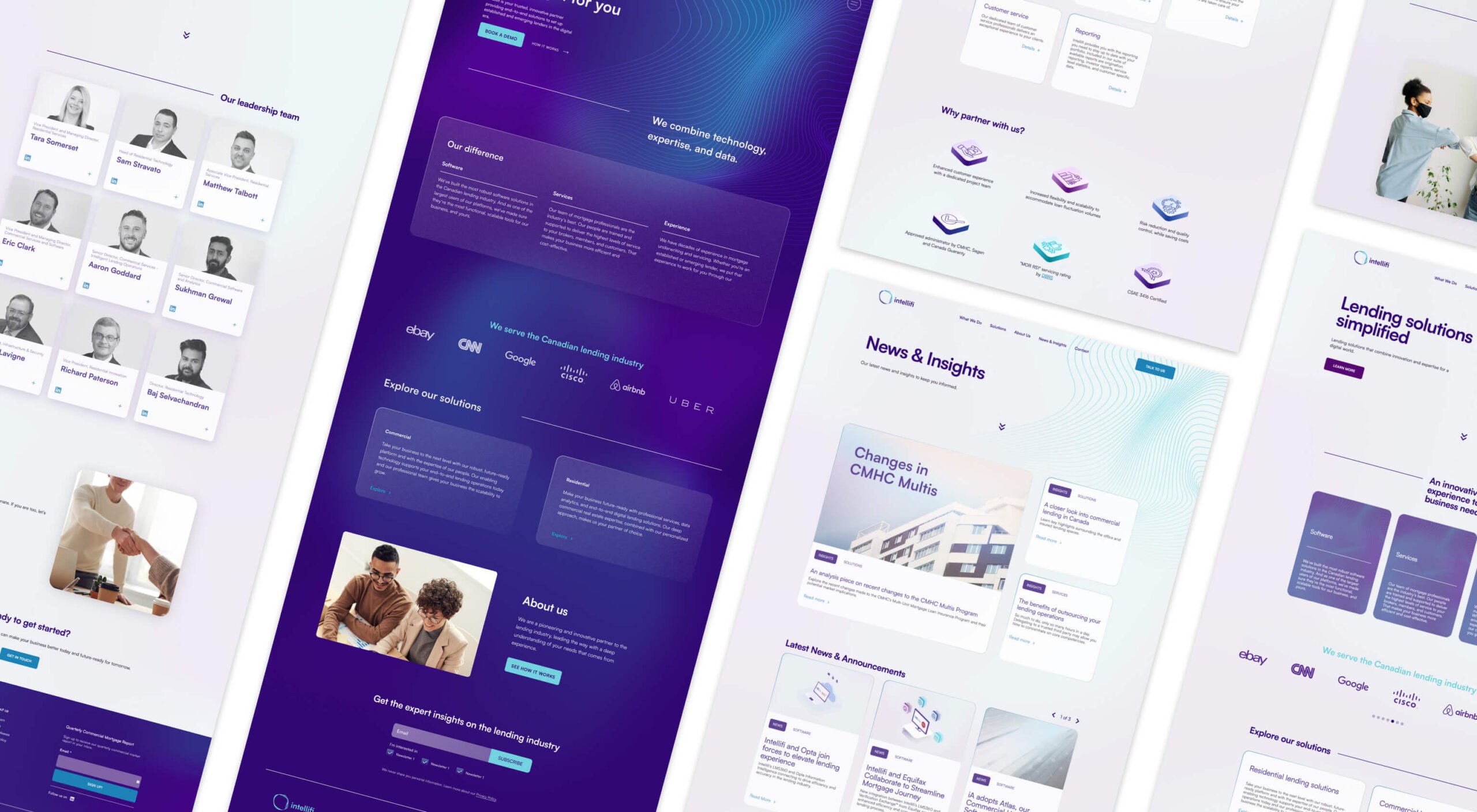
To achieve this, we focused on clean, minimalistic design with ample white space to let the content breathe. Gradients and lines from the logo were carried through to the website, offering visual consistency and a sense of motion across the site’s key pages. Rounded corners on content cards and CTAs softened the brand’s innovative edge, making it feel more approachable while still retaining its professional tone.

Ultimately, we wanted Intellifi to look both aspirational and trustworthy. The design had to reflect a sense of ongoing evolution, where technology meets human experience in a clean, approachable way.

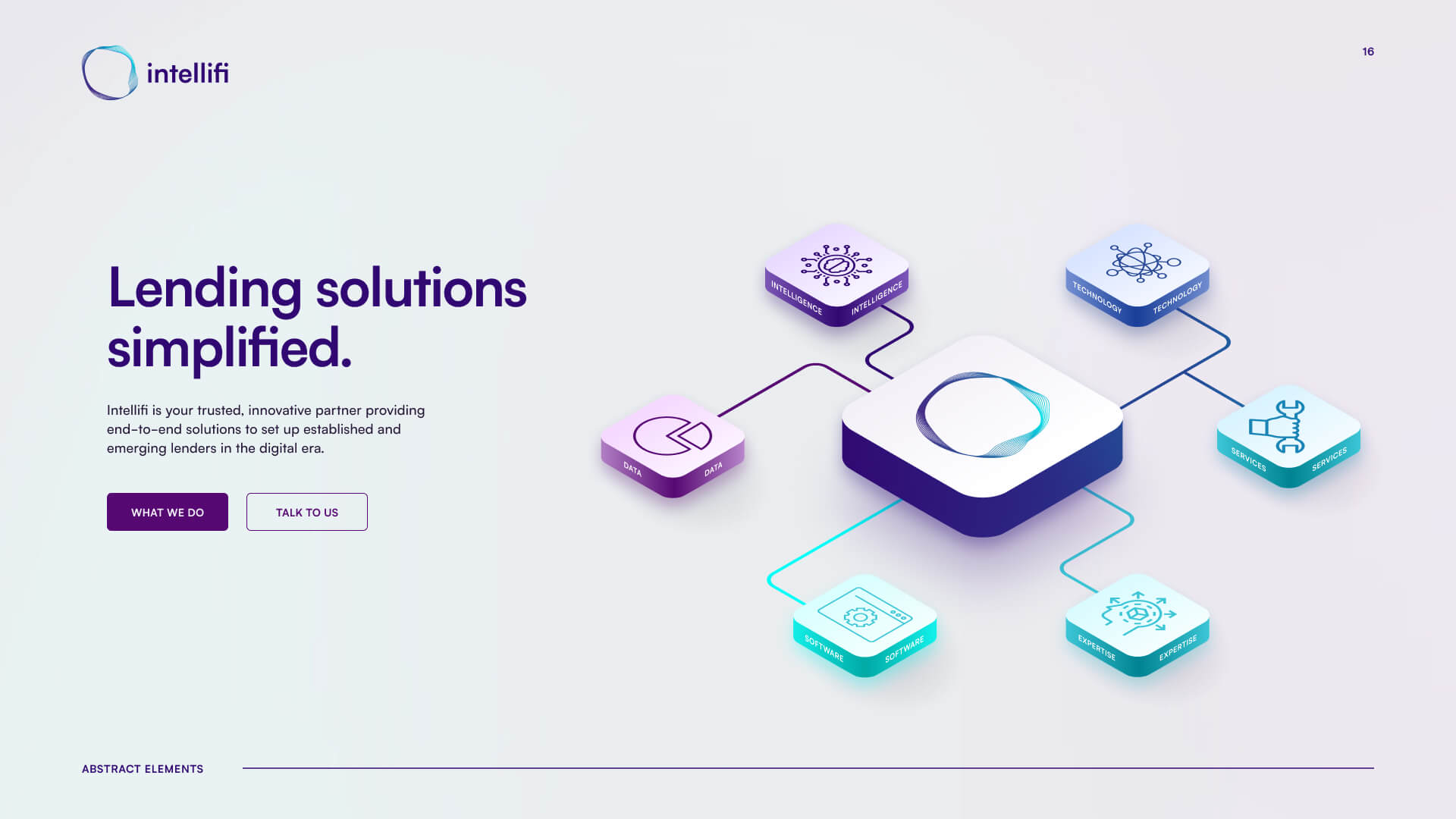
Abstract shapes and gradient overlays were used to symbolize innovation and growth, creating a cohesive visual language that felt both modern and timeless.


USER EXPERIENCE

Crafting the User Experience: Intuitive, Simple, Effective

We knew that Intellifi’s audience—ranging from finance professionals to lending institutions—needed a digital experience that was as seamless as the services they offered. To deliver this, we conducted workshops, user interviews, and internal testing to inform the site’s information architecture and interaction design.

The navigation was streamlined to guide users effortlessly through Intellifi’s diverse service offerings—whether they were looking for technology solutions, servicing options, or debt valuation services. We focused on creating intuitive user flows that would simplify complex information, allowing users to quickly find the resources they needed.

To keep the experience engaging, we introduced subtle animations that enhanced the overall feel without overwhelming the user. Interactive elements were designed to be functional and purposeful, always keeping the user’s needs in mind.


Technology: A Platform Built for Scalability

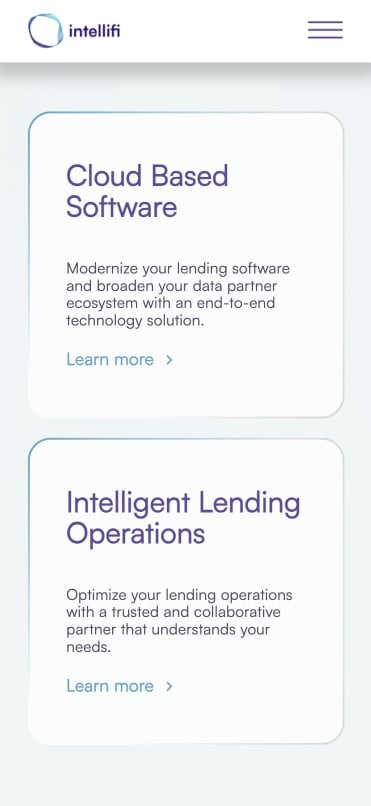
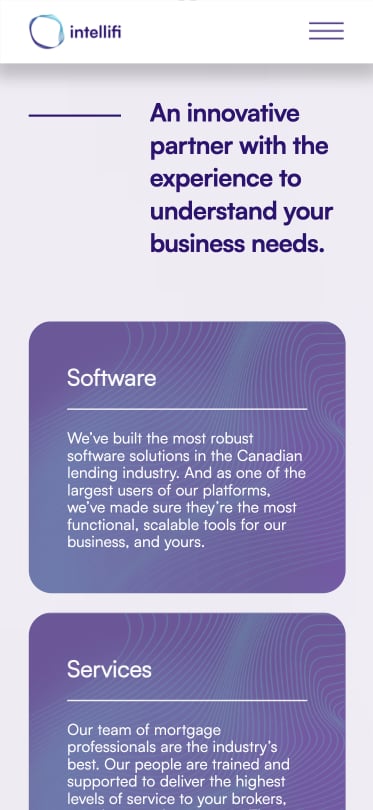
The website was built on WordPress with a custom-made theme, optimized for performance and scalability. Given Intellifi’s forward-thinking focus, we followed best practices for responsive design, ensuring that the website would perform smoothly across devices—crucial for a brand positioning itself as tech-driven.

By adhering to WCAG 2.1 AA accessibility standards, we ensured that the site would be accessible to all users, including those with disabilities. The final product was a site that was as technically robust as it was visually engaging.

The new Intellifi brand and website quickly positioned the company as a leader in the Canadian lending industry. By creating a brand that balanced innovation with trustworthiness, we helped Intellifi launch with confidence, ready to make an impact in a competitive market.

The website now serves as a key touchpoint for both prospective partners and clients, presenting Intellifi as a modern, forward-thinking solution to lending challenges.

RELATED PROJECTS

VIEW ALL CASE STUDIES

Frequently Asked Questions

Common questions about banking and finance website projects, answered from experience.

What does a banking or finance website redesign project typically include?

A typical banking, finance, or insurance website redesign includes brand positioning and messaging clarity, a conversion-focused UX and IA rebuild, a modular design system, and a CMS build that supports consistent publishing and future expansion. The goal is to improve trust signals and comprehension while keeping the customer journey fast and intuitive. For Intellifi, our engagement included a full brand strategy, messaging, visual identity, and a custom WordPress build optimized for performance, scalability, and accessibility.

What makes financial services brand strategy different from other brand work?

Financial services brands operate under an unusually acute tension: heavy regulation and inherent risk aversion on one side, a need to build genuine preference in a market where competitors all sound identical on the other.

Most financial brands land in one of two places: compliant and forgettable, or differentiated in ways that make compliance teams nervous. The resolution is finding differentiation that’s true, provable, and defensible, then building outward from there.

In financial services, that often means starting with proof before positioning: what outcomes has the firm delivered, for which clients, and what does that tell us about who the organization is and who it’s for? The brand voice needs to navigate regulatory scrutiny without defaulting to the flat, institutional tone the industry hides behind. And the site experience needs to make complex offerings feel navigable for audiences with very different levels of financial literacy.

We’ve worked through this across firms like Intellifi, The Advisor Guide, and PearTree Canada.

How do you build a financial services brand that works for both institutional and retail audiences?

The language that builds credibility with a CFO or institutional investor is often the opposite of what resonates with a retail customer navigating a mortgage or first investment account. A brand built primarily for one will underperform with the other.

The answer isn’t a compromise that splits the difference. It’s a brand architecture with a shared core position and audience-specific messaging, content structure, and user pathways. Each audience needs to encounter the brand on their own terms: the right level of technical depth, the right proof points, the right tone. The site’s information architecture does the heavy lifting here, routing institutional and retail audiences to distinct content without fragmenting the overall brand experience.

This dual-audience challenge shows up across a wide range of financial services work, from lending technology (Intellifi) to consumer financing (PaySpyre) to philanthropic financial services (PearTree Canada).

When is the right moment for a financial services firm to rebrand?

When the current brand is actively holding the business back from where it needs to go next. The most common triggers are structural: a merger, new ownership, expansion into new markets or service lines, or a growing gap between how the firm sees itself and how it’s perceived externally.

What’s less commonly acknowledged is that a rebrand isn’t always the right solution. Sometimes the firm needs sharper positioning and better content, not a new logo and website. We start by diagnosing what’s driving the disconnect: awareness, perceived relevance to a new segment, or a credibility gap in a specific service area.

The answer shapes whether the work required is a brand evolution, a messaging overhaul, or a full repositioning. That diagnostic step is what separates productive rebrands from expensive ones that don’t move the needle. We’ve navigated both ends of this spectrum with firms like Intellifi and The Advisor Guide.

How do you build a financial services brand that can grow into new markets without losing coherence?

By investing in the structural layer of the brand before finalizing the visual identity. The brands that scale well in financial services are built on a clear institutional logic (a defensible answer to “what are we for and who do we serve best”) paired with a brand architecture flexible enough to accommodate new service lines, geographies, and audience segments without requiring reinvention every time.

That means defining the positioning, messaging hierarchy, and rules for how the brand flexes at the system level, not just at the launch-day level. A brand built around one service line that needs to accommodate three more will either constrain growth or fracture under the pressure of it.

For firms operating across regions, the system also needs to account for market-specific content needs, language requirements, and regulatory considerations. We’ve built these scalable systems for firms like Cogency Global and PaySpyre.