
Go to content
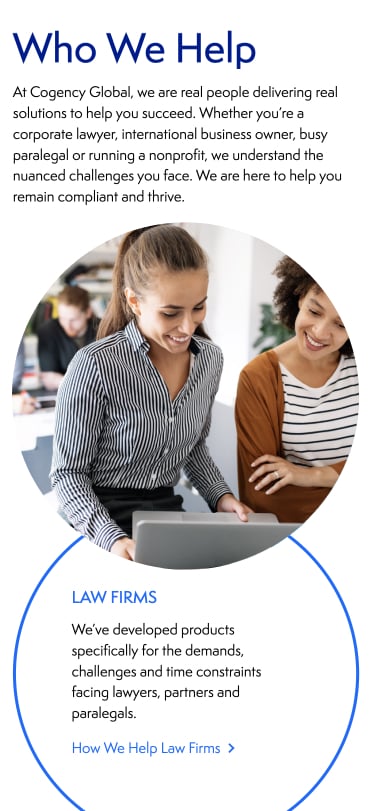
A woman leans over a table, engaged in a cogent discussion. The scene is shown within a circular frame set against a blue background. To the right, a glimpse of a modern workspace with plants and an inspirational quote on the wall can be seen.

INTRODUCTION

Simplifying Compliance: Redesigning the Digital Experience for Cogency Global

Cogency Global, a leader in corporate compliance and governance services, supports businesses in navigating complex regulatory landscapes both in the U.S. and internationally. Despite their comprehensive service offering and established reputation, their digital presence needed a transformation to better reflect their brand identity, enhance user engagement, and streamline the customer journey. That’s where we came in.

Transforming the Digital Landscape: A Comprehensive Approach

The scope of our project was ambitious: develop a robust, SEO-optimized website with over 2,200 pages and integrate it seamlessly with Cogency’s existing CRM systems, including HubSpot and Salesforce. Our primary goals were clear:

    • Brand Alignment: Ensure the website reflected Cogency’s brand identity and editorial standards.
    • Enhanced User Experience: Create intuitive page flows and navigation, providing a guided experience through the buyer’s journey.
    • Lead Generation & Conversion: Improve conversion rates from 1% to 2-4%, leveraging strategic CTAs and optimized landing pages.
    • SEO Optimization: Elevate Cogency’s online visibility with advanced SEO strategies, ensuring their expertise is easily discoverable.
    • Seamless CRM Integration: Maintain robust integration for effective lead management and nurturing.

USER EXPERIENCE

Building the Foundation: A User-Centric Design

We began with a deep dive into Cogency’s brand and user personas, understanding the needs of their diverse audience, which includes law firms, entities, nonprofits, and lenders. Using this insight, we designed a user experience that catered to each group’s specific requirements, from comprehensive compliance solutions to international corporate services.

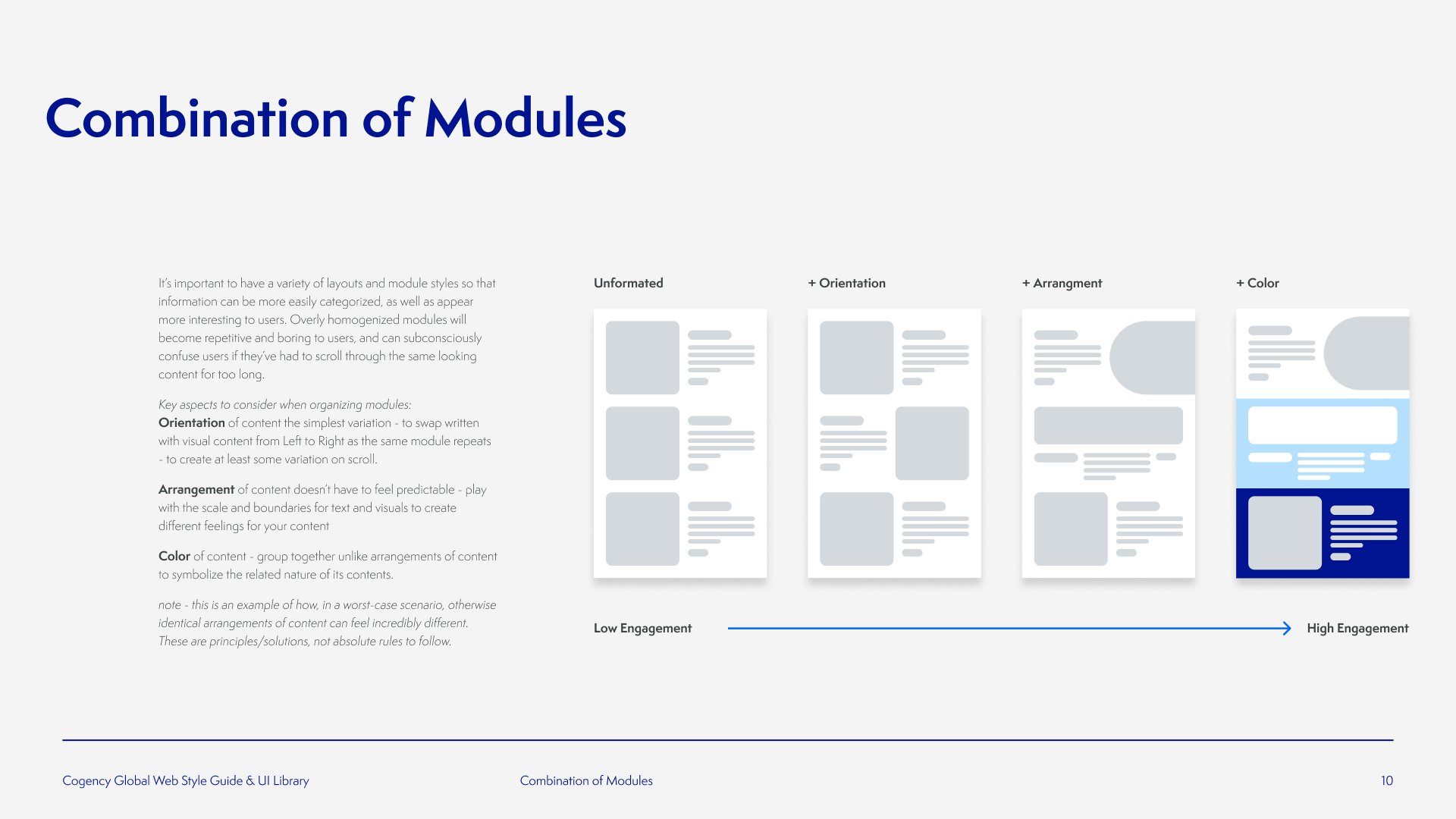
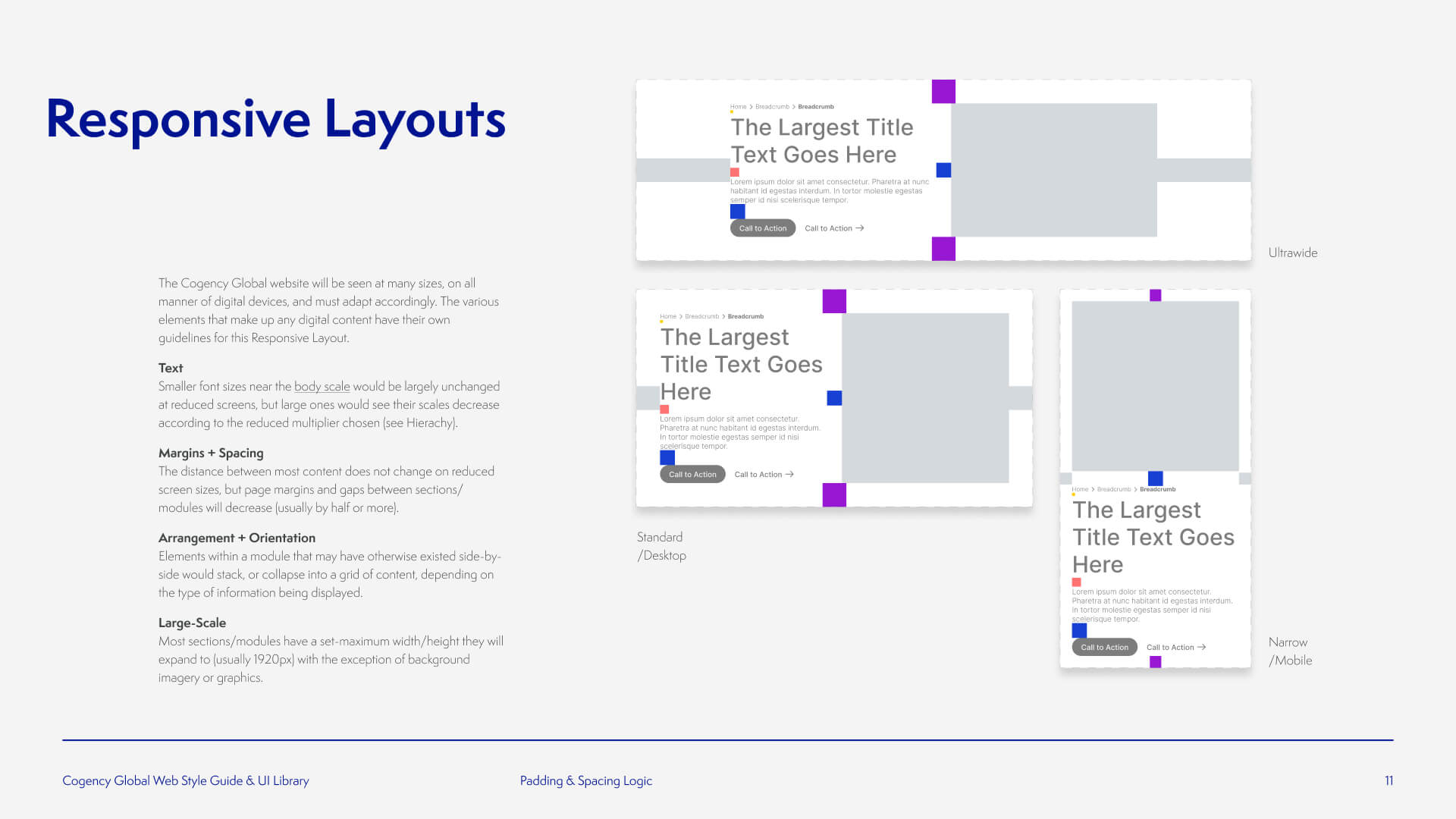
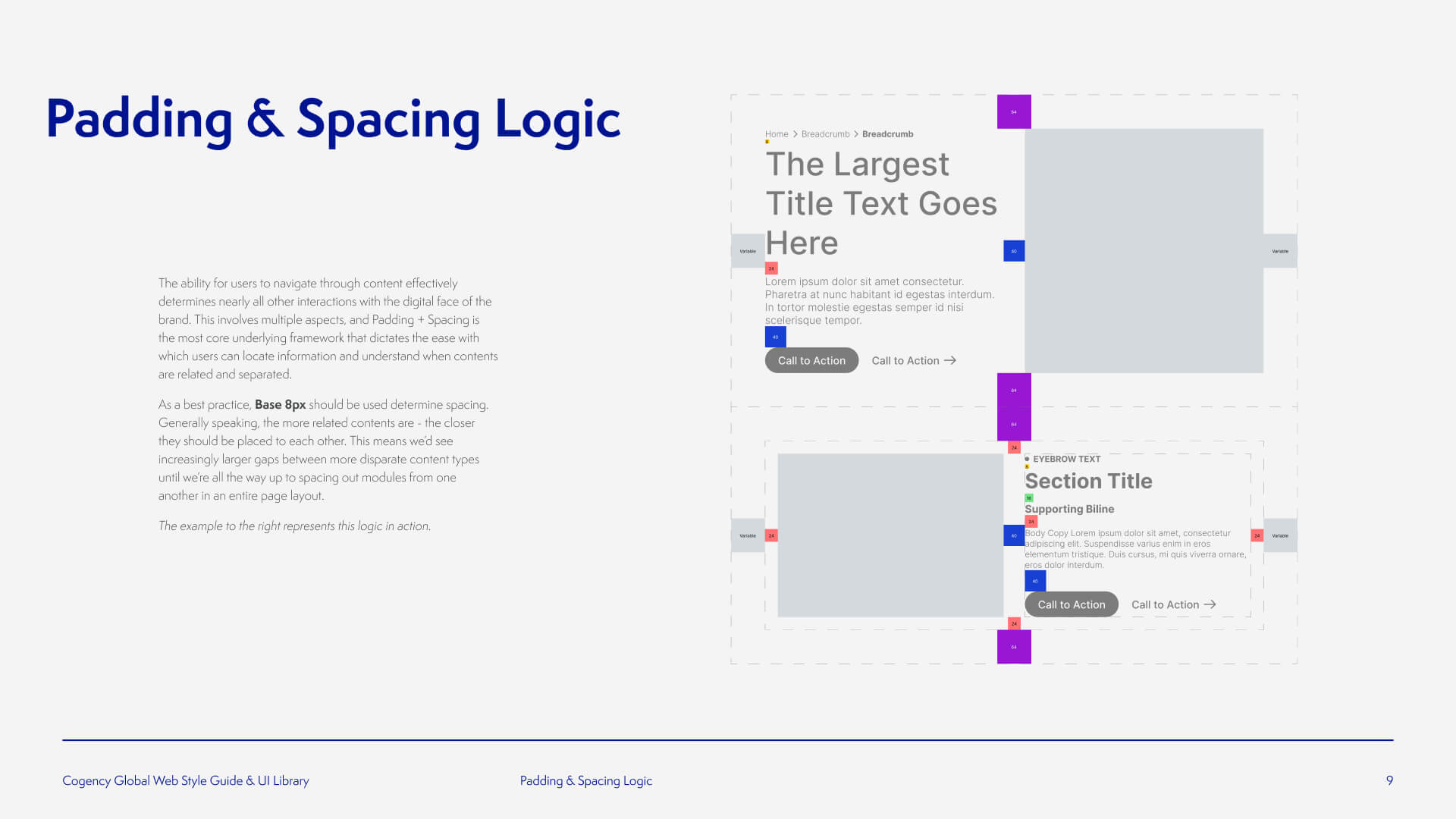
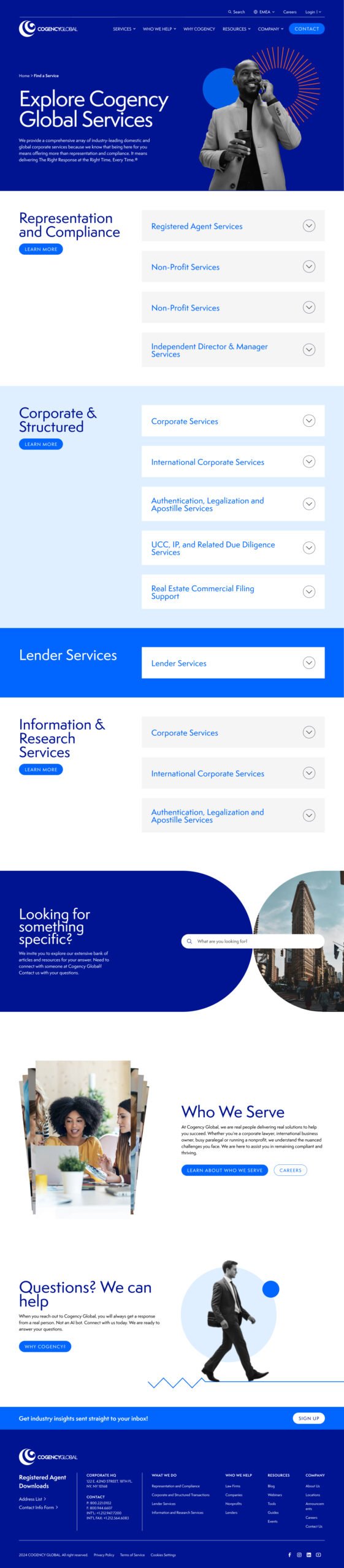
The new information architecture organized the vast array of services into an accessible, user-friendly structure. We employed a flexible WordPress block design pattern library, enabling Cogency’s team to easily update content while maintaining brand consistency. This modular approach not only improved usability but also supported future scalability.
Streamlining Compliance: Optimizing Content for Clarity + Conversion

Given the scale of the website, content organization was critical. We collaborated closely with Cogency’s brand and content teams to migrate over 2,500 URLs from HubSpot to WordPress, ensuring a seamless transition without losing valuable SEO equity. A comprehensive content audit informed our strategy, allowing us to refine the site’s taxonomy and improve search functionality.

Custom post types for testimonials, webinars, events, and blog posts were integrated, enabling Cogency to showcase their expertise and client success stories effectively. These content types, combined with advanced filtering and search capabilities, made it easier for users to find relevant information and engage with the brand.

Enhancing Engagement: A Visual + Functional Overhaul

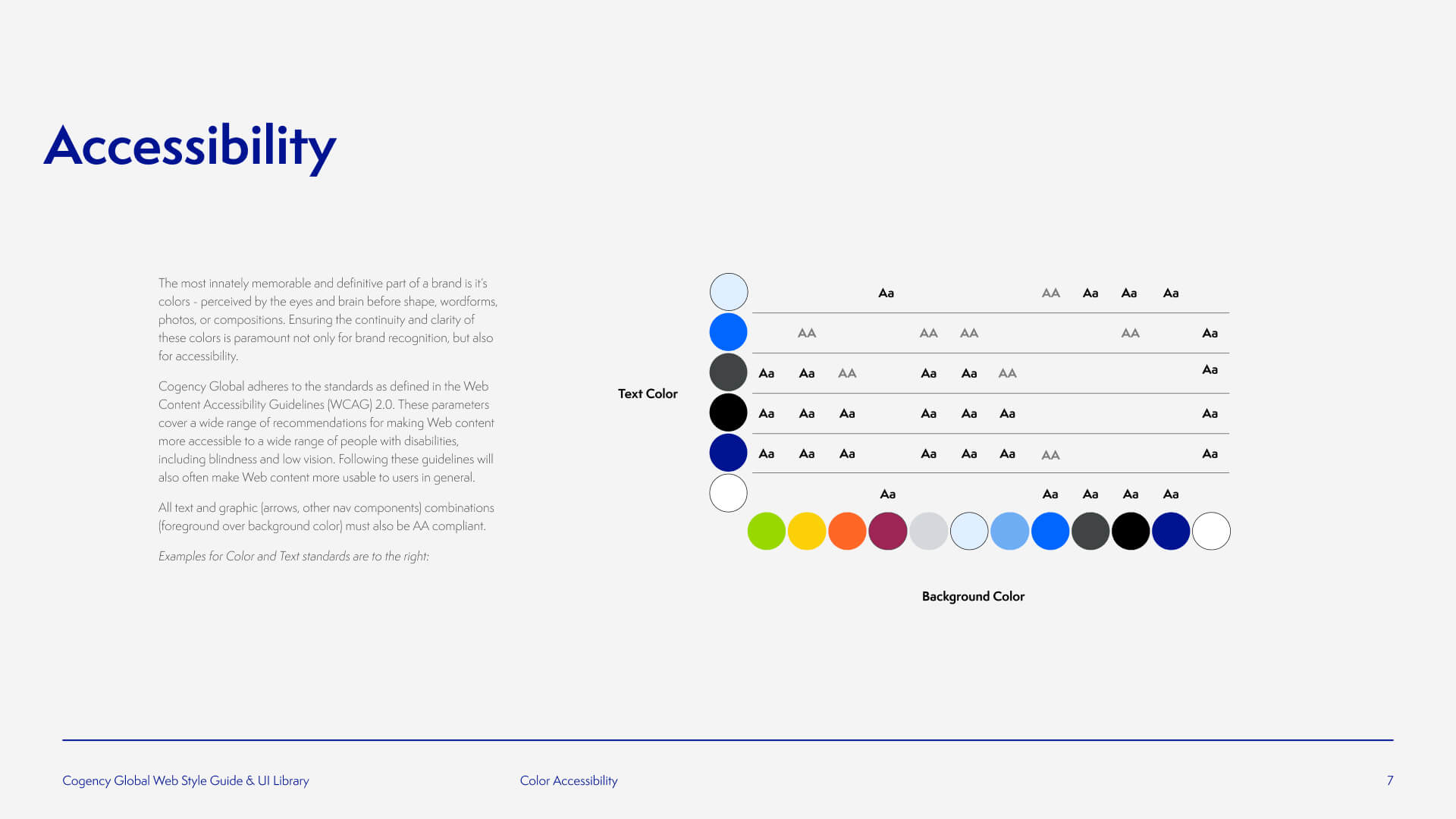
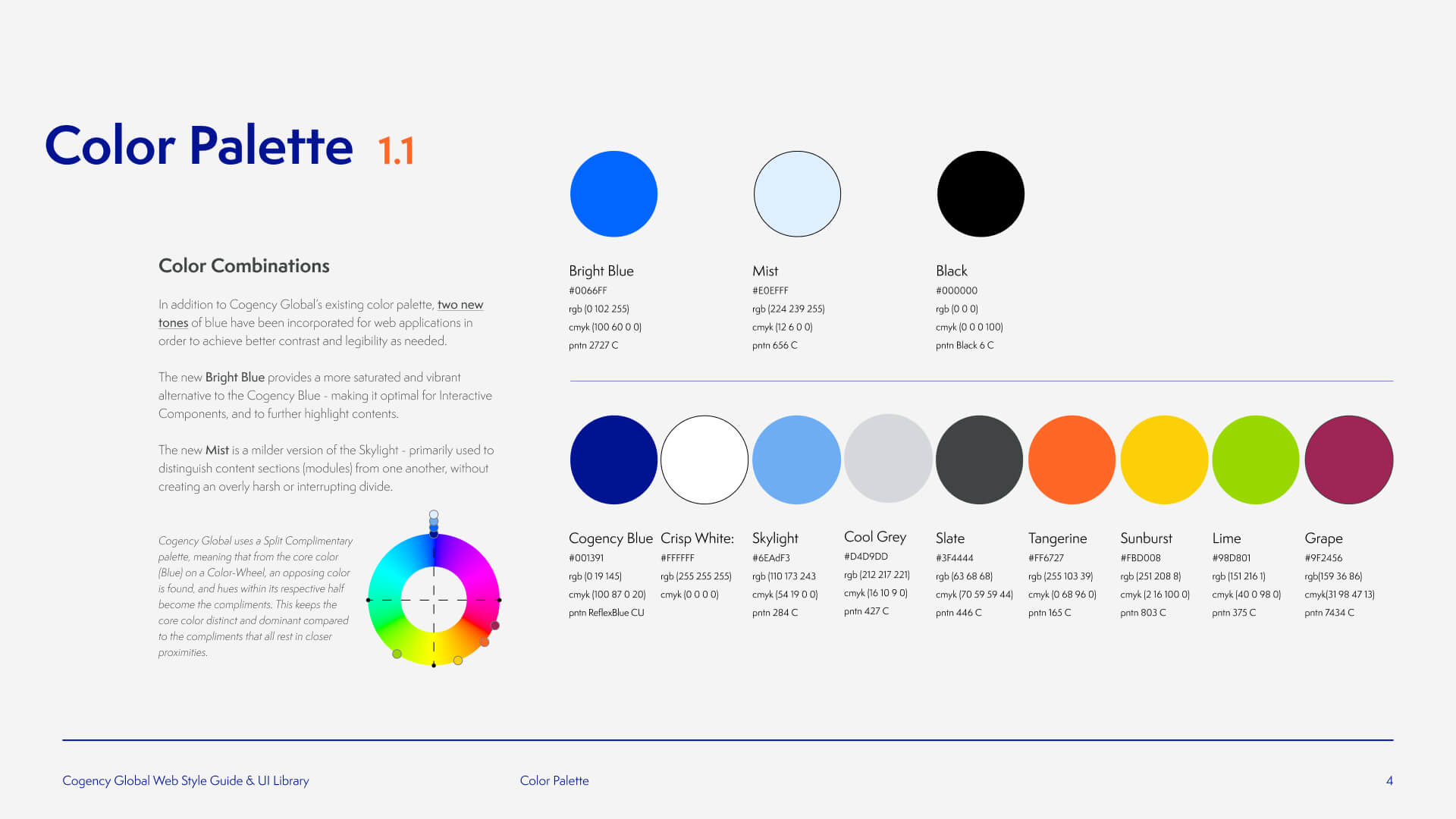
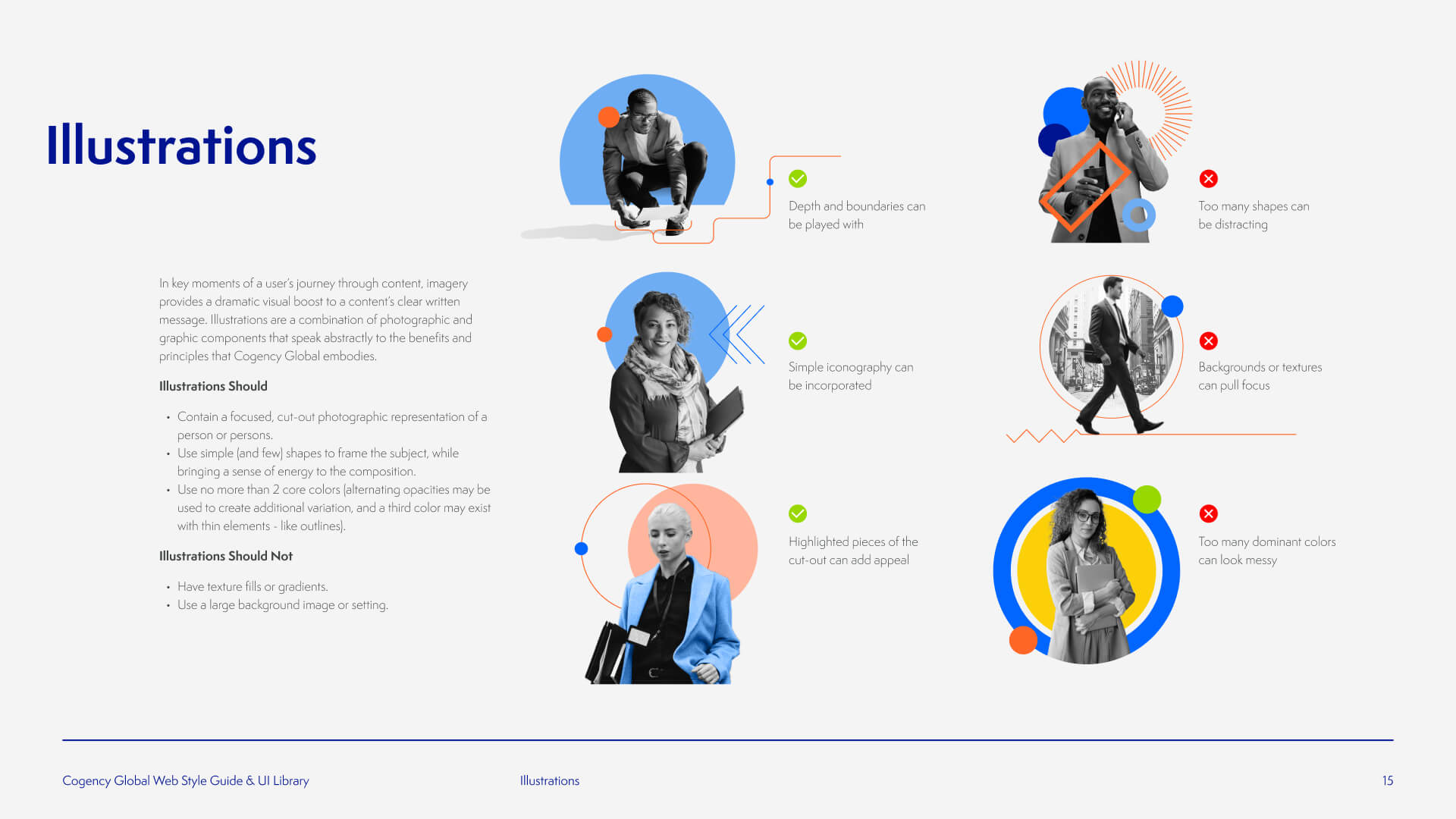
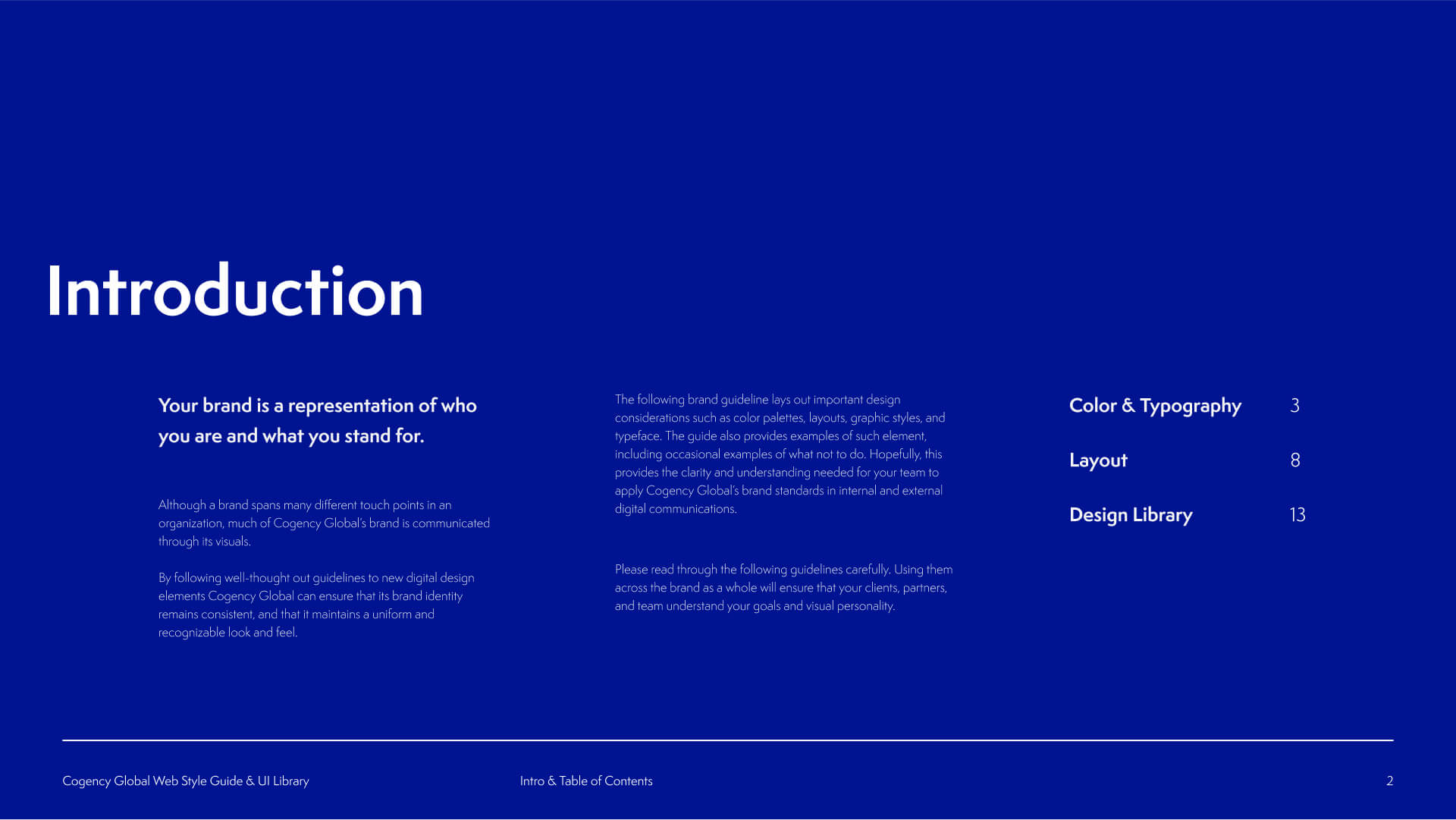
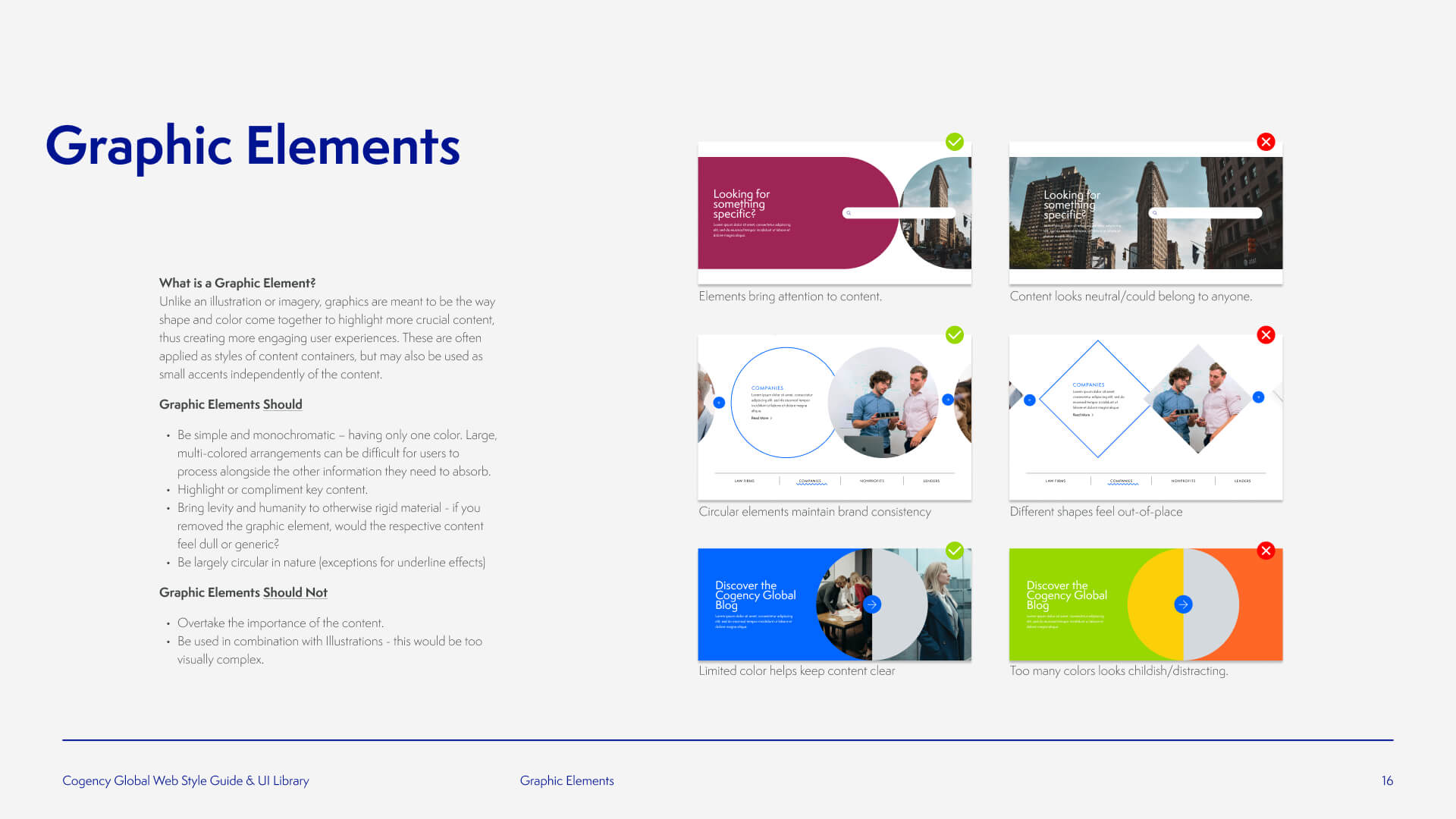
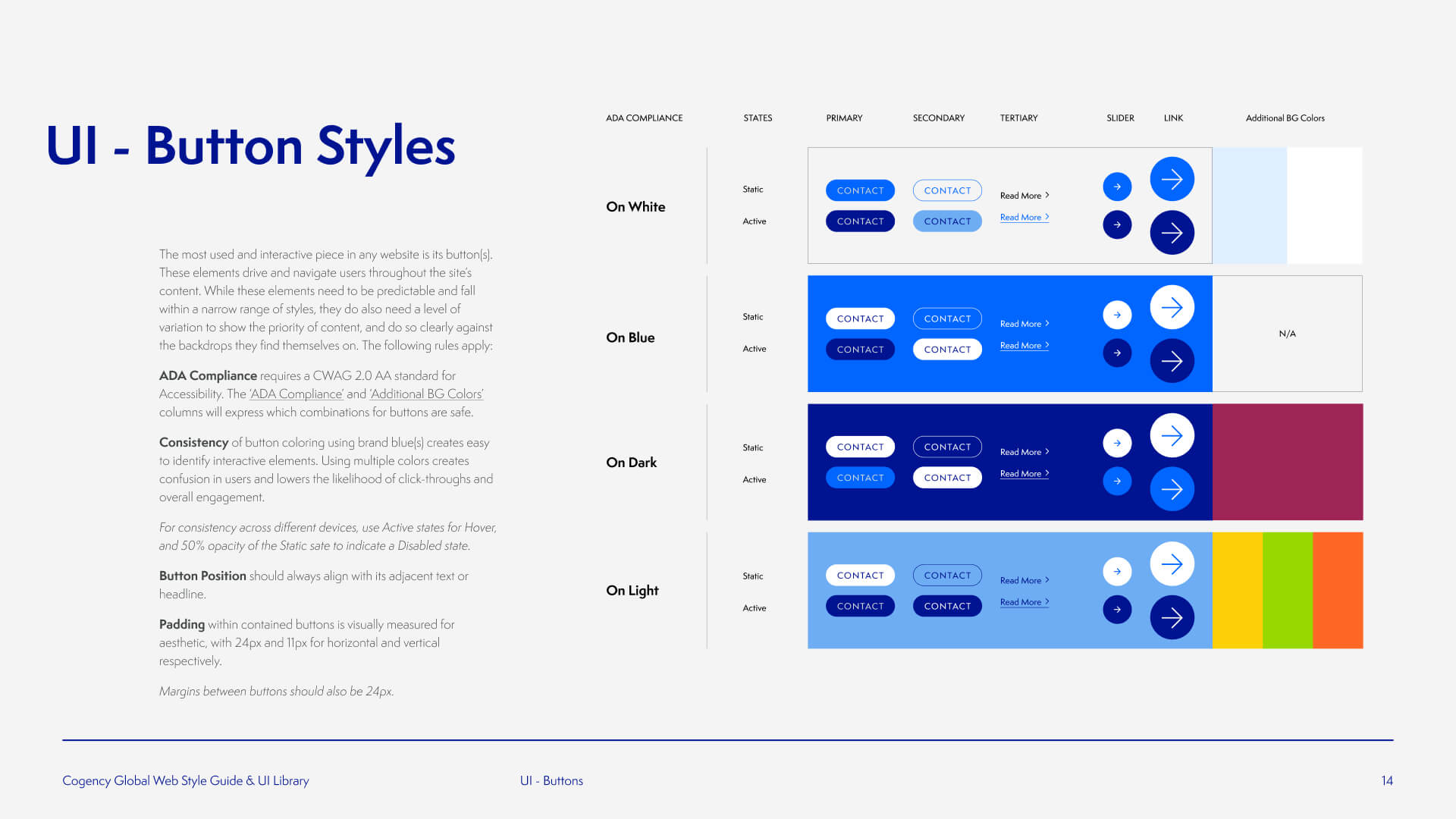
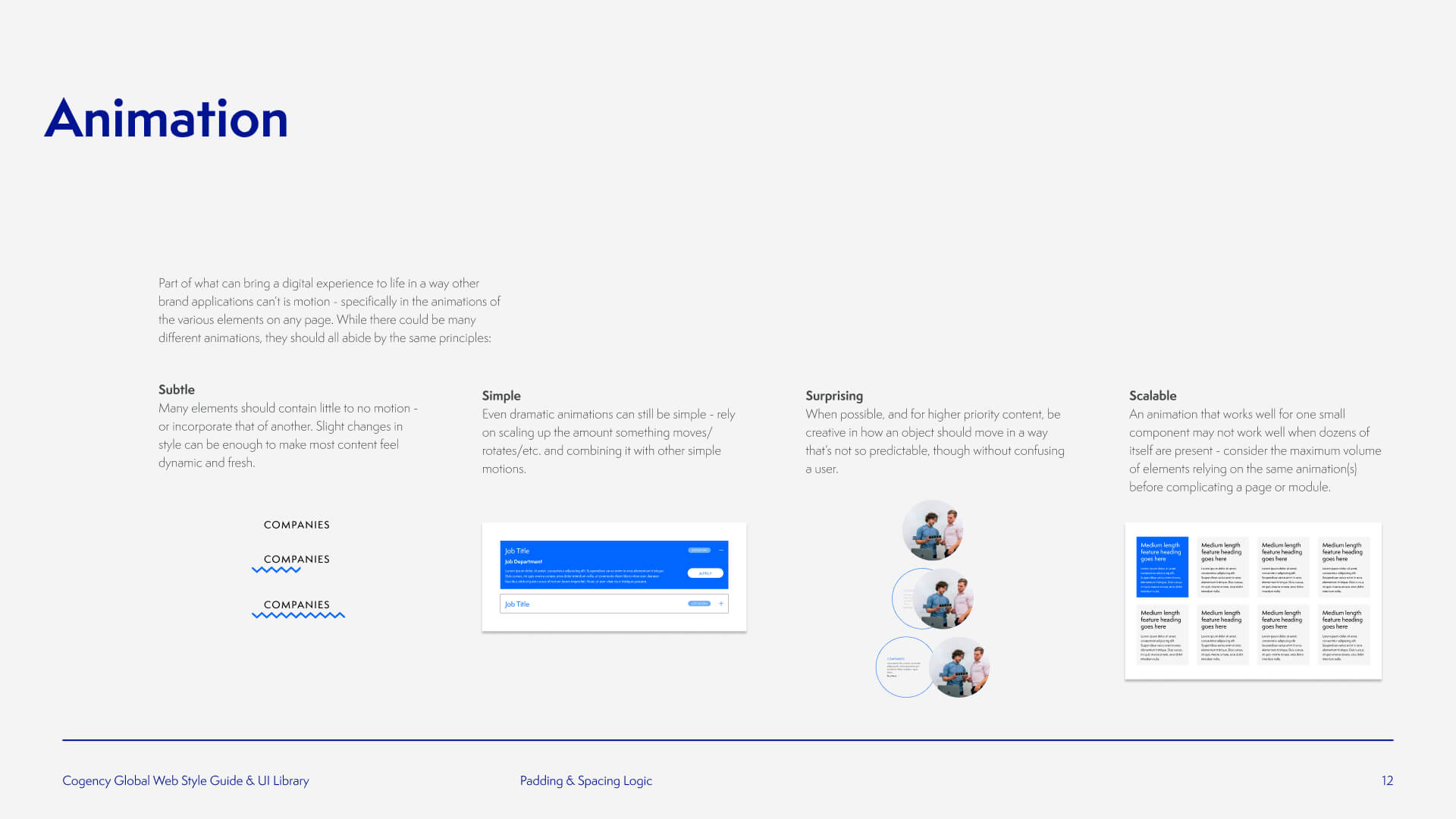
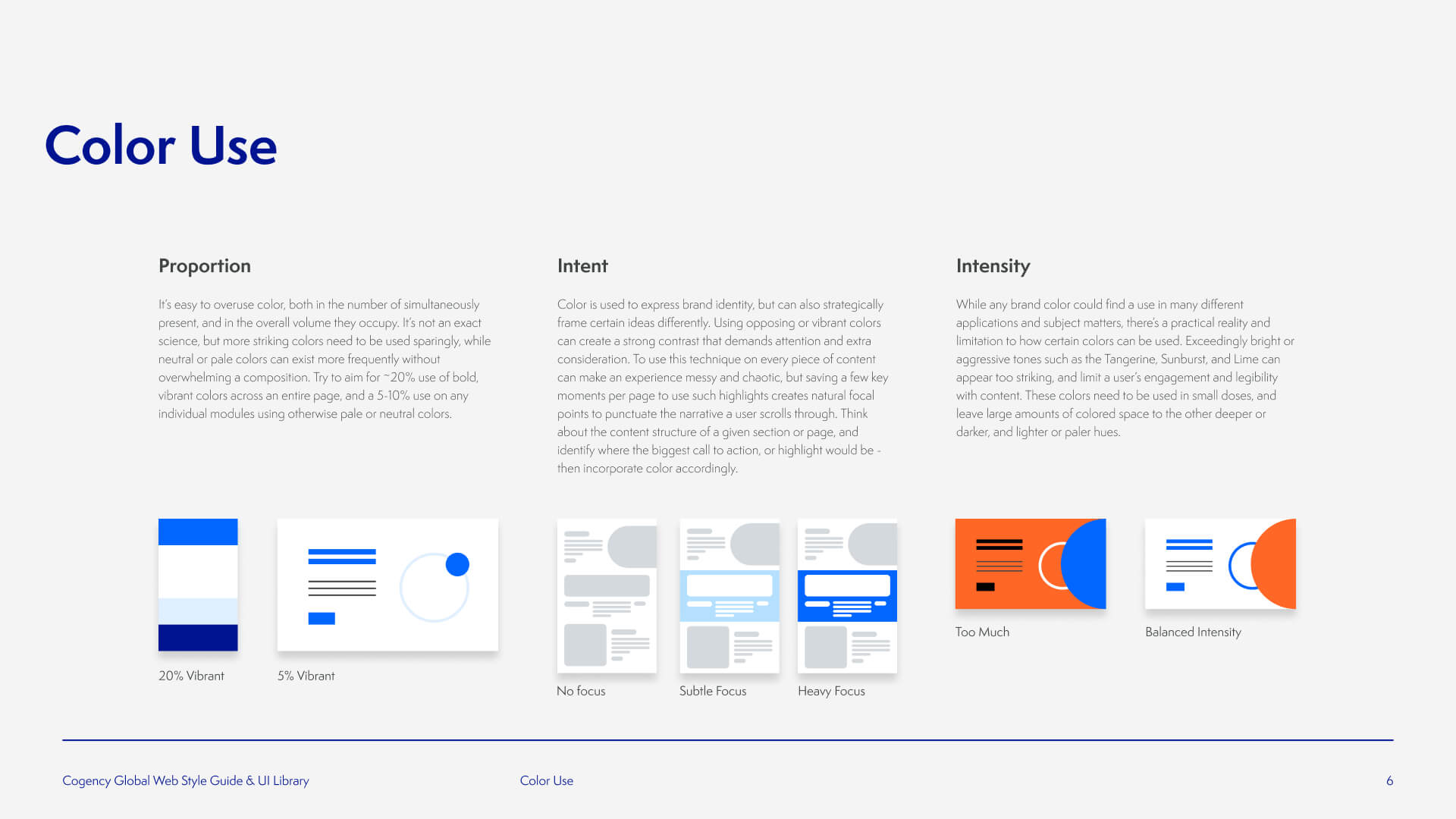
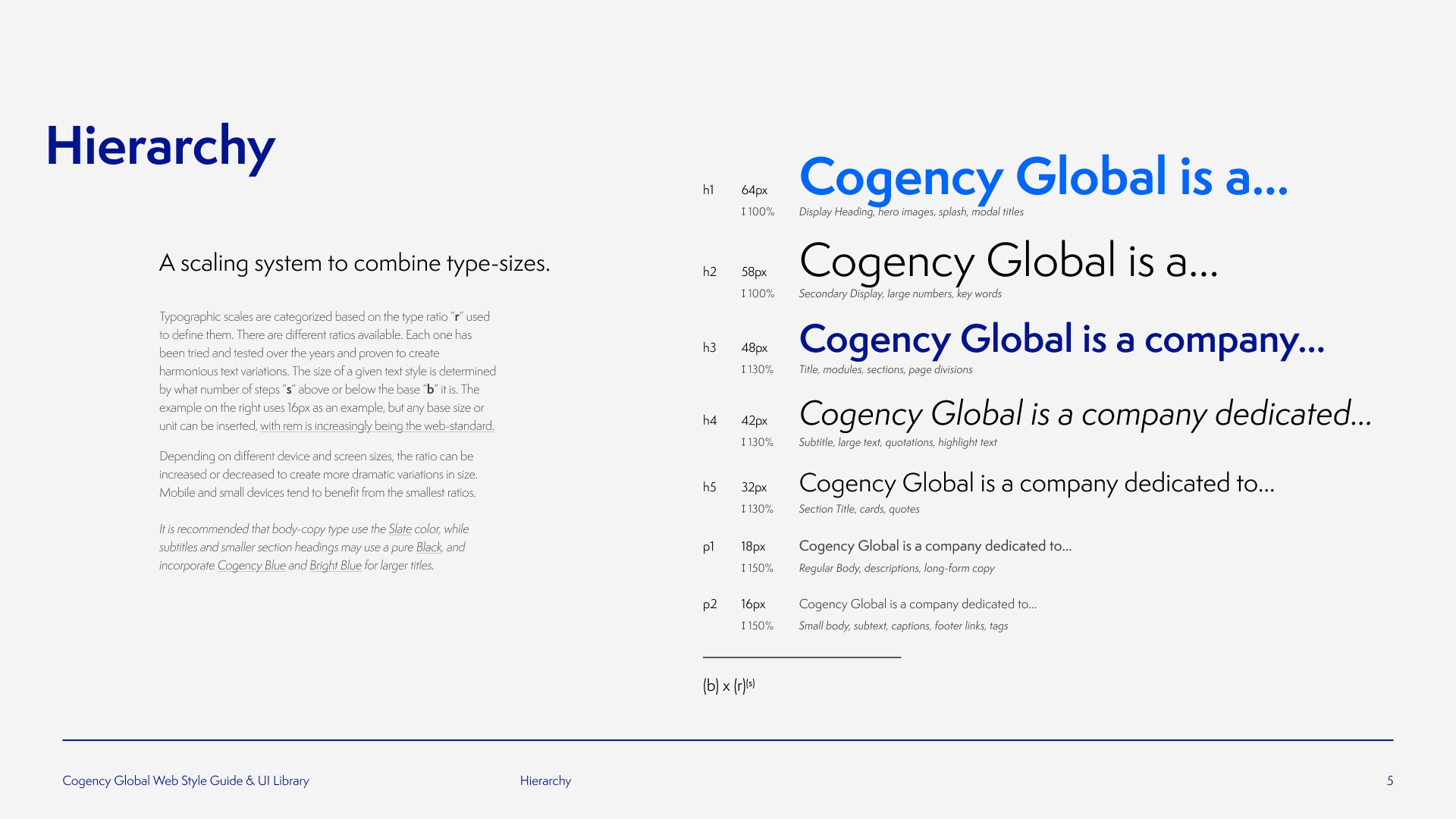
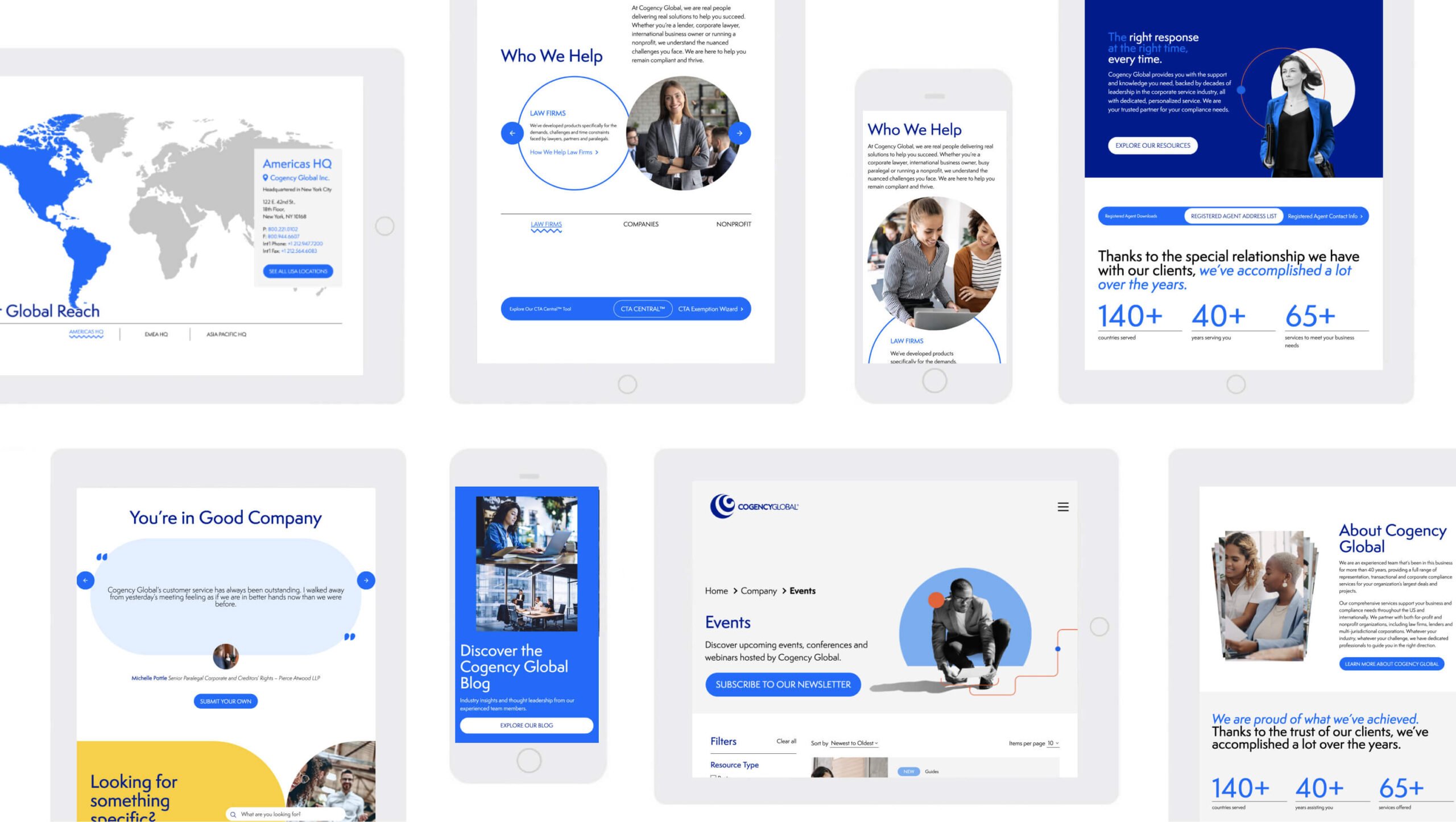
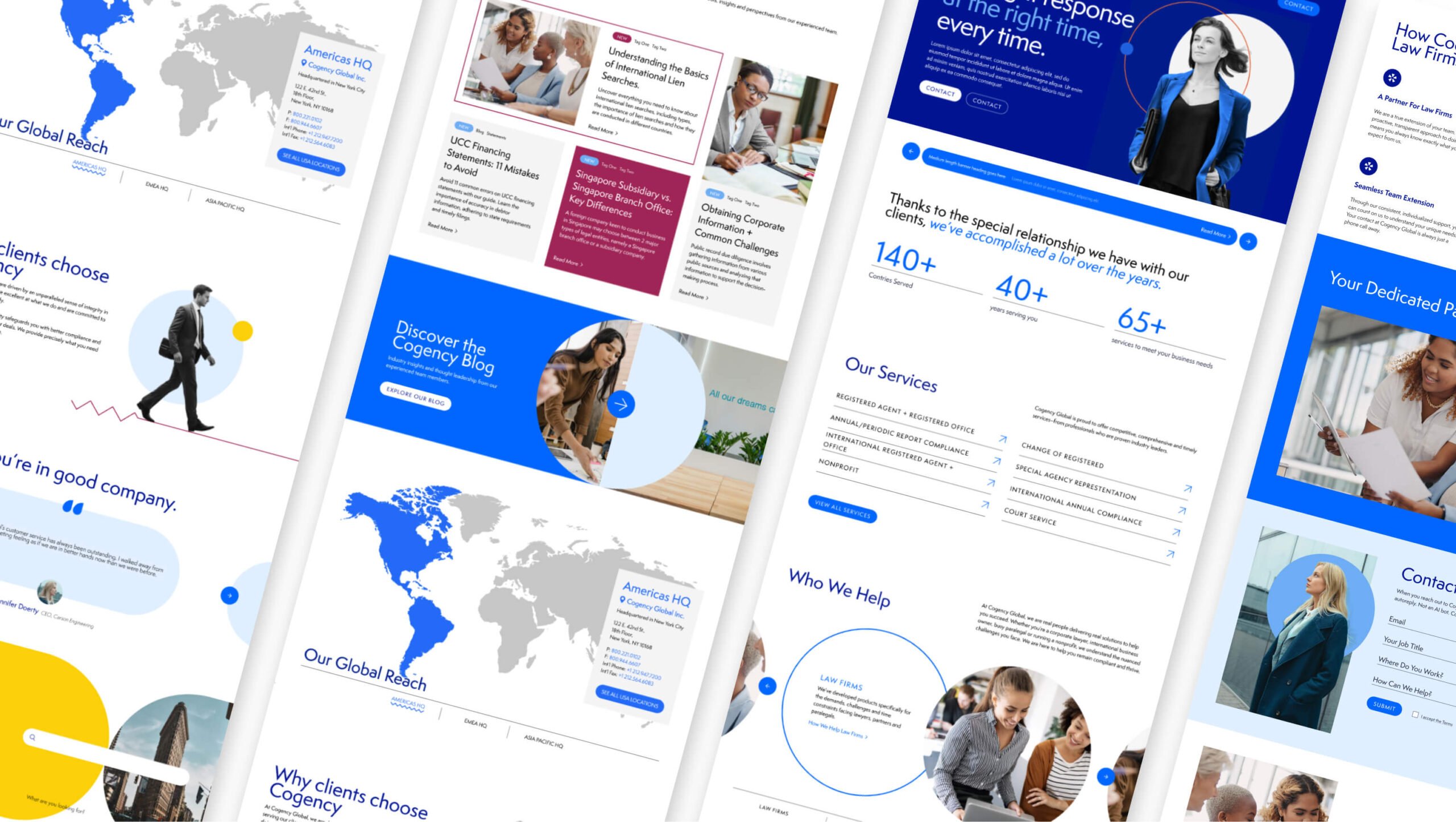
The new website design embraced Cogency’s brand identity while introducing a clean, modern aesthetic. We incorporated customizable branded templates, fonts, and color schemes, along with dynamic content features like iconography, animations, and accordions to create an engaging user experience. The visual design emphasized simplicity and clarity, reinforcing trust and credibility.

For the Americas and EMEA markets, we developed separate websites to address region-specific needs, utilizing a multi-language plugin to ensure content accessibility in multiple languages. This global approach allowed Cogency to cater to their diverse international client base more effectively.

Post-launch, the impact was immediate. The new website not only reflected Cogency’s brand identity more accurately but also significantly improved user engagement and lead generation. Enhanced SEO performance and targeted landing pages led to a substantial increase in organic traffic and conversions, positioning Cogency as a trusted partner in the complex world of corporate compliance.

By simplifying content management and integrating advanced analytics, we provided Cogency with the tools they need to continue refining their digital strategy and nurturing client relationships. The comprehensive search capabilities and user-friendly design empowered users to navigate the complexities of compliance with confidence.

Visit the new Cogency Global website: cogencyglobal.com

Frequently Asked Questions

Common questions about professional services website projects, answered from experience.

How do professional services firms differentiate when competitors all sound the same?

The differentiation problem in professional services is rarely due to a lack of expertise. Most professional services firms are genuinely excellent at what they do. The problem is they all describe it in the same way: safe language, interchangeable positioning, and a website full of practice area pages that could belong to any competitor.

Differentiation starts with identifying what’s actually true and specific about the firm, then building a brand system that makes that specificity impossible to miss.

We do this through stakeholder interviews, competitive audits, and audience research to find the positioning gap between where the firm sits and how it presents itself. From there, we build messaging, visual identity, and site architecture that work together to make the firm’s point of view tangible.

We’ve done this across law firms like Boughton Law and Watson Goepel, financial services firms like Smythe LLP, and compliance firms like Cogency Global.

How do consulting firms use thought leadership to drive qualified leads?

Thought leadership drives leads when it’s tied to specific service lines, designed for search discovery, and embedded in the site experience where purchase decisions happen.

Most firms produce content but don’t connect it structurally to their services, their people, or a clear next step. The content lives on a blog that’s disconnected from the rest of the site, and readers have no path from insight to conversation. We build thought leadership into the information architecture from the start: content tied to the people and services behind it, filterable by practice area, and positioned alongside contextual calls to action.

The format matter, too. Written insights, video case studies, and webinar content each serve different stages of the buyer’s journey and signal different kinds of credibility. We’ve built these systems for firms like Watson Goepel, HeirSearch, and Cogency Global.

How do multi-practice professional service firms maintain brand consistency across multiple business units, websites, or subbrands?

By building a system that makes consistency easier than inconsistency. Brand erosion at scale doesn’t usually happen because people ignore the guidelines. It happens because the guidelines don’t account for how the organization actually operates.

The fix is a shared brand architecture, a modular design system, and clear rules about what flexes by context and what doesn’t. For firms with multiple entities, that means defining the relationship between parent brand and sub-brands explicitly: how much visual and verbal latitude each unit gets, where shared equity is leveraged, and where distinct positioning is warranted.

The design system and content management tools need to support this structurally, not just conceptually, so that teams can create and update content independently while staying within defined guardrails. We’ve built these systems across multi-entity firms like Smythe LLP, multi-regional organizations like Cogency Global, and firms undergoing digital transformation like Watson Goepel.

What does a professional services rebrand and website redesign project include?

A professional services firm rebrand and website redesign project typically includes positioning and messaging, a refined visual system, and a conversion-optimized website experience that supports the full customer or client journey. Takt’s approach for building professional services websites emphasizes differentiation, trust-building, seamless digital journeys, qualified lead generation, and consistency across touchpoints.

How long does a professional services firm's website redesign take?

A professional services website redesign timeline is usually phased, because positioning and messaging decisions influence IA, page templates, and conversion paths. Takt is not oriented toward quick fixes, and the work is typically structured to build future-proof platforms that balance usability, interactivity, accessibility, and business goals.

What builds trust fastest on a professional services firm website?

Trust on a professional services website is built through clarity, credibility cues, and consistency across messaging, design, and execution, especially on high-intent pages like services, expertise, and leadership. Takt explicitly prioritizes “unshakeable trust” through authentic brand communication, thought leadership, and flawless execution across touchpoints. Boughton Law’s website is a clear example of this approach, where the work aimed to re-establish the firm as a leader by elevating its story and positioning its lawyers as thought leaders.

How should a professional services website organize services so buyers and clients actually understand what you do?

A professional services website should organize services around specific buyer or client challenges and decision paths, not internal departments or practice labels. Takt aligns experience design with the client’s buying journey, enabling visitors to quickly self-qualify and find the right expertise with minimal friction. On InterVISTAS, navigation and content structure prioritize key sections such as “What We Do,” and a tagging system links insights and content to specific service areas, making complex yet valuable offerings easier to understand.

What should a professional services website redesign prioritize for lead generation?

A professional services website redesign should prioritize high-intent journeys, clear service proof, and frictionless conversion points that match how buyers evaluate risk and fit. Takt’s approach is to align strategy and experience to the buying journey to drive more qualified leads, not simply increase traffic.

How do you build a financial services brand that can grow into new markets without losing coherence?

By investing in the structural layer of the brand before finalizing the visual identity. The brands that scale well in financial services are built on a clear institutional logic (a defensible answer to “what are we for and who do we serve best”) paired with a brand architecture flexible enough to accommodate new service lines, geographies, and audience segments without requiring reinvention every time.

That means defining the positioning, messaging hierarchy, and rules for how the brand flexes at the system level, not just at the launch-day level. A brand built around one service line that needs to accommodate three more will either constrain growth or fracture under the pressure of it.

For firms operating across regions, the system also needs to account for market-specific content needs, language requirements, and regulatory considerations. We’ve built these scalable systems for firms like Cogency Global and PaySpyre.

How does brand strategy translate into a brand system that non-designers can actually use?

Through executional artifacts that bridge the gap between strategic intent and daily communications. Strategy that doesn’t translate into usable tools is strategy that doesn’t survive first contact with the organization.

The translation layer is what matters: message architecture, writing guidance, narrative templates, and component-level visual rules that give people what they need to execute consistently without a design degree. For organizations with decentralized communications (multiple faculties, business units, or regional offices), the system also needs to define flex zones explicitly: what adapts by context, what doesn’t, and where the escalation path goes when someone isn’t sure.

Those decisions, answered clearly and embedded in the tools teams actually use, are what determine whether a brand strategy lives or gathers dust. We’ve built these systems across a range of organizational structures, from multi-campus universities (Adler University) to multi-subsidiary companies (Meraki Resources) to small nonprofits with limited design resources (Community Action Initiative).

RELATED PROJECTS