Go to content

Watson Goepel

INTRODUCTION

A Digital Transformation for Watson Goepel’s 40th Anniversary

Founded in 1984 by three pioneering partners, Watson Goepel has grown into a well-respected legal firm with over 30 lawyers specializing in a diverse range of practice areas. As they approached their 40th anniversary, they recognized the need for a digital presence that matched their growth and evolution. Despite previous updates, their website felt disjointed, outdated, and lacked the cohesive messaging needed to represent the firm’s expertise and character. It was time to modernize their online identity and create a platform that reflected their reputation for excellence.

Watson Goepel sought a strategic partner to help transform their digital presence and celebrate four decades of success. Our mission was to create a website that embodied their modern sophistication while remaining approachable and supportive of their expanding services.

BRAND MESSAGING

A Fresh Approach to Brand Messaging

To accurately capture Watson Goepel’s brand, we began by refining their messaging and expanding their visual identity. The goal was to highlight the firm’s deep expertise and professionalism while showcasing their approachable, client-focused nature.

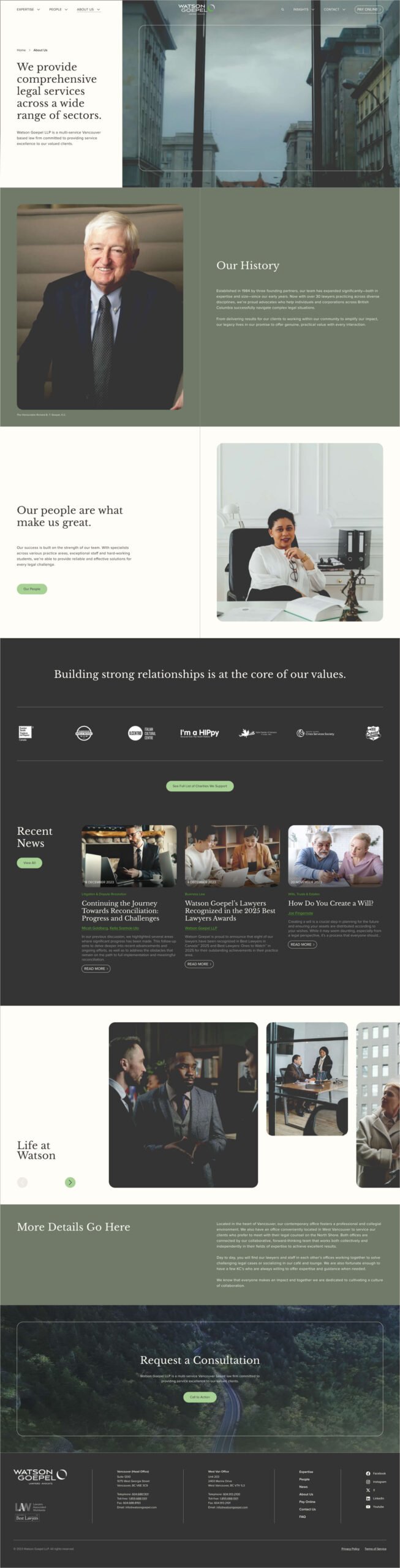
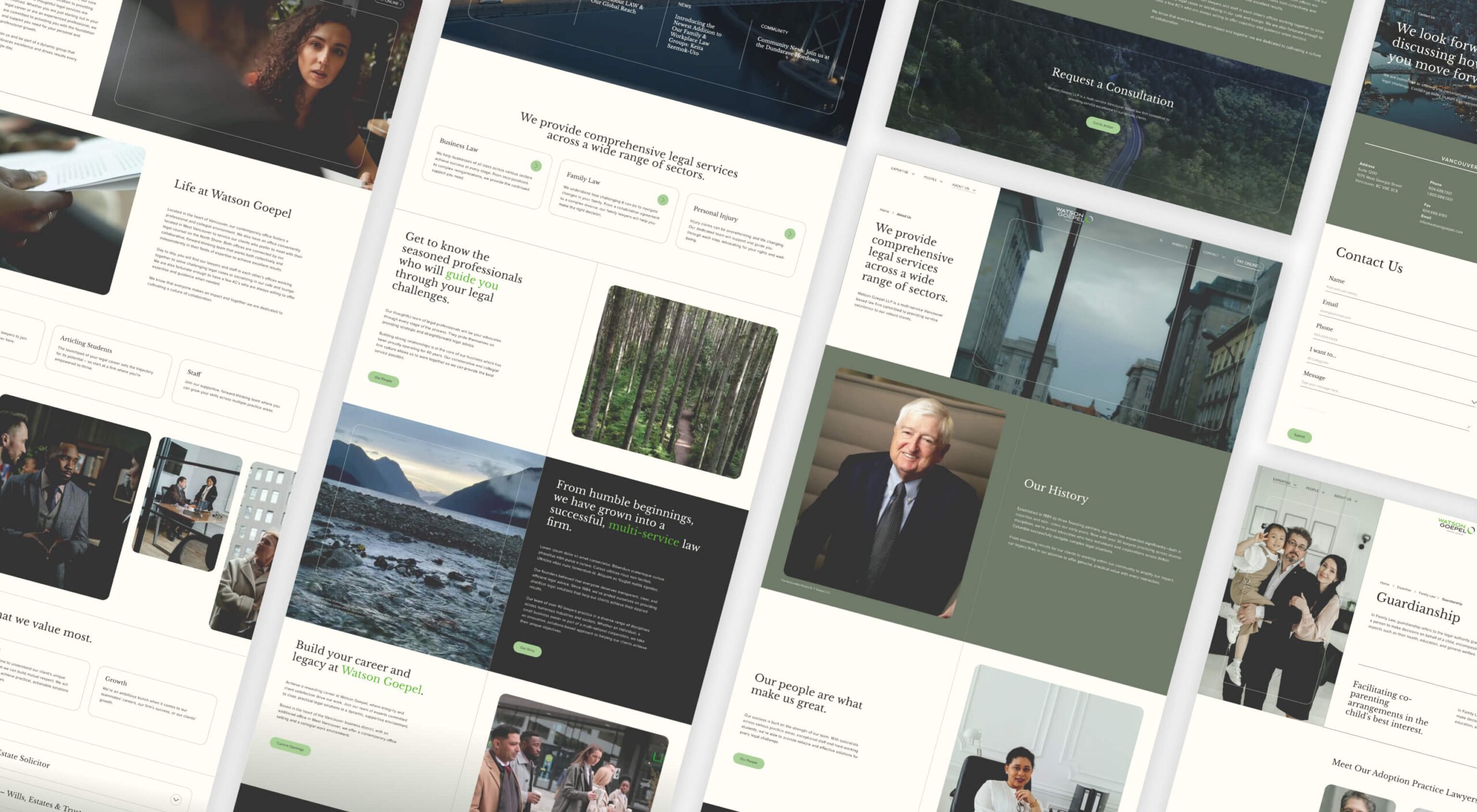
We expanded their existing color palette with sophisticated shades of gray-green, dark gray, and cream, adding a layer of refinement that complemented their traditional logo. Typography was carefully chosen to balance elegance and readability: Libre Baskerville for headings conveyed a sense of history and gravitas, while Proxima Nova for body text ensured clarity and approachability.
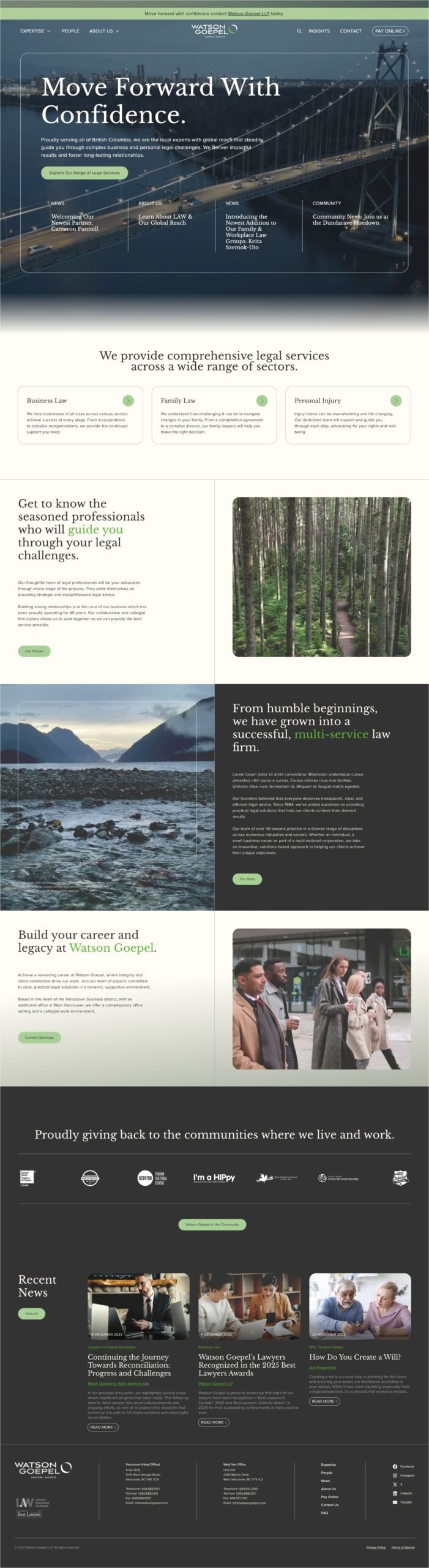
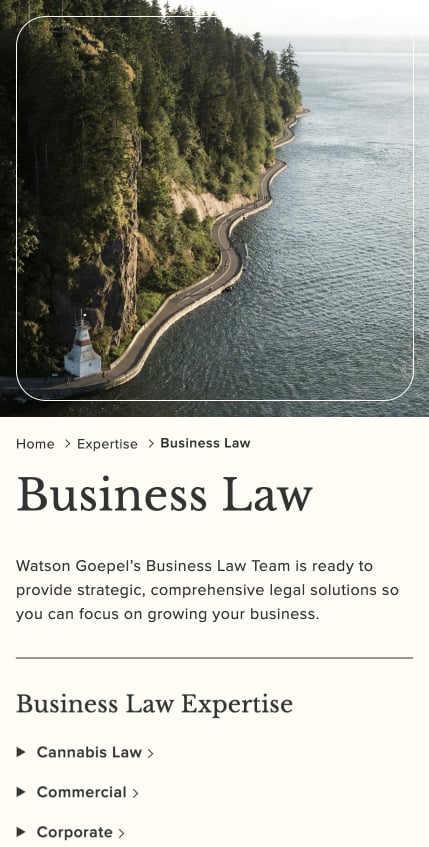
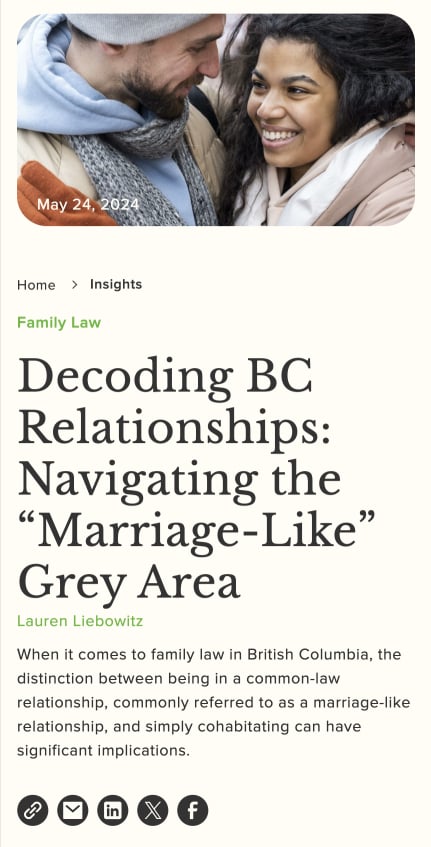
Crafting a Seamless User Journey: Intuitive UX with Legal Precision

Navigating a law firm’s website should be as straightforward as seeking legal advice. Through user interviews and workshops, we identified two primary paths users were taking: searching for a specific lawyer or exploring practice areas. We reimagined the site’s navigation to prioritize these two key user journeys, placing them prominently in the top navigation bar.

To address the firm’s challenge with inconsistent navigation and page structures, we implemented a cohesive information architecture that allowed users to easily find what they needed. Whether it was learning about a lawyer’s background or understanding the firm’s services, the new structure provided a clear, logical flow that minimized friction and confusion.


Blending Sophistication with Approachability

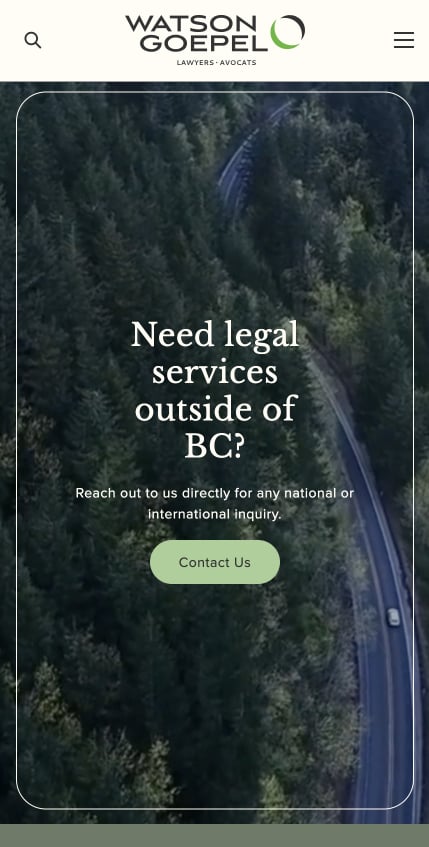
The creative direction for the new website was built around the theme of approachable sophistication. Rounded corners on buttons and images softened the design, while a consistent use of the expanded color palette unified the look and feel. We used the firm’s iconic logo as a cornerstone but introduced new visual elements like rounded squares as image and video motifs to add depth and cohesion.

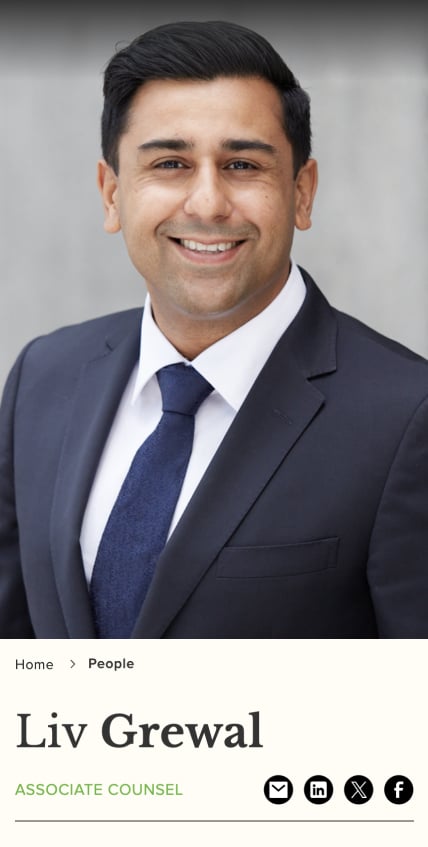
Custom photography and video production played a crucial role in this transformation. By featuring the firm’s team members in a professional yet personable light, we emphasized the human side of Watson Goepel, reinforcing their reputation as trusted advisors who are not only experts in their field but also relatable and client-focused.


DEVELOPMENT

Building a Future-Ready Platform: Technology with Purpose

The new Watson Goepel website was built on a custom WordPress theme, optimized for speed, SEO, and web accessibility (WCAG 2.1 AA). Given the firm’s desire for in-house content management, the backend was designed to be user-friendly and scalable, allowing the team to easily update content such as lawyer bios, case studies, and service pages.

We also addressed technical challenges such as blocked pages and broken links, ensuring a smooth and intuitive experience for users. The integration of SEO best practices and improved page loading times supported the firm’s marketing and business development goals, positioning them as thought leaders in the legal field.


Showcasing the Faces Behind the Firm

To truly capture the essence of Watson Goepel, we conducted custom photography and video shoots that highlighted the people who drive the firm’s success. These visuals added a personal touch to the website, making it clear that while the firm offers extensive legal expertise, they are also deeply committed to their clients and community.

The imagery was carefully curated to reflect the firm’s diverse team and welcoming culture, reinforcing the message that Watson Goepel is not just a legal service provider, but a partner in navigating complex legal landscapes.

The new website not only commemorated Watson Goepel’s 40th anniversary but also set the stage for the next chapter in their journey. With a modern, sophisticated digital presence that reflects their core values and diverse expertise, the firm is now well-positioned to continue serving clients across British Columbia with the same commitment and excellence they’ve upheld for four decades.

RELATED PROJECTS

VIEW ALL CASE STUDIES

Frequently Asked Questions

Common questions about professional services website projects, answered from experience.

How do professional services firms differentiate when competitors all sound the same?

The differentiation problem in professional services is rarely due to a lack of expertise. Most professional services firms are genuinely excellent at what they do. The problem is they all describe it in the same way: safe language, interchangeable positioning, and a website full of practice area pages that could belong to any competitor.

Differentiation starts with identifying what’s actually true and specific about the firm, then building a brand system that makes that specificity impossible to miss.

We do this through stakeholder interviews, competitive audits, and audience research to find the positioning gap between where the firm sits and how it presents itself. From there, we build messaging, visual identity, and site architecture that work together to make the firm’s point of view tangible.

We’ve done this across law firms like Boughton Law and Watson Goepel, financial services firms like Smythe LLP, and compliance firms like Cogency Global.

How do consulting firms use thought leadership to drive qualified leads?

Thought leadership drives leads when it’s tied to specific service lines, designed for search discovery, and embedded in the site experience where purchase decisions happen.

Most firms produce content but don’t connect it structurally to their services, their people, or a clear next step. The content lives on a blog that’s disconnected from the rest of the site, and readers have no path from insight to conversation. We build thought leadership into the information architecture from the start: content tied to the people and services behind it, filterable by practice area, and positioned alongside contextual calls to action.

The format matter, too. Written insights, video case studies, and webinar content each serve different stages of the buyer’s journey and signal different kinds of credibility. We’ve built these systems for firms like Watson Goepel, HeirSearch, and Cogency Global.

How do multi-practice professional service firms maintain brand consistency across multiple business units, websites, or subbrands?

By building a system that makes consistency easier than inconsistency. Brand erosion at scale doesn’t usually happen because people ignore the guidelines. It happens because the guidelines don’t account for how the organization actually operates.

The fix is a shared brand architecture, a modular design system, and clear rules about what flexes by context and what doesn’t. For firms with multiple entities, that means defining the relationship between parent brand and sub-brands explicitly: how much visual and verbal latitude each unit gets, where shared equity is leveraged, and where distinct positioning is warranted.

The design system and content management tools need to support this structurally, not just conceptually, so that teams can create and update content independently while staying within defined guardrails. We’ve built these systems across multi-entity firms like Smythe LLP, multi-regional organizations like Cogency Global, and firms undergoing digital transformation like Watson Goepel.

What does a professional services rebrand and website redesign project include?

A professional services firm rebrand and website redesign project typically includes positioning and messaging, a refined visual system, and a conversion-optimized website experience that supports the full customer or client journey. Takt’s approach for building professional services websites emphasizes differentiation, trust-building, seamless digital journeys, qualified lead generation, and consistency across touchpoints.

How long does a professional services firm's website redesign take?

A professional services website redesign timeline is usually phased, because positioning and messaging decisions influence IA, page templates, and conversion paths. Takt is not oriented toward quick fixes, and the work is typically structured to build future-proof platforms that balance usability, interactivity, accessibility, and business goals.

What builds trust fastest on a professional services firm website?

Trust on a professional services website is built through clarity, credibility cues, and consistency across messaging, design, and execution, especially on high-intent pages like services, expertise, and leadership. Takt explicitly prioritizes “unshakeable trust” through authentic brand communication, thought leadership, and flawless execution across touchpoints. Boughton Law’s website is a clear example of this approach, where the work aimed to re-establish the firm as a leader by elevating its story and positioning its lawyers as thought leaders.