Go to content

Worldwide Boat

Hero image for a luxury yacht charter company brand and website design project.

INTRODUCTION

Charting New Waters: Elevating the Luxury Yacht Charter Experience

Worldwide Boat is more than a luxury yacht charter company; it’s a bespoke concierge for those seeking unparalleled travel experiences. Offering custom yacht charters with seamless travel services, the company’s small but dedicated team of 24 delivers a highly personal touch, crafting itineraries that encompass more than just the yacht journey. From exclusive activities at destinations to ensuring effortless travel to and from the yacht, every detail is meticulously planned to create unforgettable memories for their clientele.

CREATIVE DIRECTION

Designing the Voyage: Brand Messaging and Visual Identity

To reflect Worldwide Boat’s deep connection to the ocean and their concierge-level care, we collaborated closely with their team through interviews, workshops, and brainstorming sessions. The result was a brand and visual identity rooted in elegance and storytelling.

Visual Identity Highlights:

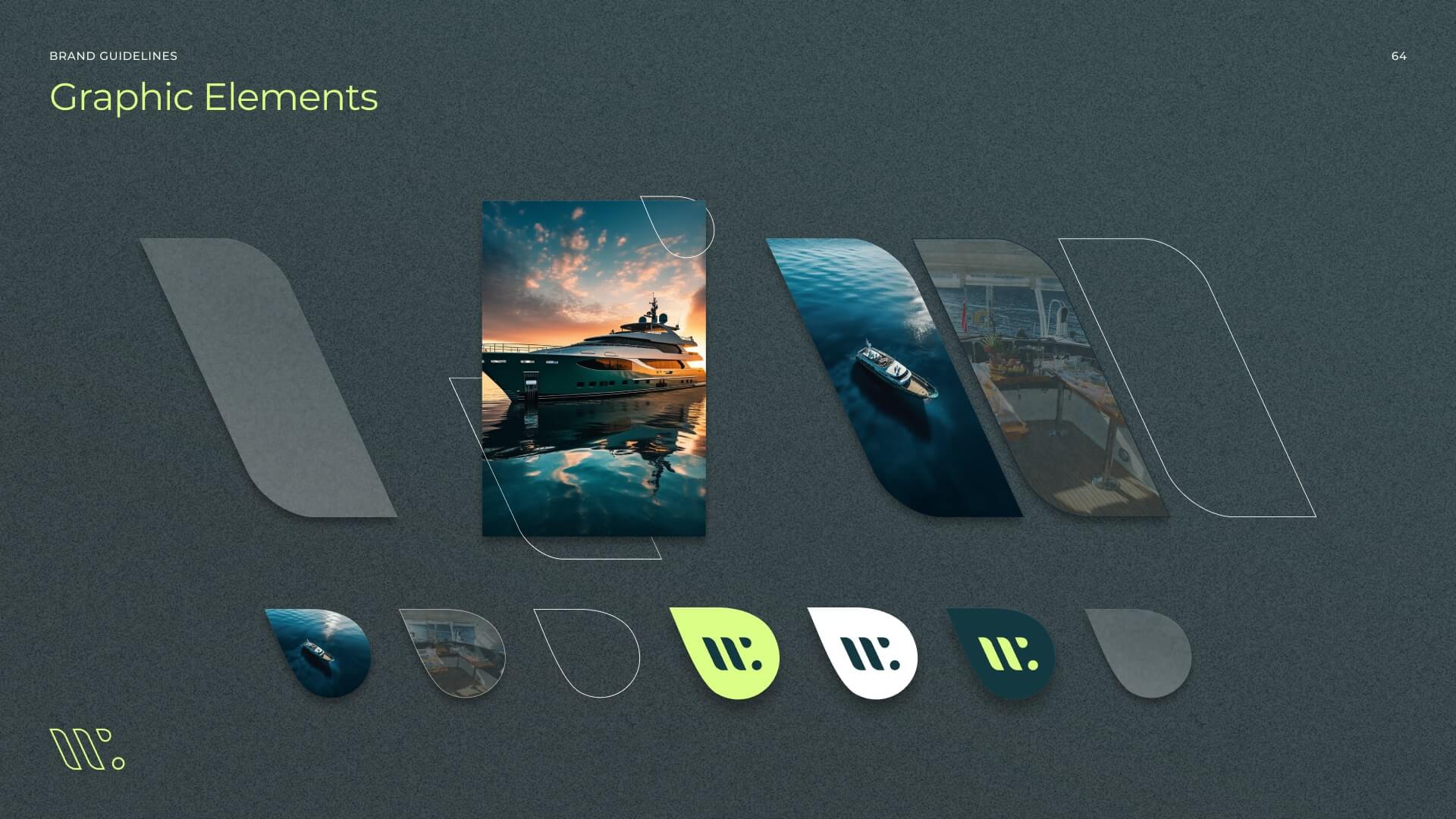
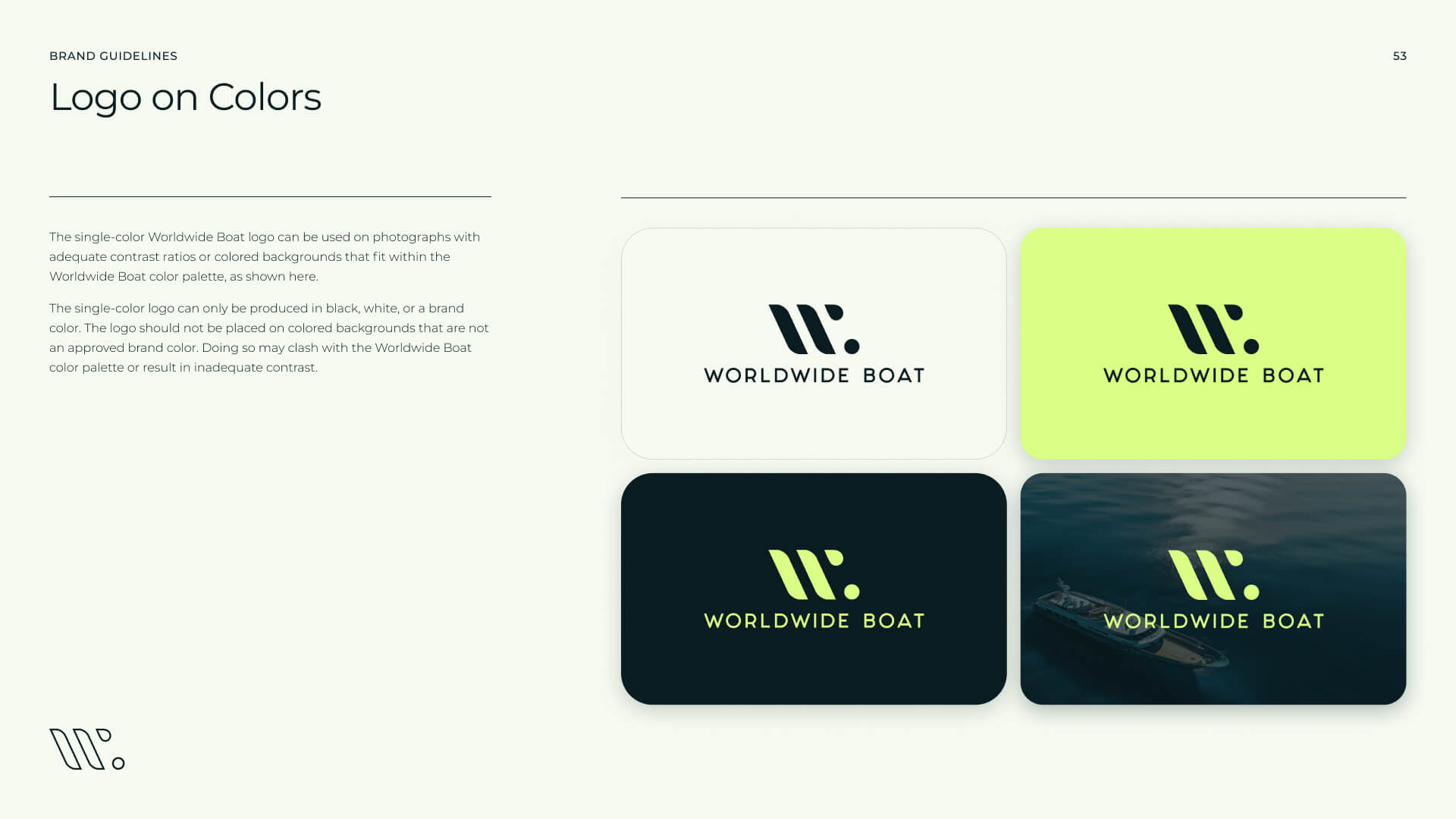
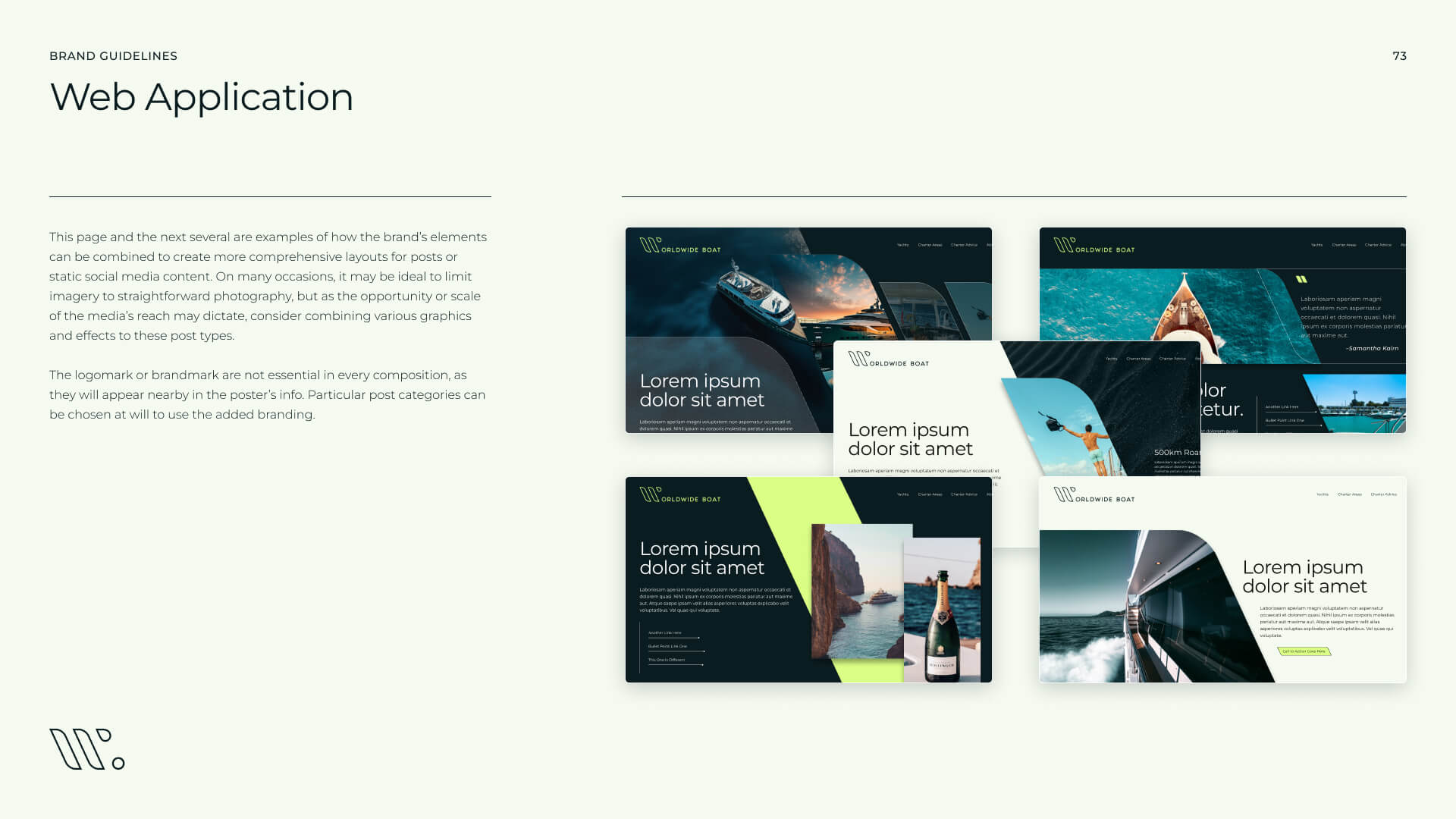
      • Ocean-Inspired Aesthetic: Deep sea blues and tropical greens were paired with subtle sand tones to evoke the beauty of the ocean and the luxury of chartered travel.


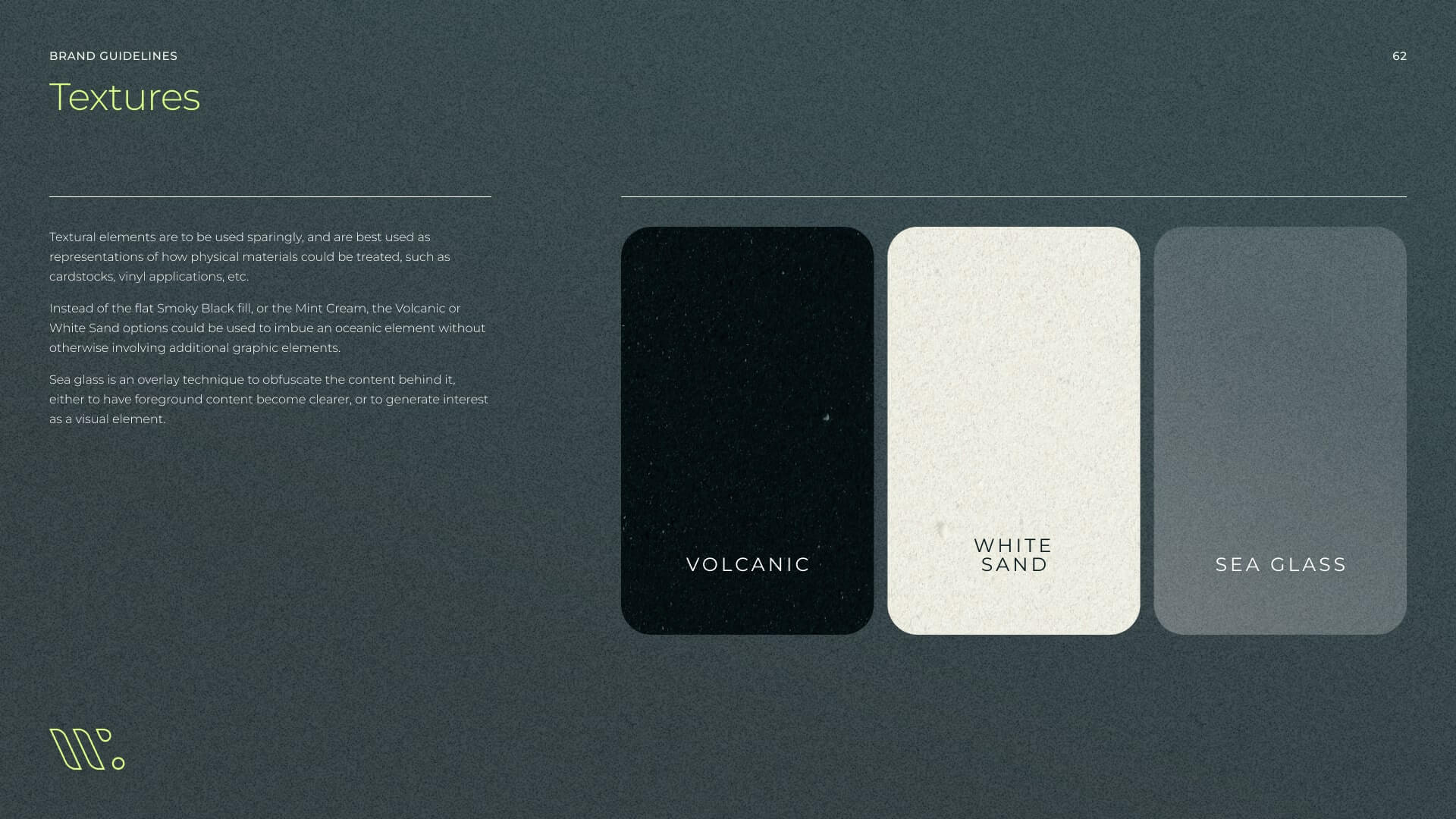
      • Textures and Treatments: Gradients mimicking water ripples, arches inspired by nautical flags, and glass-like finishes captured the serene and timeless nature of life at sea.


    • Iconic Elements: Rounded motifs symbolized continuity and unity, while treatments like arches and layered textures added depth and sophistication.
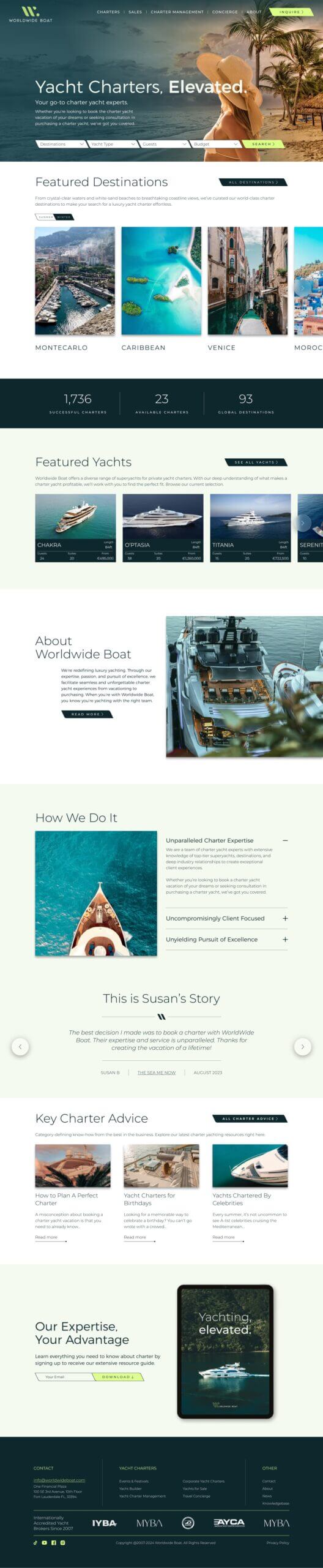
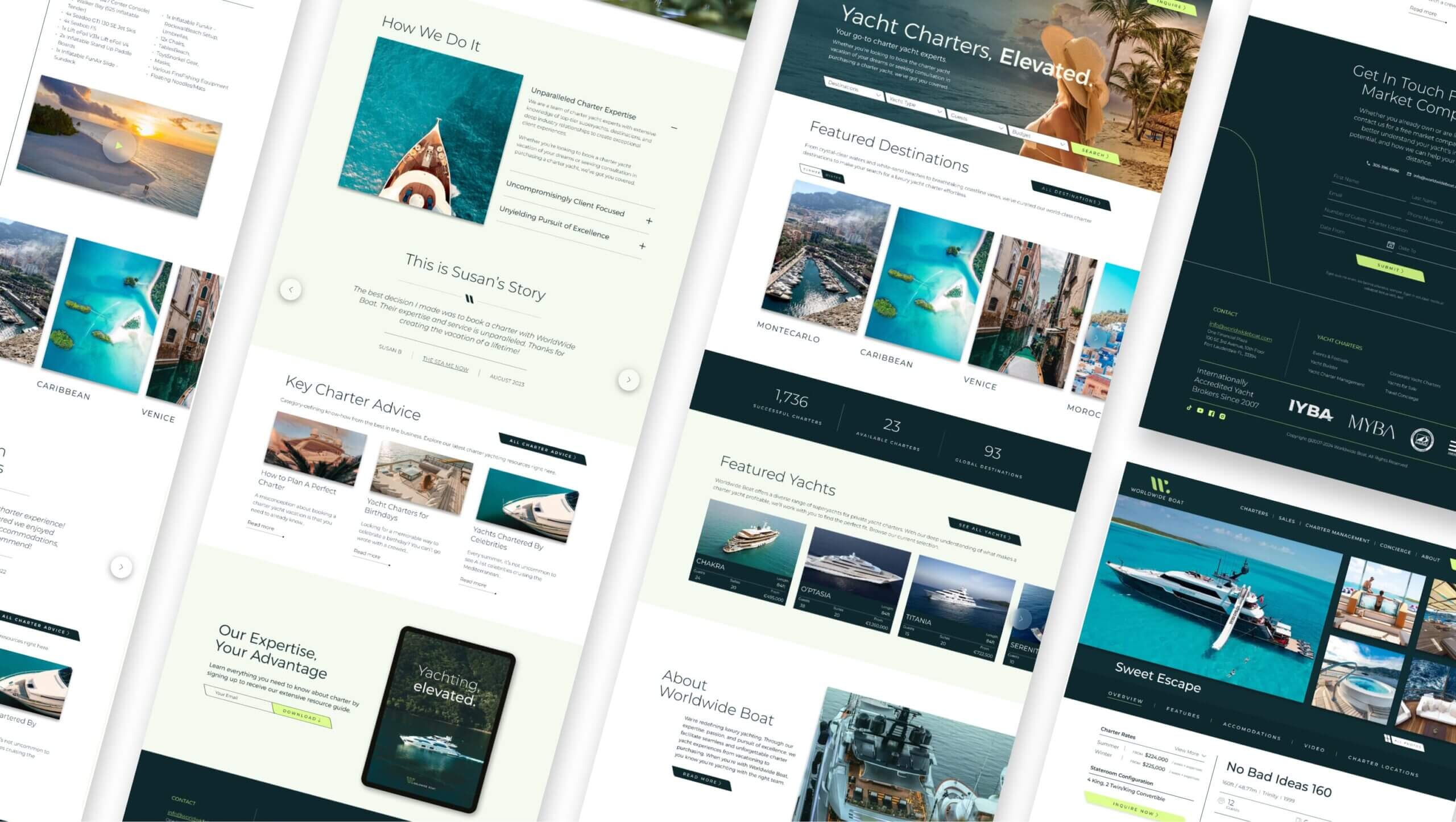
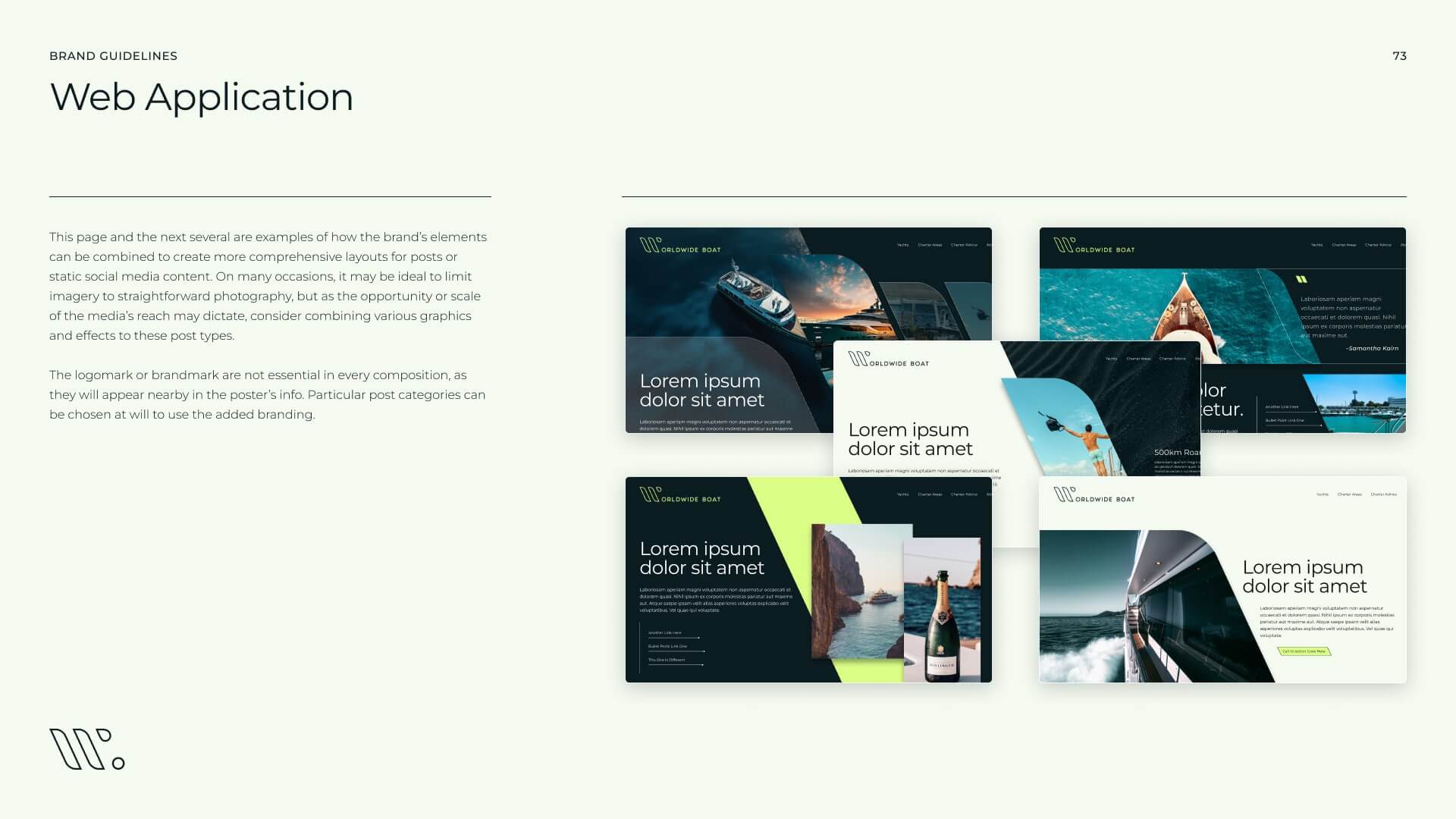
Homepage design for a luxury charter yacht company website.

Anchoring the Future: Messaging and Content

Worldwide Boat’s story was distilled into a compelling narrative, designed to differentiate them in the luxury travel market:

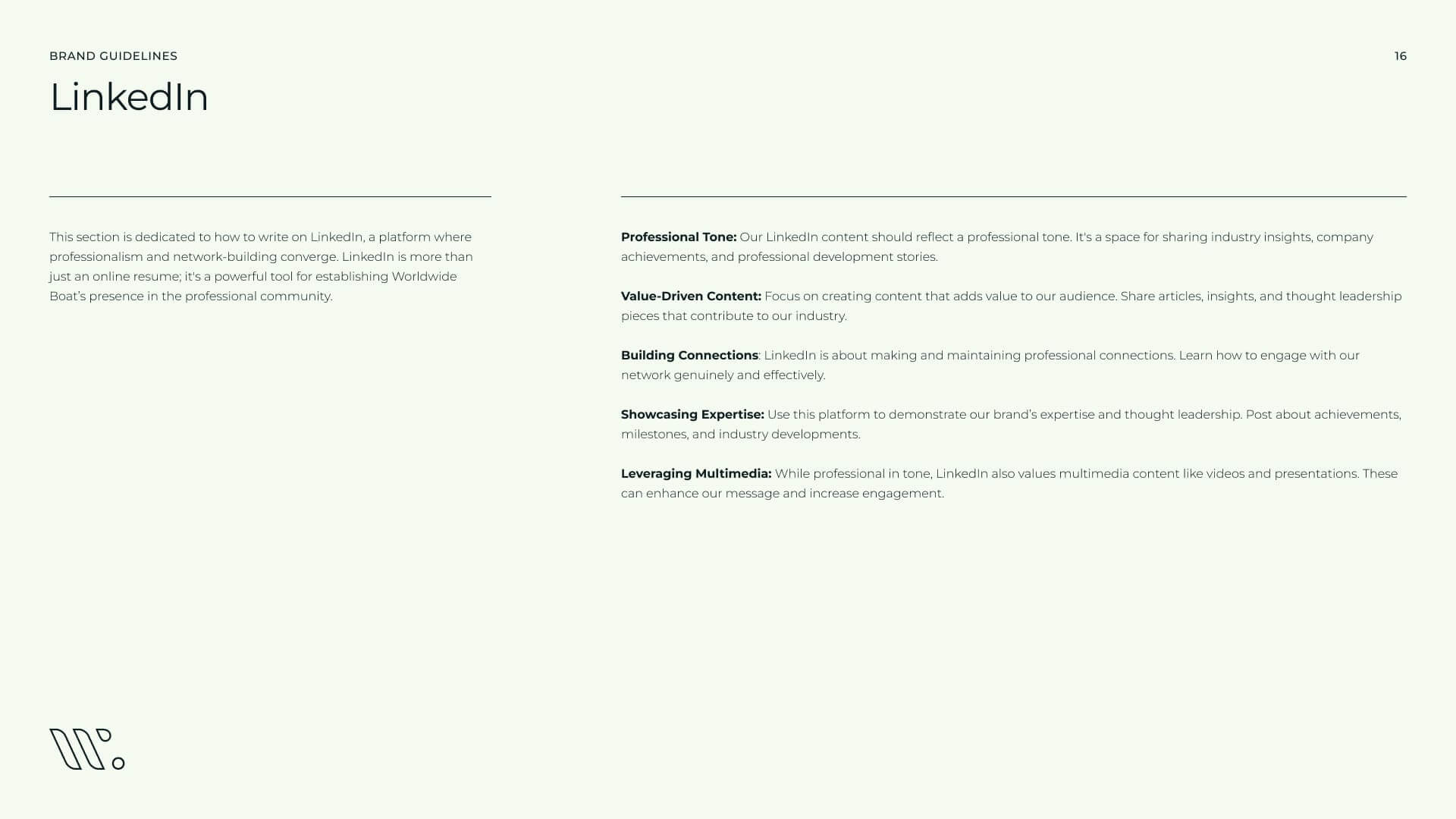
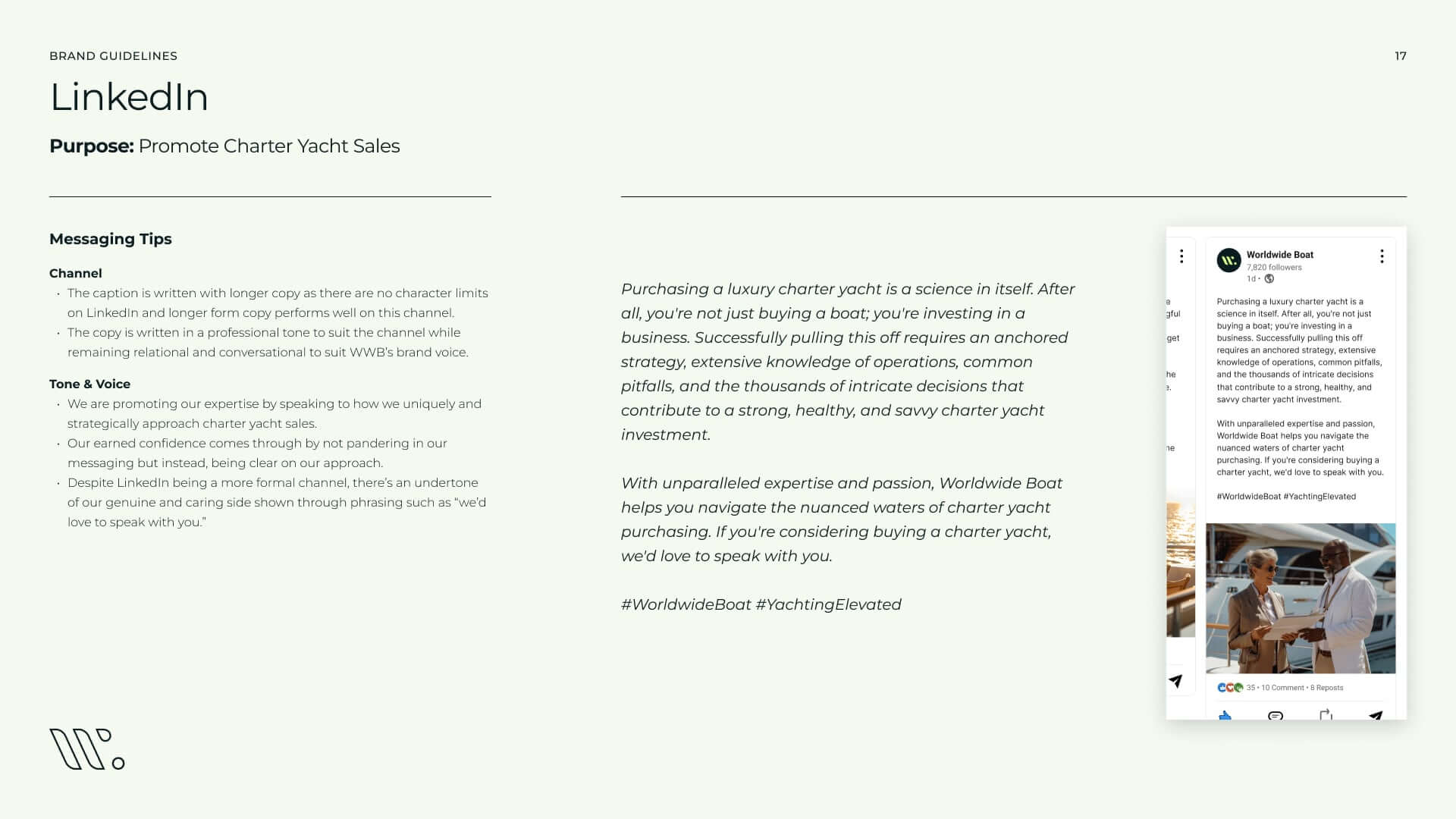
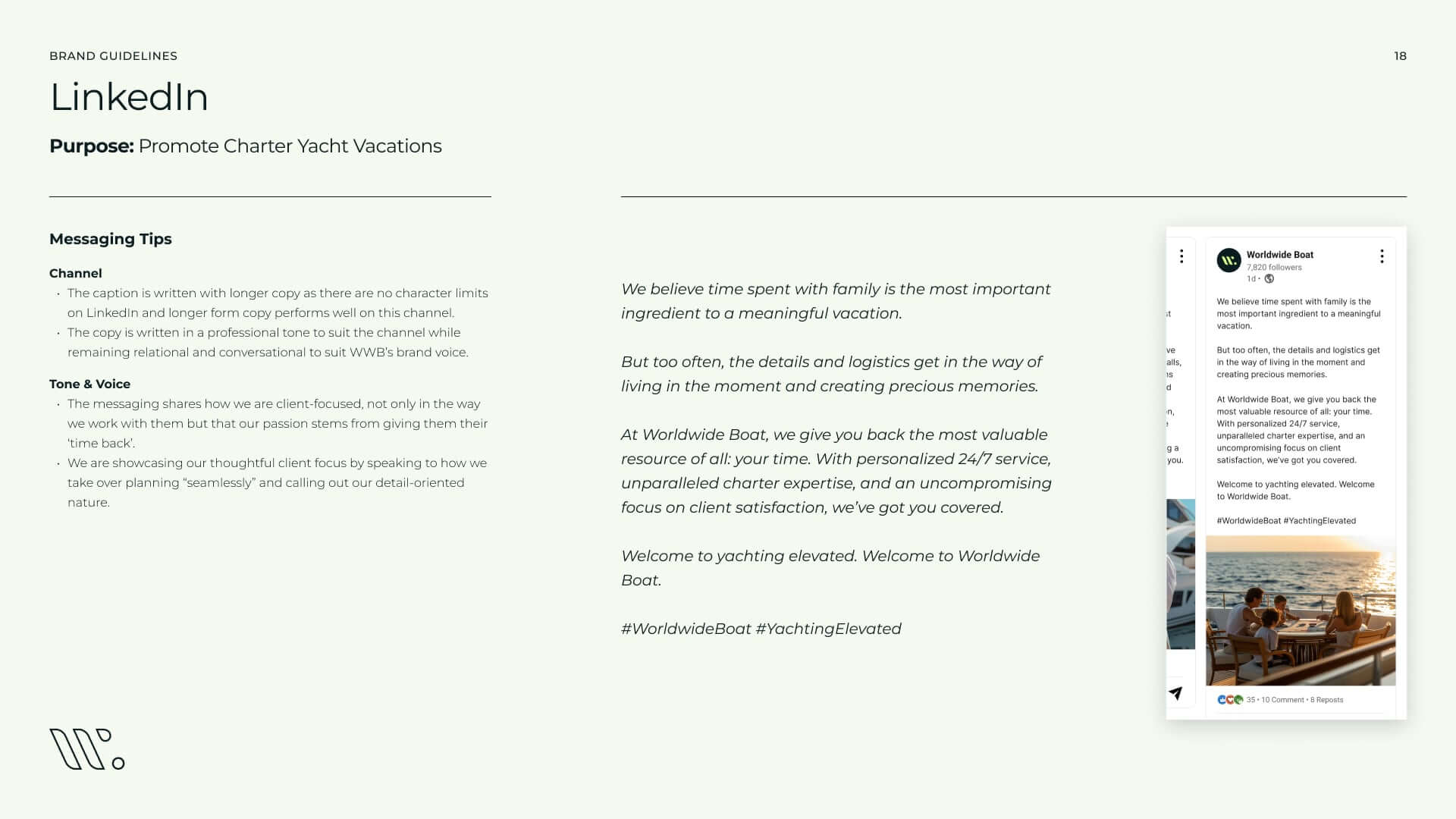
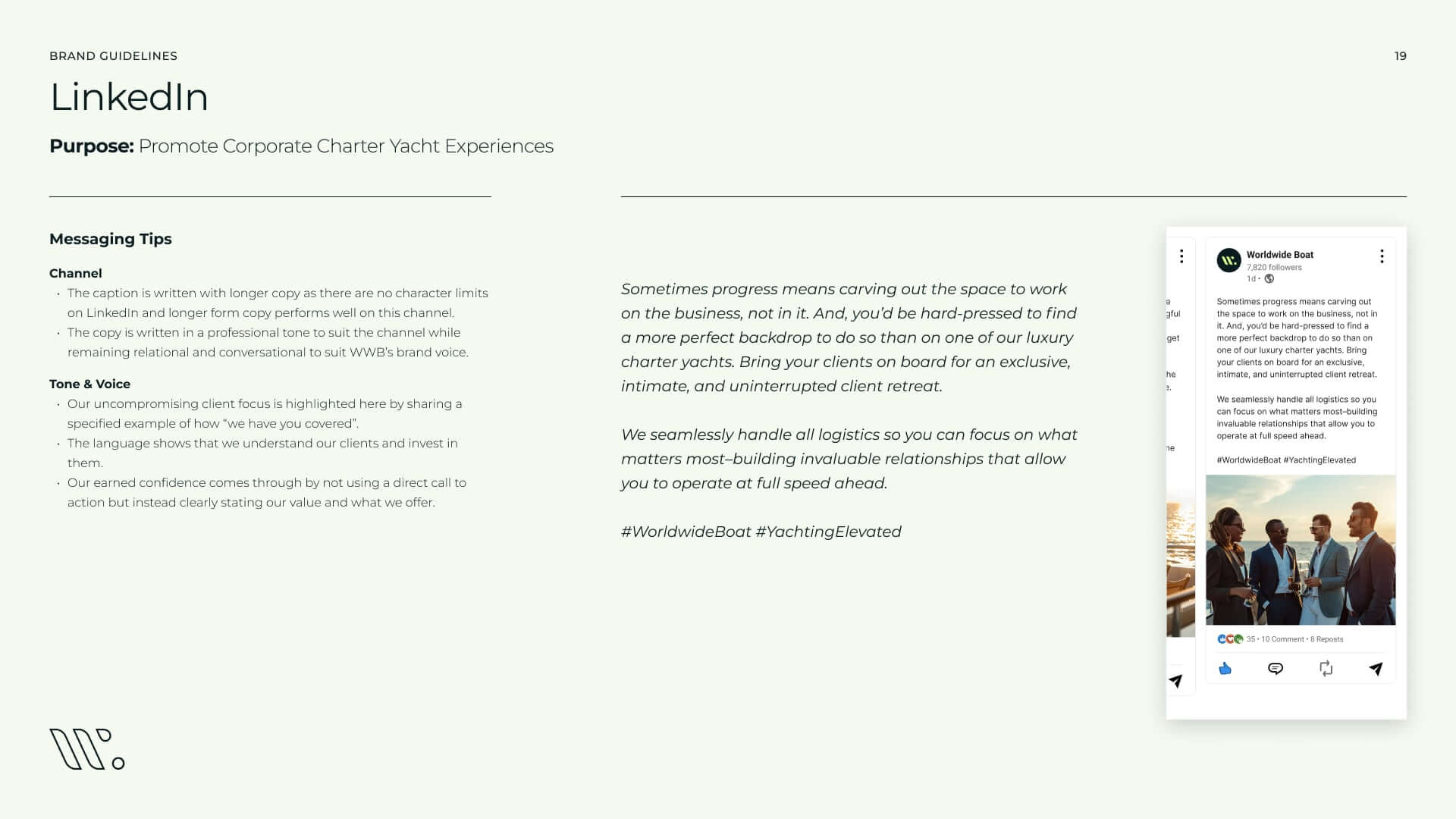
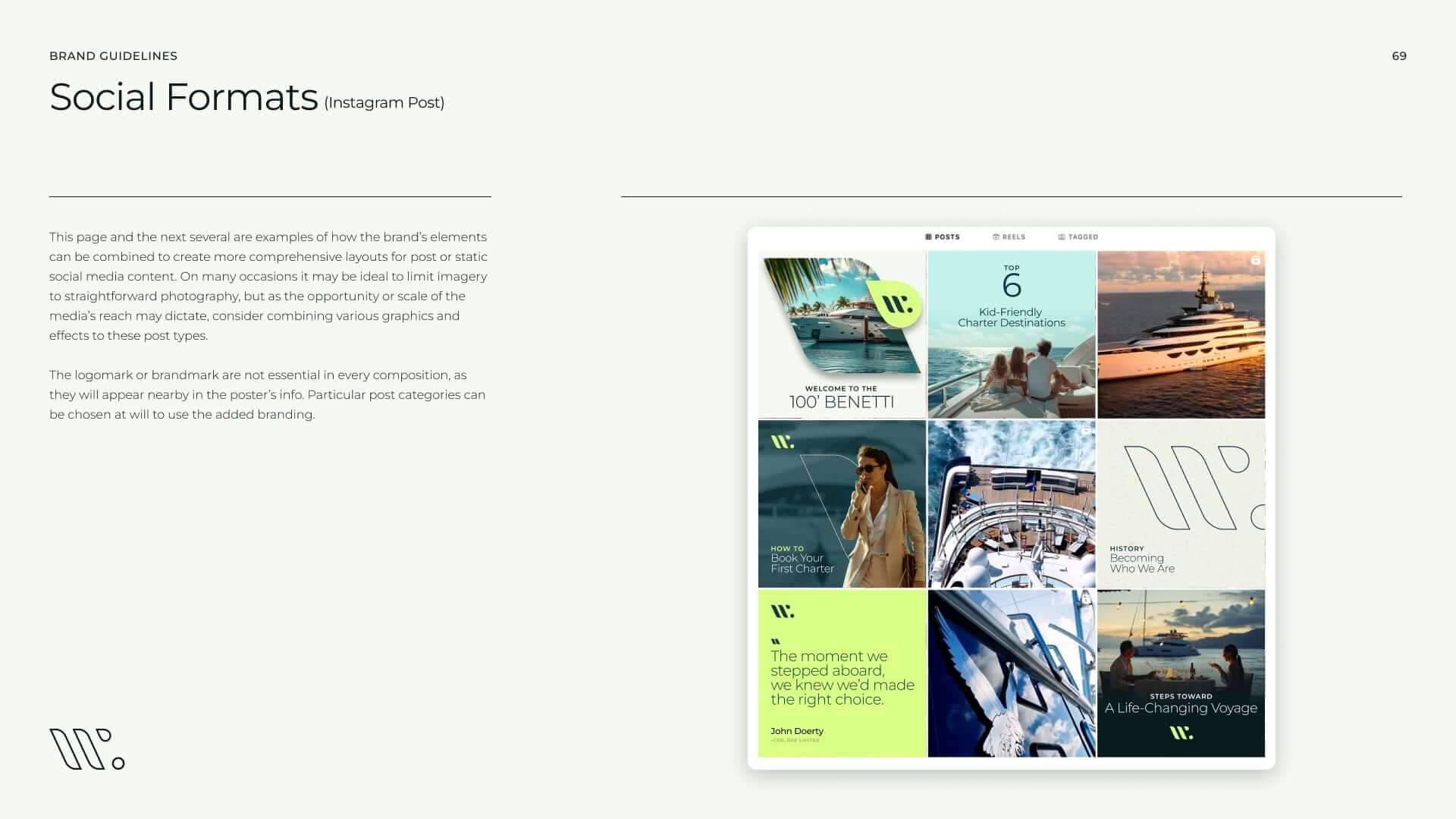
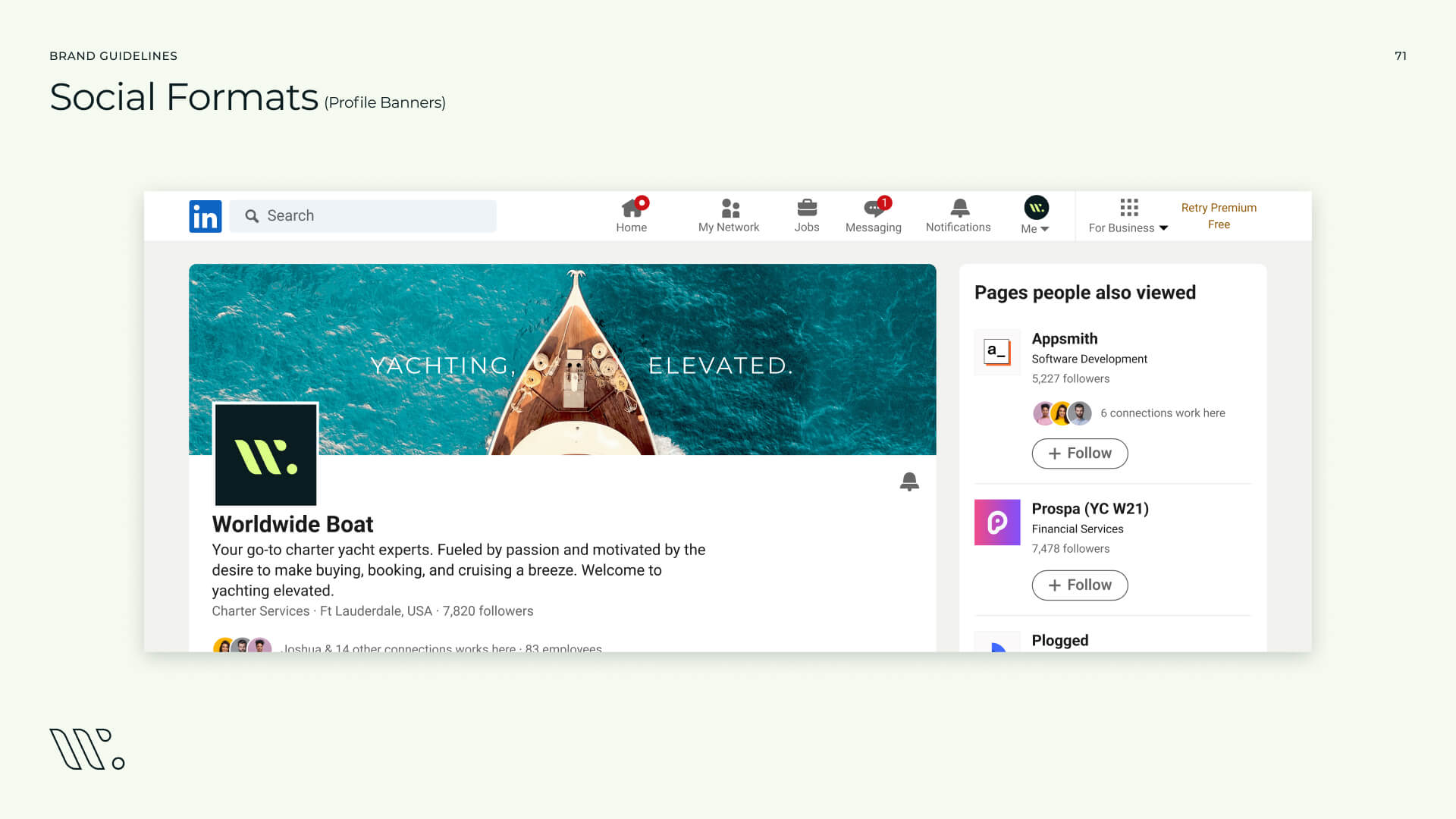
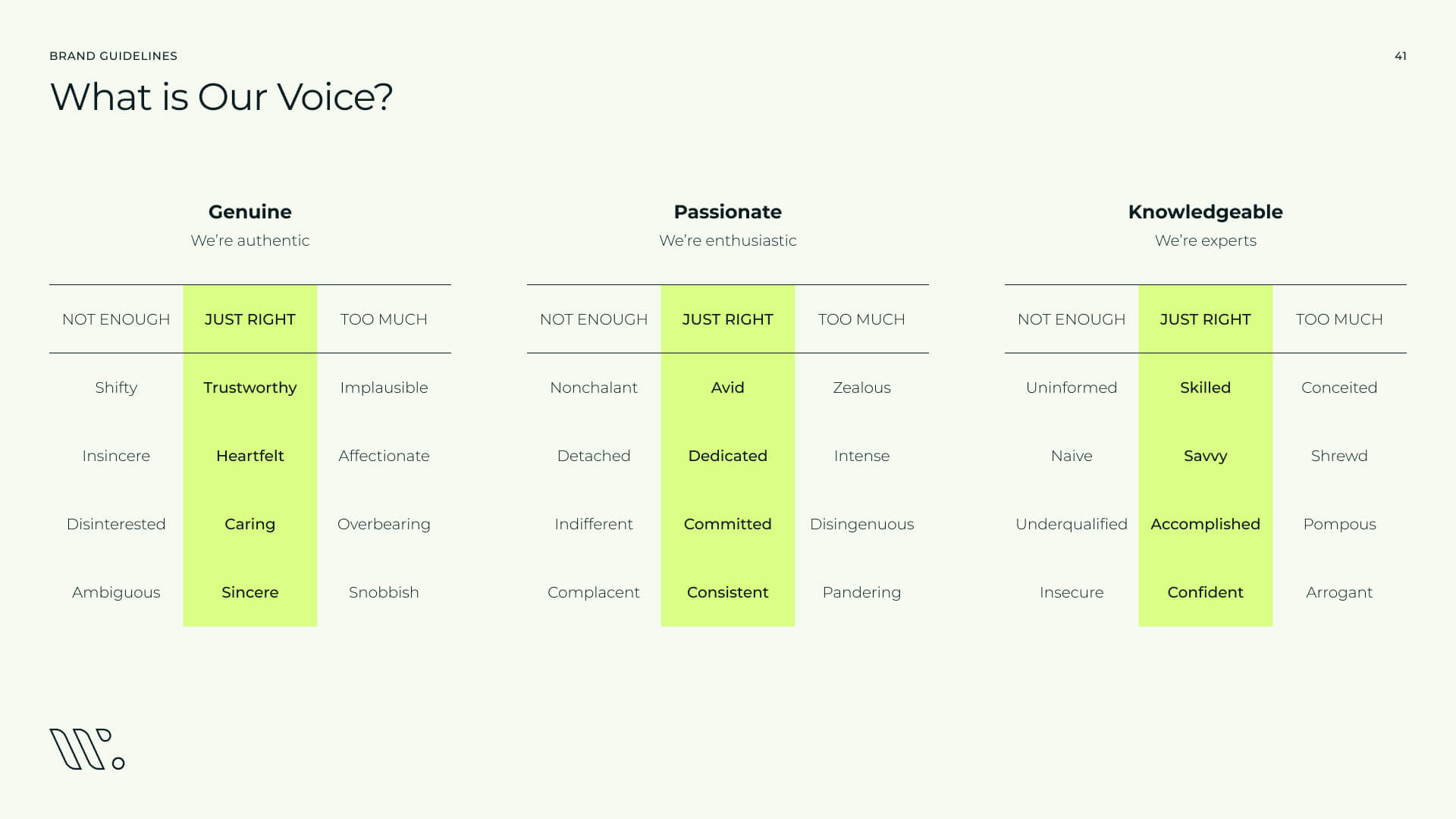
      • Channel-Specific Messaging: Tailored notes ensured their brand voice resonated across platforms, from Instagram to LinkedIn, without losing cohesion.
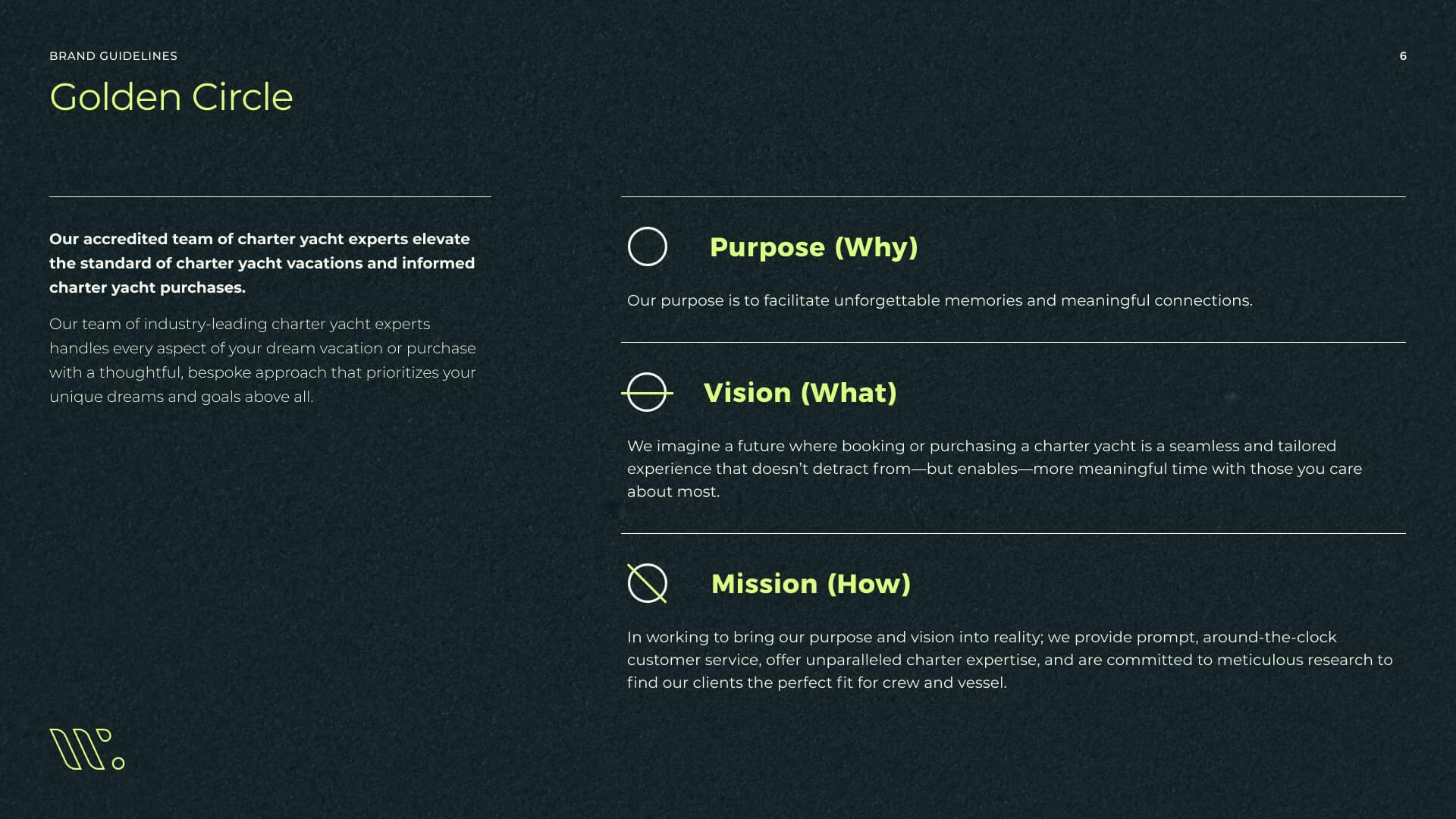
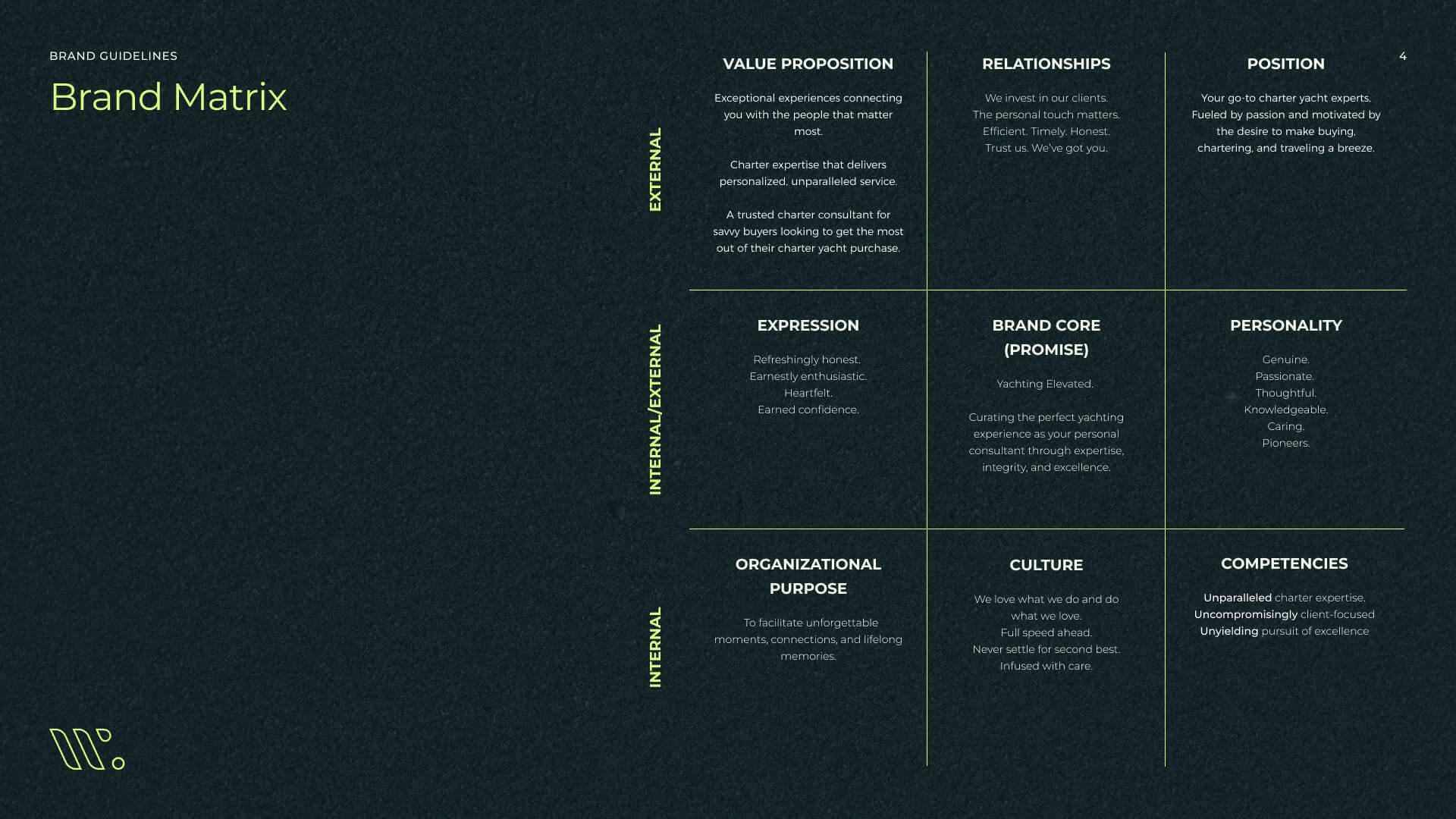
      • Strategic Positioning: Messaging centered on their role as a concierge, not just a charter service, highlighting their ability to craft end-to-end experiences for discerning travelers.
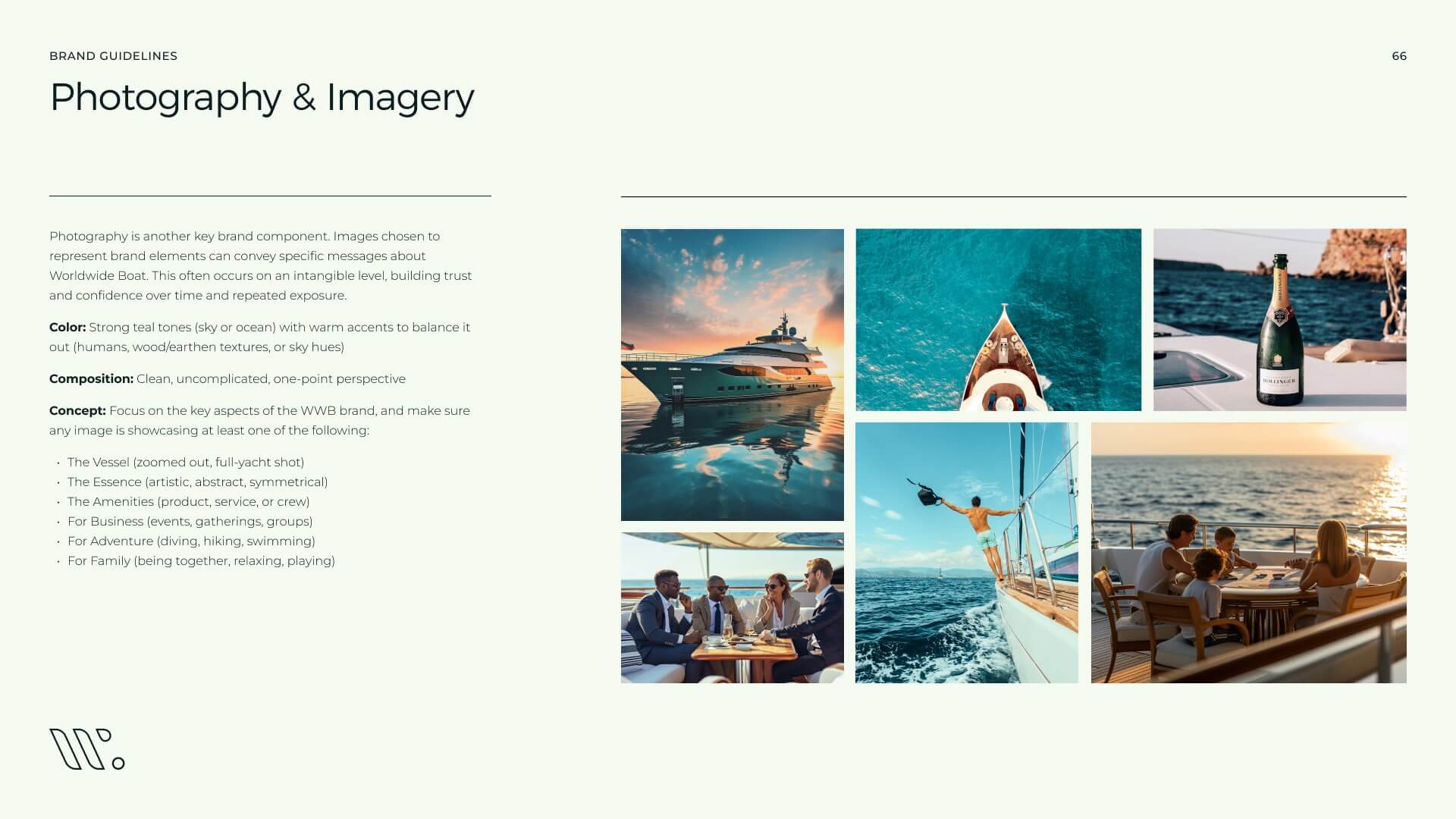
      • AI Innovation: We developed branded AI image-generation prompts to ensure consistency in visual storytelling for their future content needs.
Luxury yacht charter company website design case study overview.
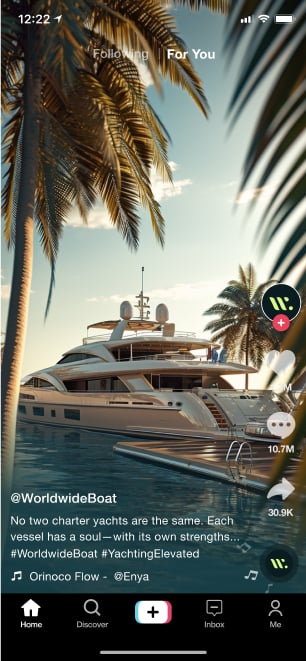
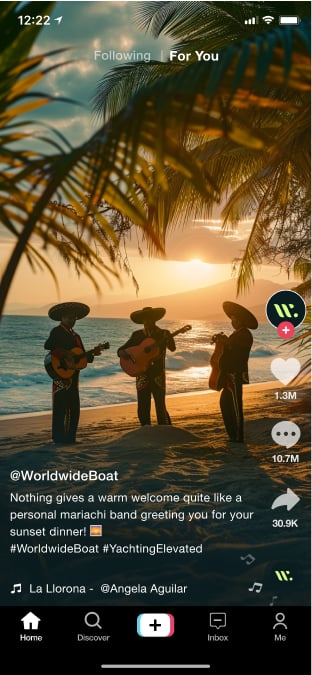
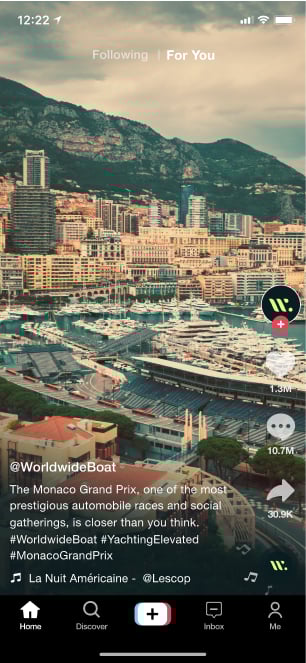
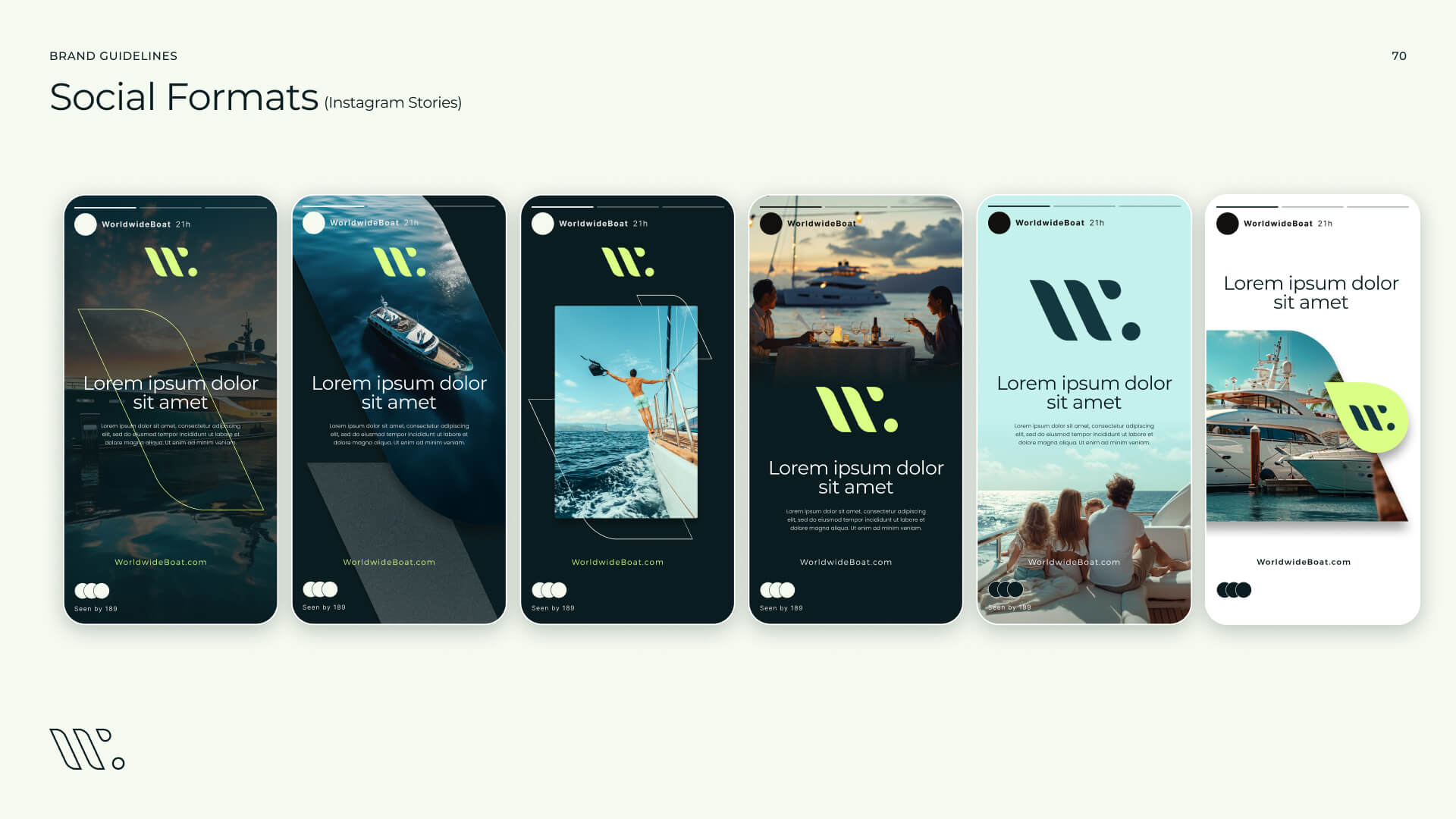
TikTok social media content for a luxury yacht charter company.

Luxury That Resonates: Beyond the Website

Our work didn’t stop at digital. We extended the brand’s identity into physical and digital touchpoints, ensuring every interaction with Worldwide Boat was infused with elegance and cohesion:

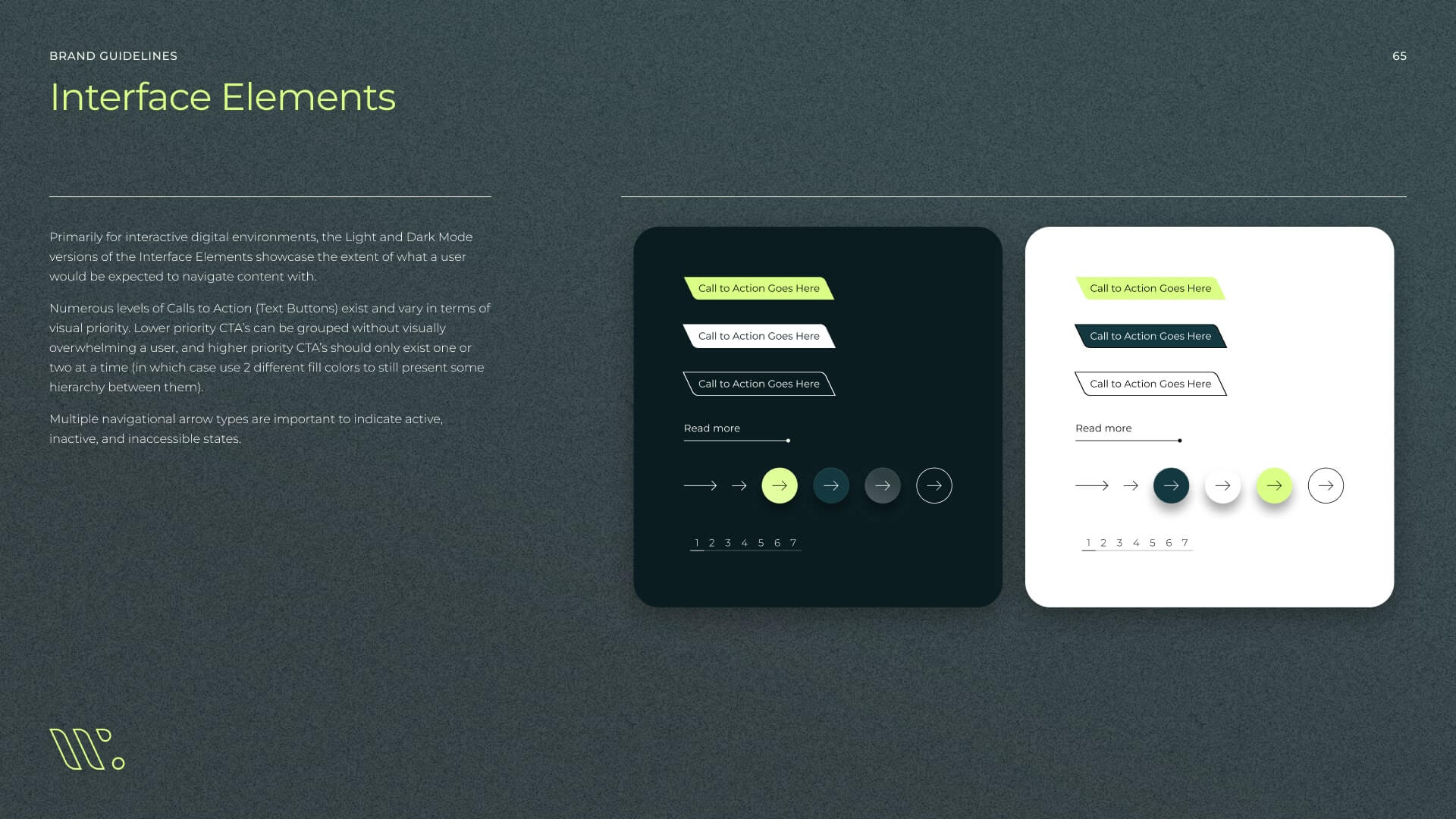
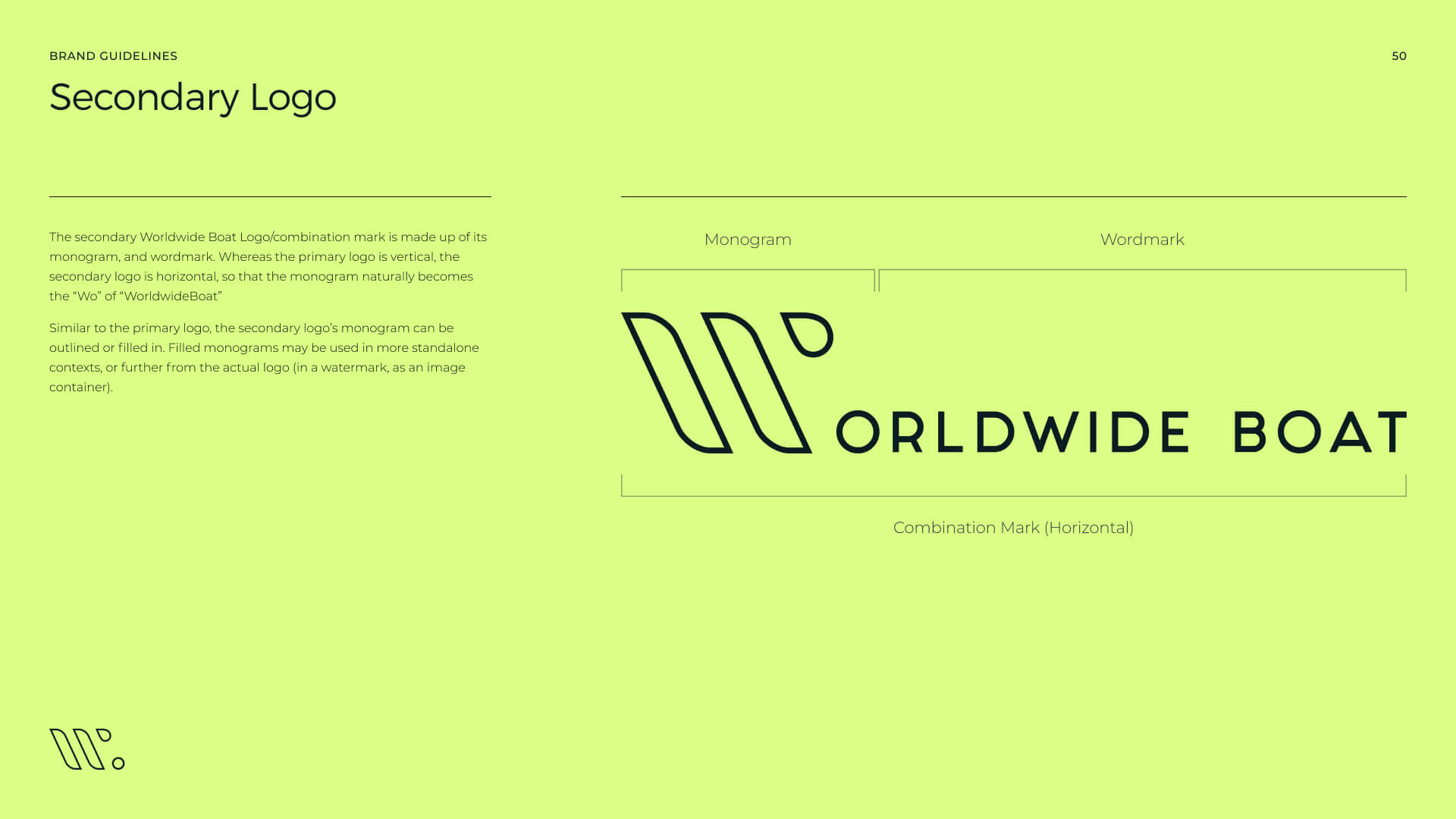
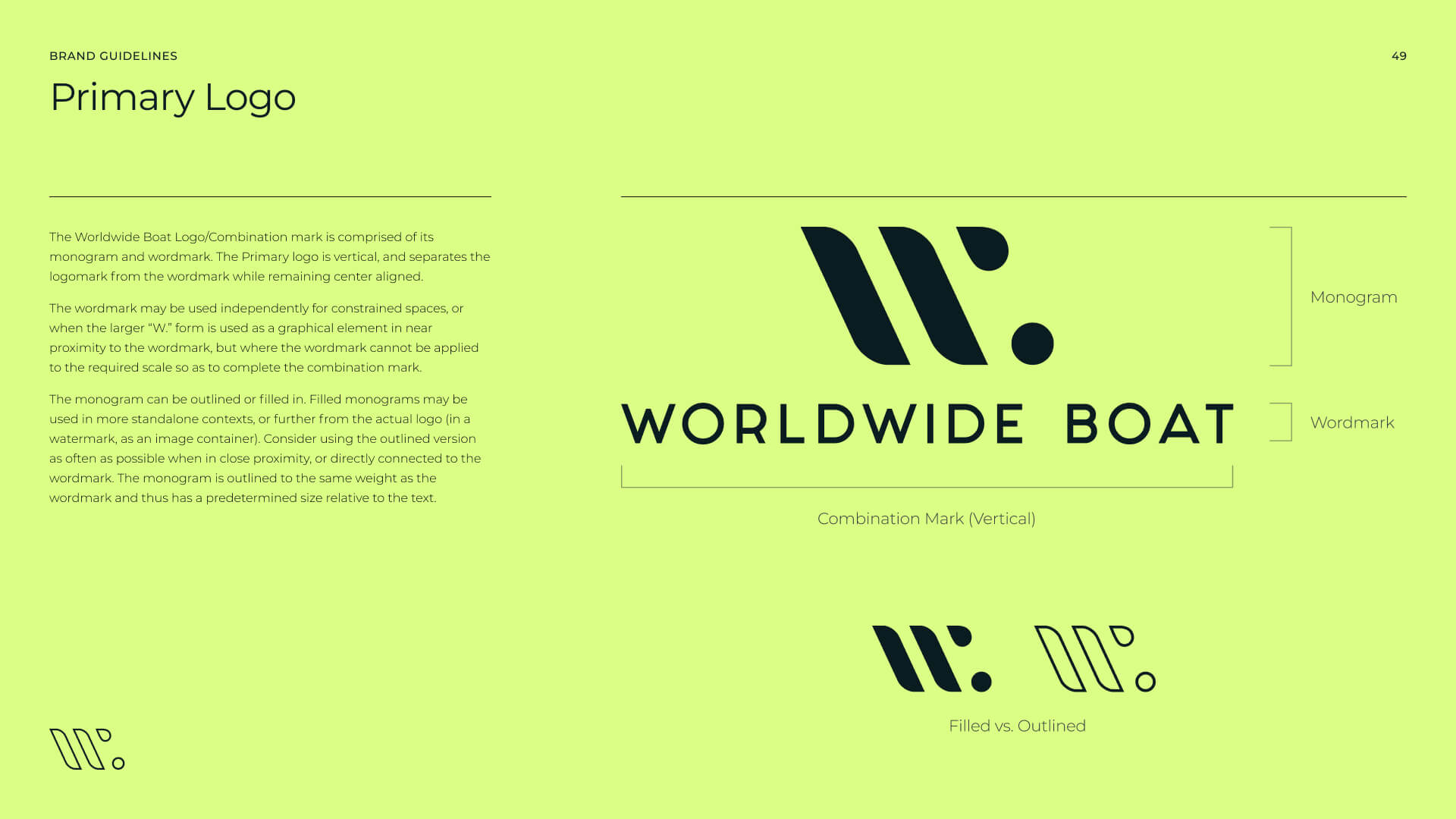
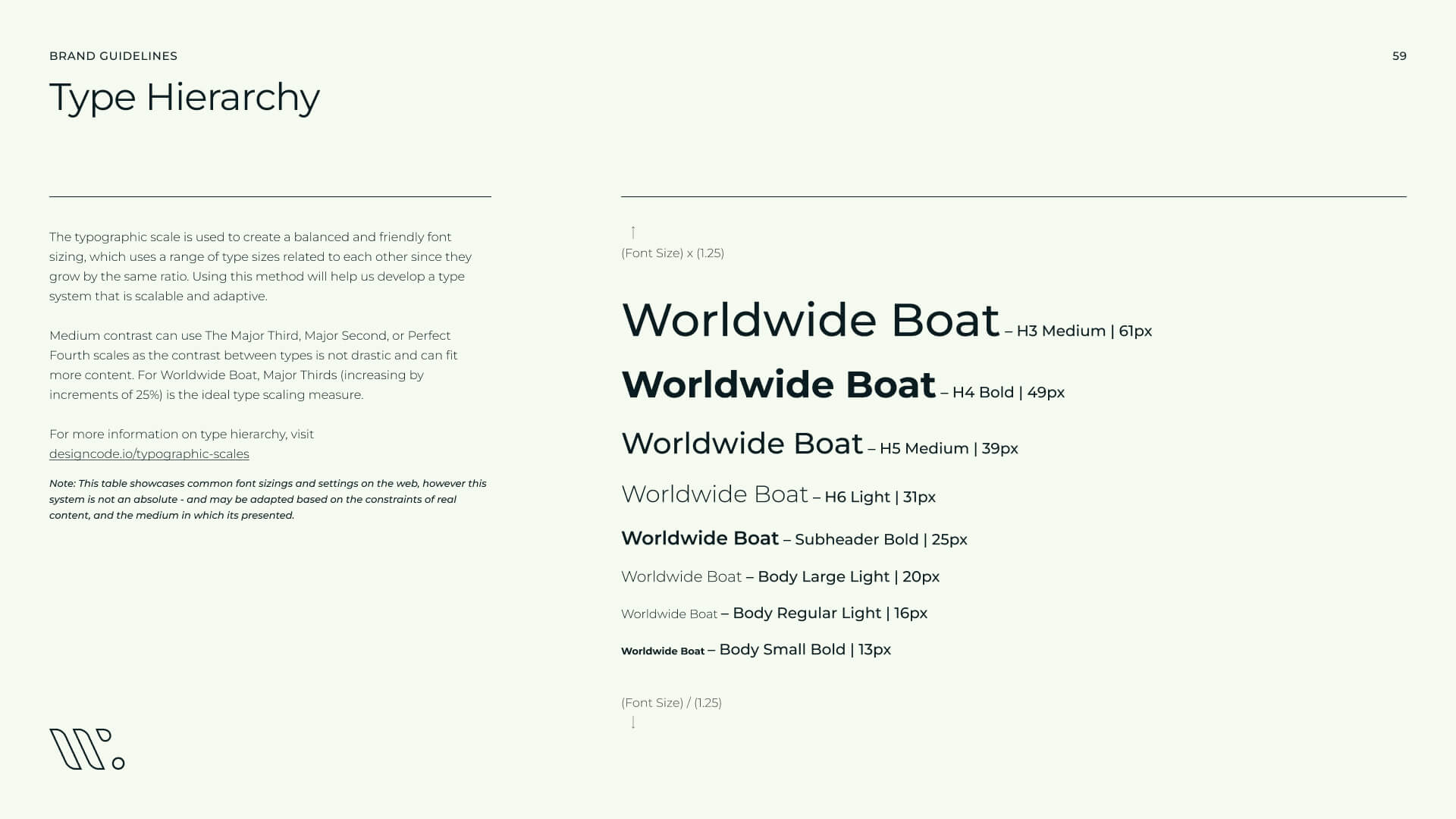
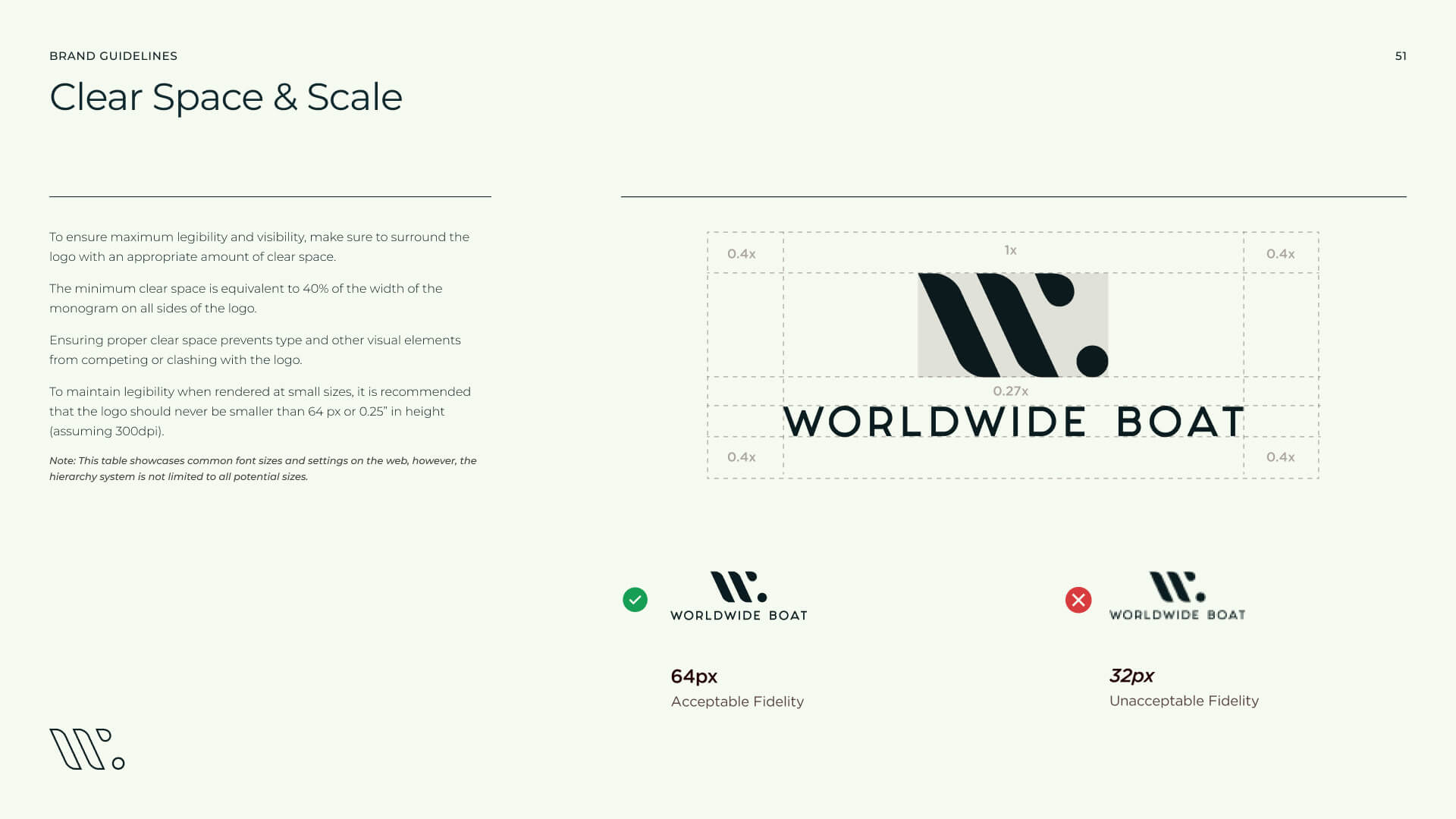
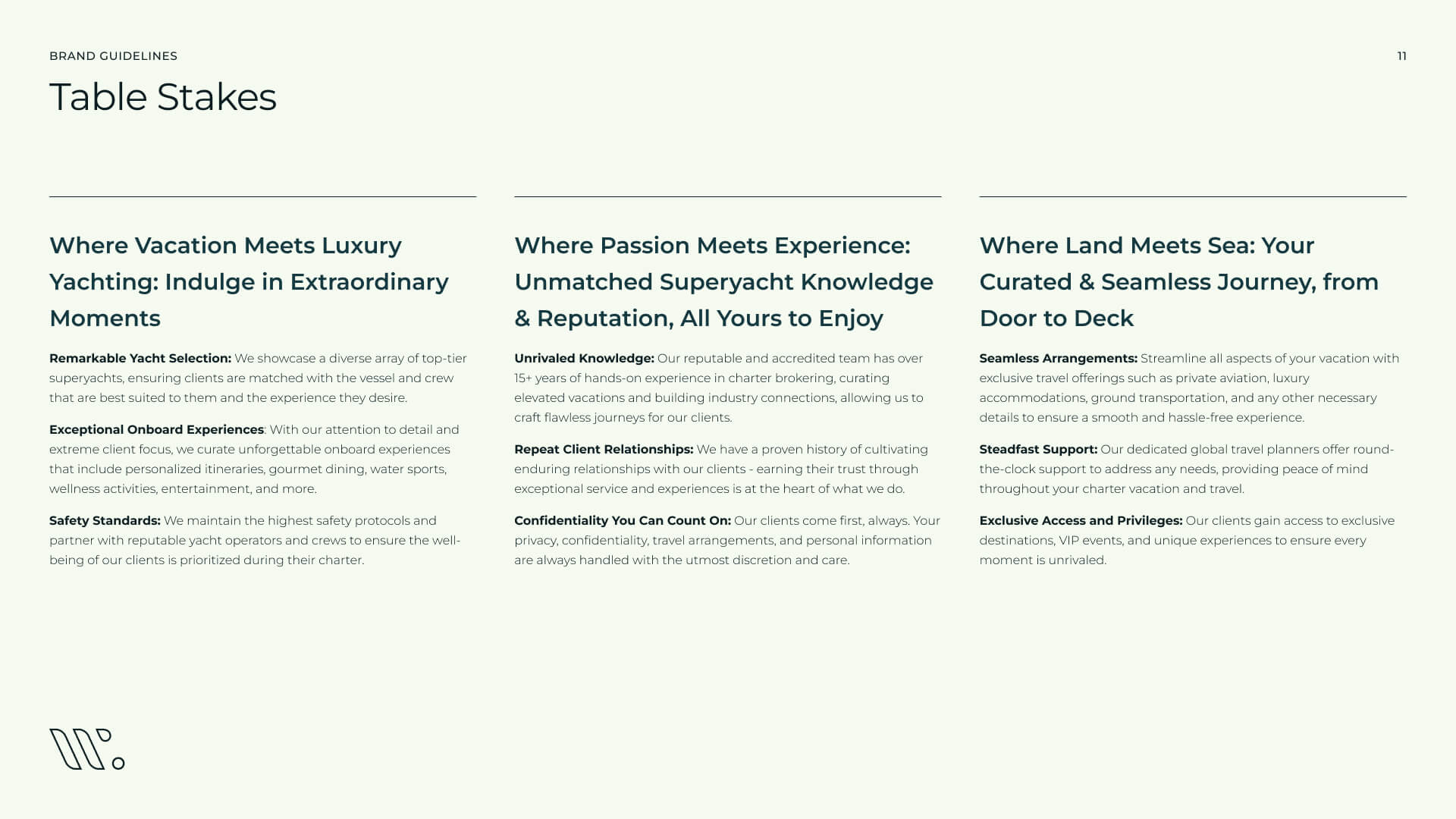
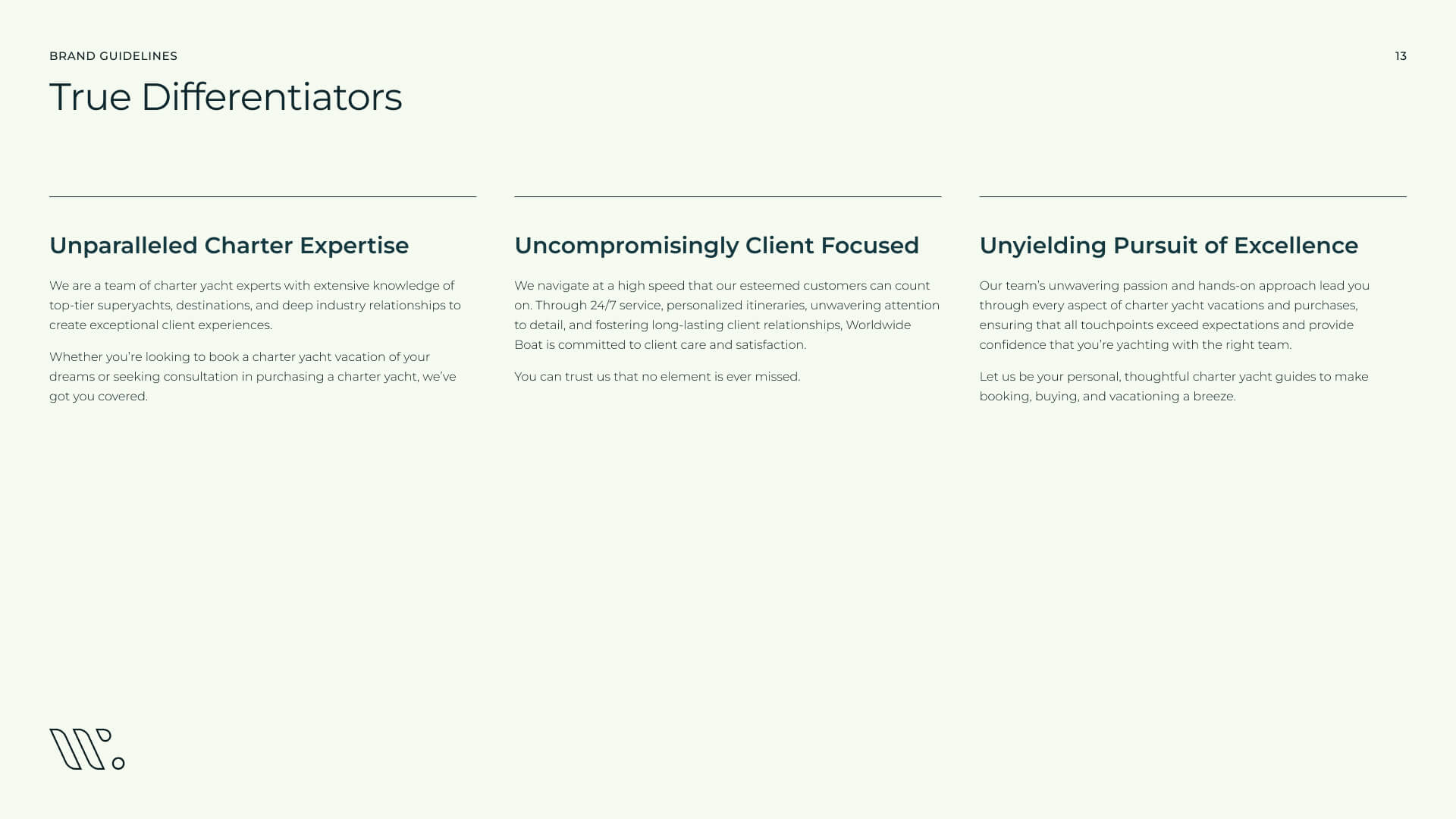
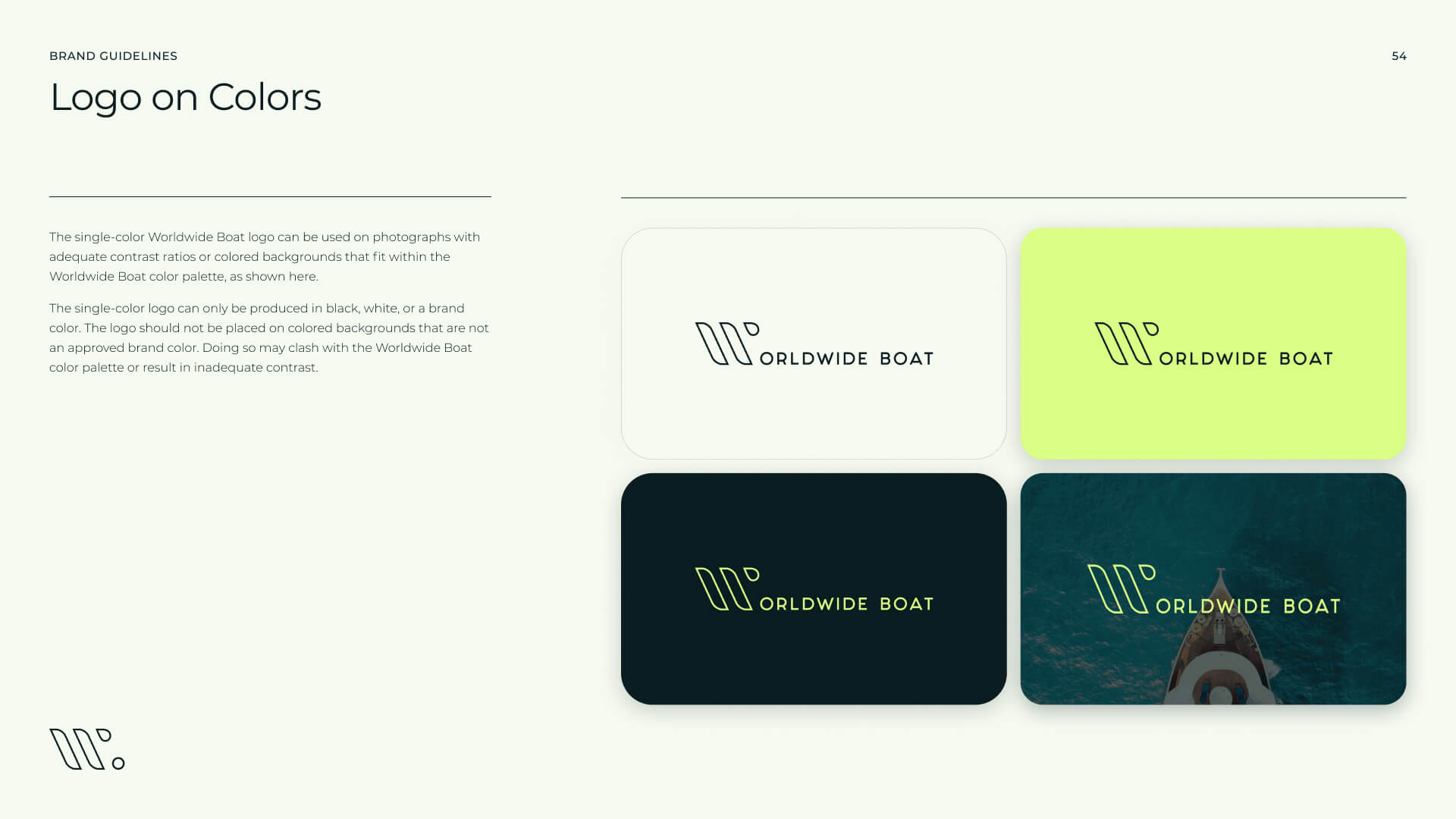
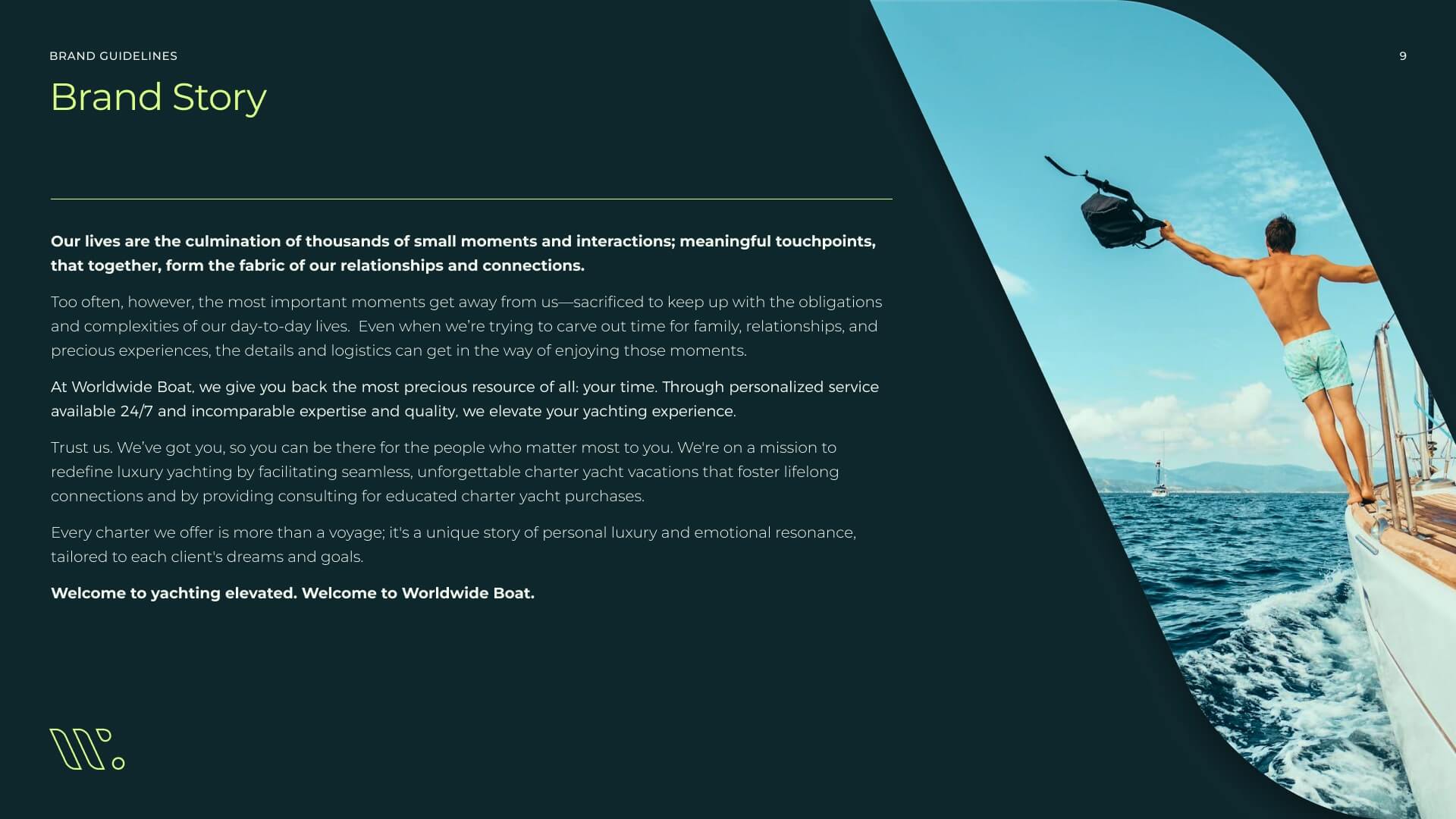
    • A Refined Brand Guide: Codified the company’s visual and messaging guidelines to maintain consistency across all touchpoints.


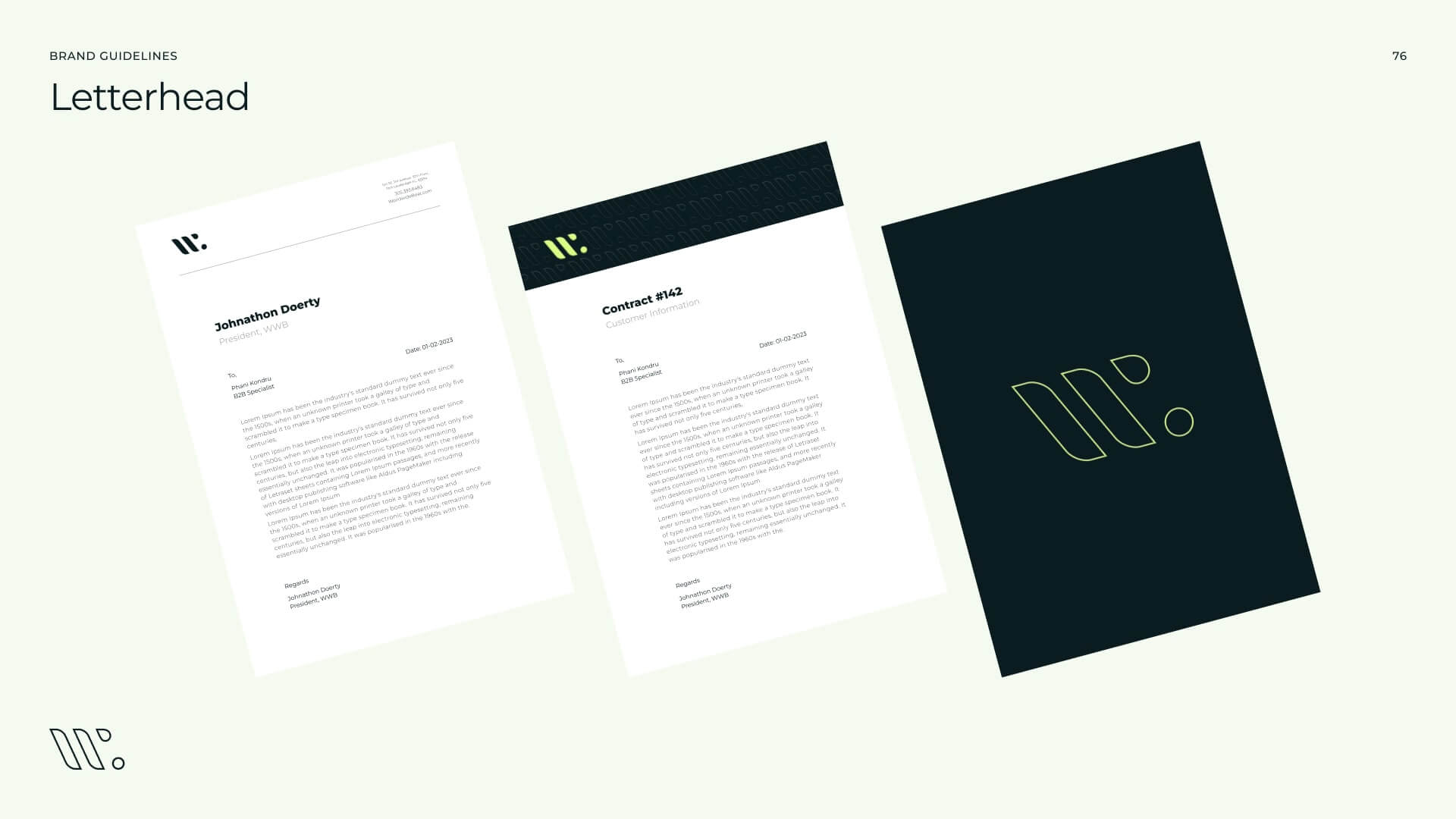
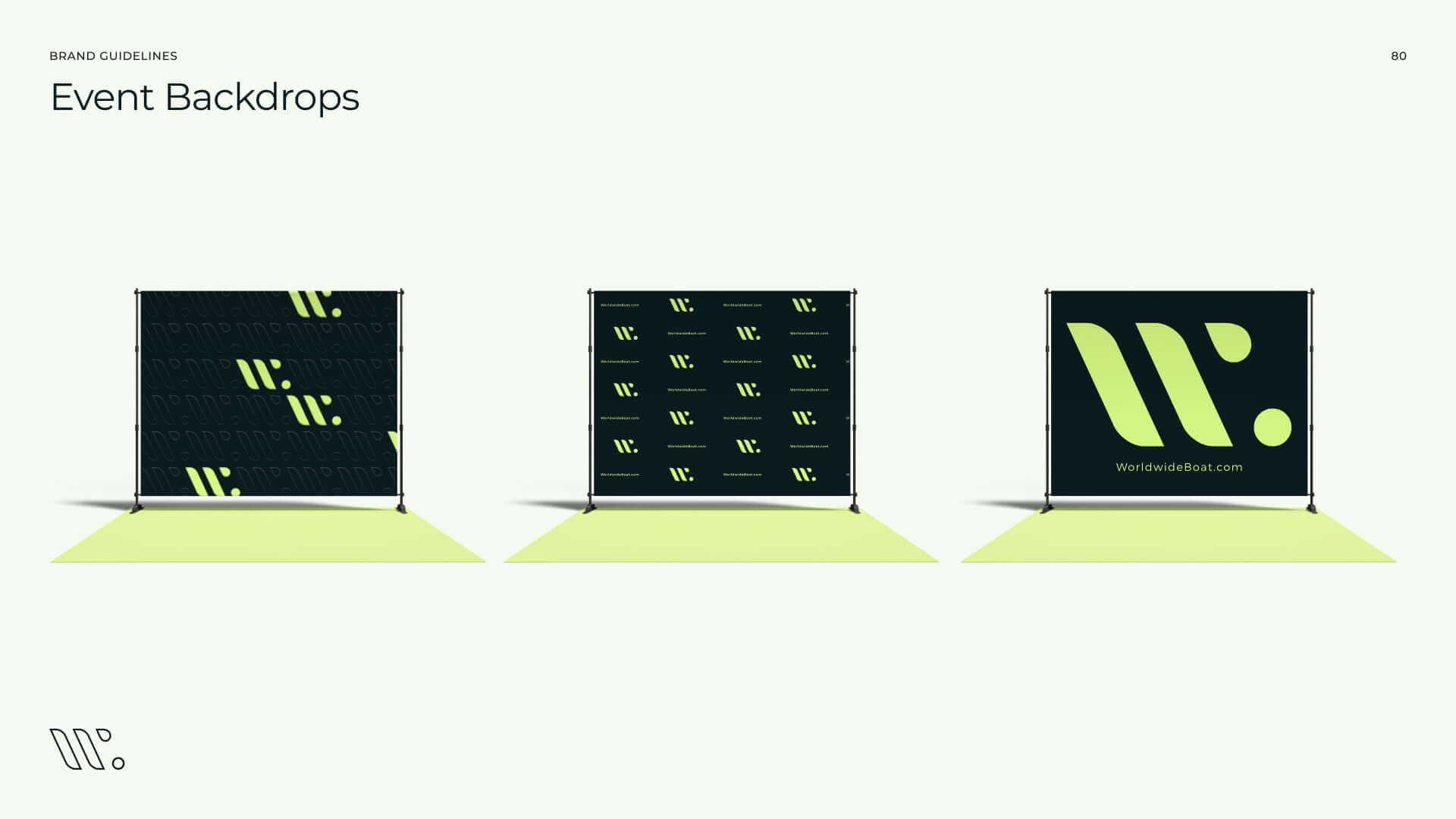
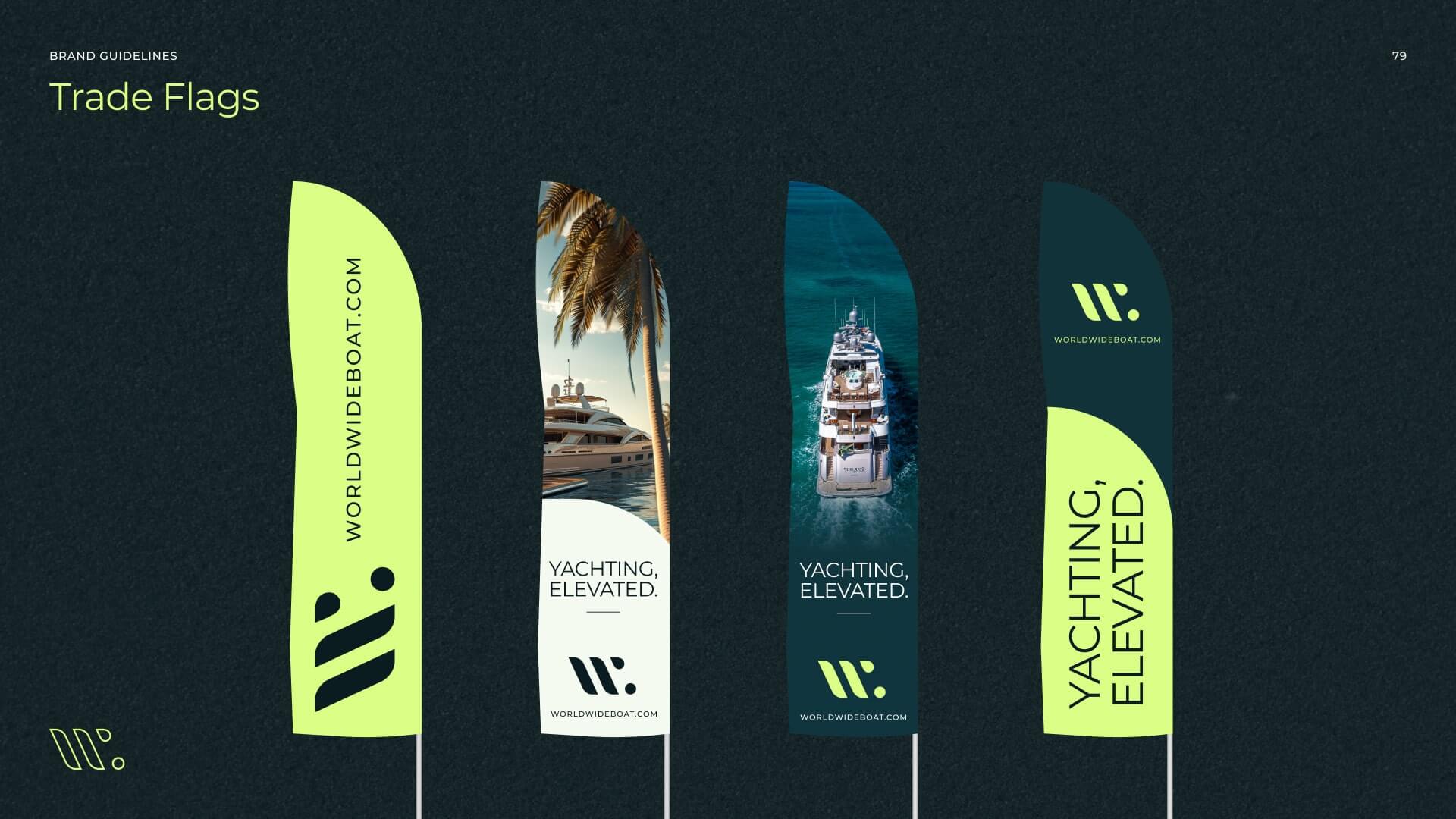
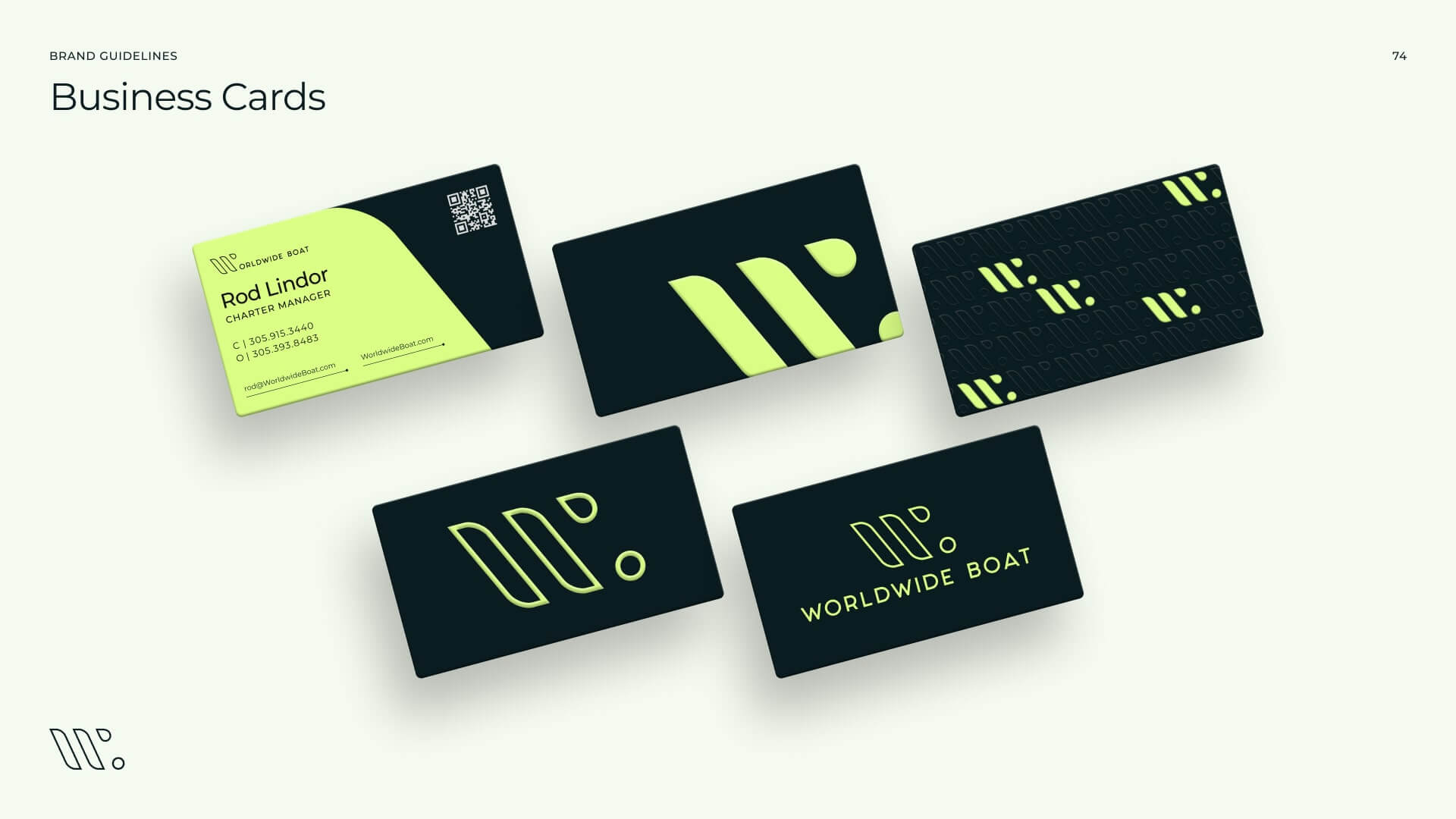
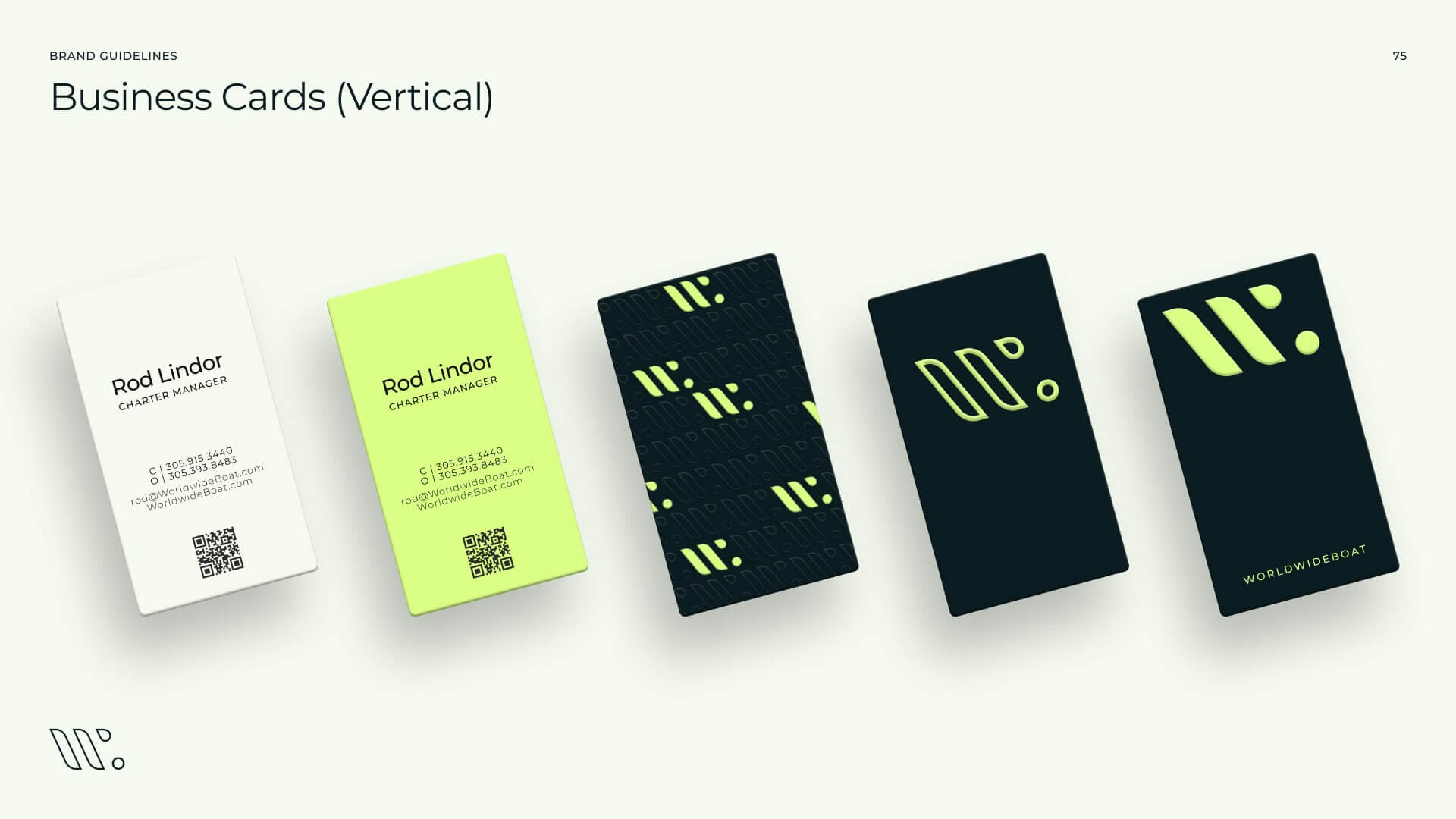
  • Sales and Marketing Collateral: Business cards, branded sales templates, and a bespoke sales sheet all communicated luxury and professionalism in line with the company’s ethos.

The Horizon Ahead

Worldwide Boat now possesses the tools and positioning to lead in the luxury yacht charter market, standing apart through their concierge-level care and storytelling-driven approach. Their brand is a reflection of their unique value, ensuring every client interaction is memorable and luxurious.

Frequently Asked Questions

Common questions about brand strategy projects, answered from experience.

How do you ensure a brand strategy reflects the organization's actual audiences, not just its internal assumptions about them?

Through external research designed to surface the decision criteria, trust signals, and information needs of audiences who don’t yet have a relationship with the organization, not just surveys of existing customers.

Internal assumptions are almost always partially wrong, especially about the audiences the organization is trying to reach in the next five years. We design research to understand how prospective audiences actually make decisions, what language they use, and what trust signals matter to them, then build the brand strategy around those findings rather than the organization’s self-image.

The most common gap we encounter is organizations that understand their historical audience well but have limited insight into adjacent or aspirational segments. Closing that gap is what makes a brand strategy forward-looking rather than retrospective. We’ve applied this audience-first approach across organizations like Kelowna Dental Centre, Worldwide Boat, and Evergreen MD Aesthetics.

How do you ensure the brand doesn't erode once it leaves the strategy document?

By designing for durability from the start, not treating it as a final-phase deliverable. Most brand erosion doesn’t happen because people ignore the strategy. It happens because the strategy wasn’t built for how the organization actually operates. The translation layer is what matters: proof banks, message hierarchies, narrative templates, writing guidance, and component-level visual rules that give people what they need to execute consistently without interpretation.

For decentralized organizations, the system also needs to define flex zones explicitly (what adapts, what doesn’t, where to escalate) and be embedded in the tools teams actually use, whether that’s a CMS, a design system, or a set of social templates.

The standard we hold every deliverable to: would this still be recognizably this organization with the logo removed? Can someone who wasn’t in the strategy room pick it up and produce something on-brand without asking for help? We’ve built these durable systems for organizations like Adler University, Meraki Resources, and Community Action Initiative.

How do you define and prioritize audiences, and how does that shape the research and messaging work?

Audience definition happens before research begins, not after. We work with the institution to identify priority segments based on strategic importance: prospective domestic and international students, current students, faculty, professional staff, alumni, donors, employers, and government or policy stakeholders. Each has different motivations and a different relationship with the brand.

Research recruitment is designed to represent these segments meaningfully rather than defaulting to whoever is easiest to reach. External interviews specifically examine how the institution is perceived from outside, what drives choice for prospective students, what sustains loyalty for alumni, what signals credibility to research partners and funders.

In the messaging framework, we develop a message map that establishes core brand pillars, then clarifies how emphasis, tone, and framing shift by audience. The optional audience profiles deliverable can formalize this into a shared institutional reference, practical enough to guide decentralized teams without overcomplicating the framework.

RELATED PROJECTS

VIEW ALL CASE STUDIES