NYU Casa Italiana

NYU’s Casa Italiana and Takt team up to create a modernized brand and website that spark enlightening conversations through the magic of Italian culture.

Bringing Tradition Online: A Digital Evolution for Queen’s Alumni Review
Queen’s University needs no introduction. They are one of the top schools in the country with a reputation that punches well above its weight—locally and internationally. Founded prior to Canadian Confederation, for nearly 200 years Queen’s has produced some of the best and brightest minds in the 21st century.
With a laundry list of notable alumni including the likes of Elon Musk, Gord Downie, Michael Ondaatje, Wendy Creson and many, many, many more, it’s perhaps not surprising that Queen’s quarterly publication, “Queen’s Alumni Review”, has become an institutional pillar since it’s start in 1927 – with a readership exceeding 125,000 people globally.
With a refresh of its physical publication underway, Queen’s asked Takt to help bring its new design to life online in a way that reflects the university’s bold, innovative, and pioneering spirit.
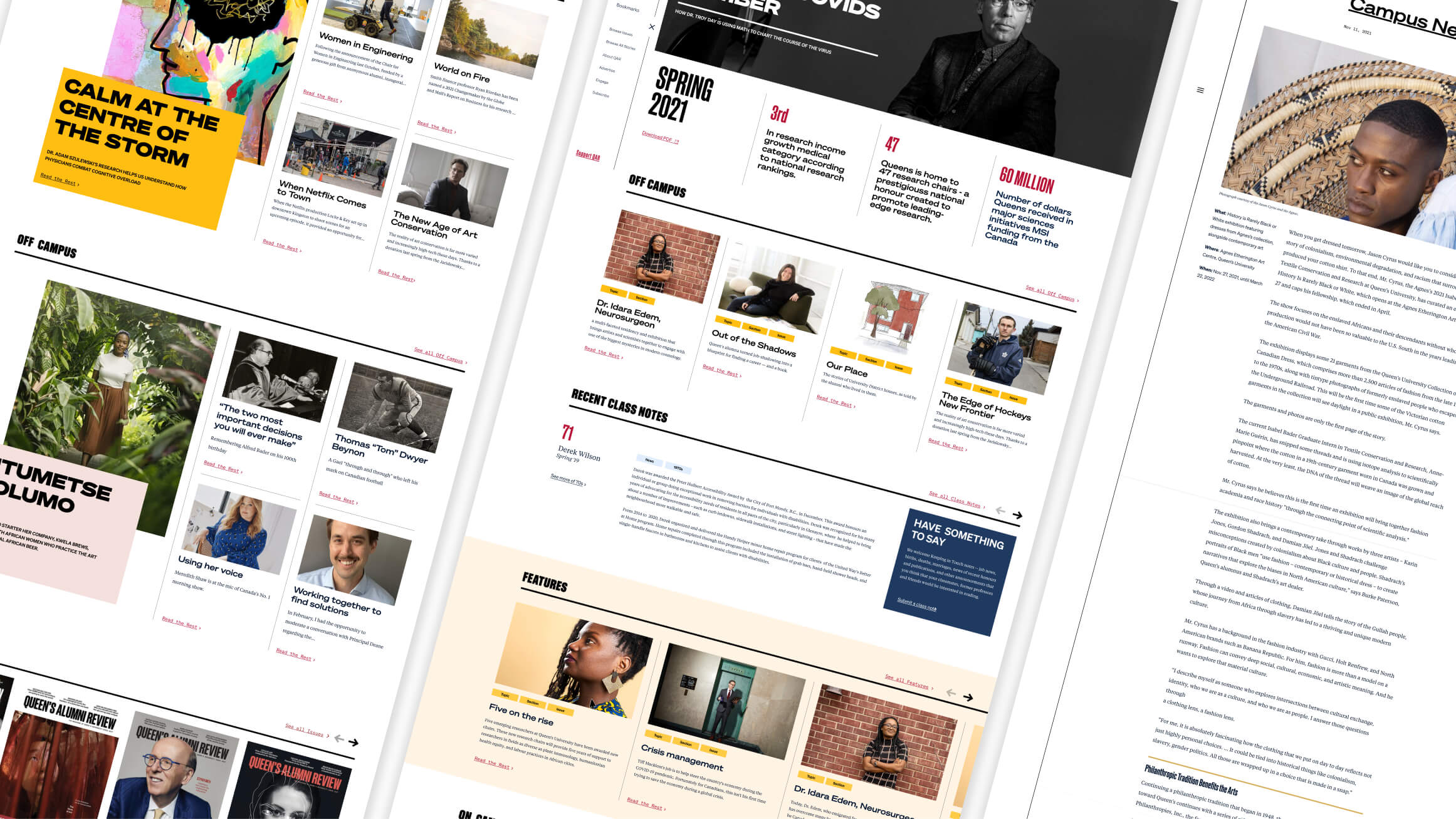
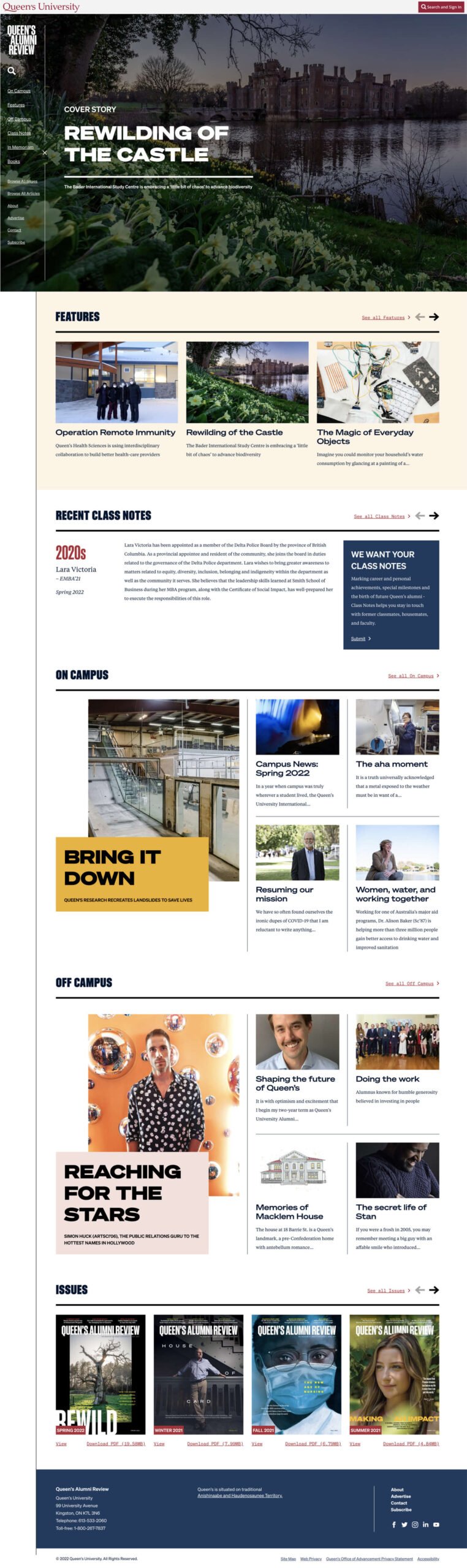
The discovery that Queen’s Alumni Review was not reliant on ad space was music to the ears of our designers. In the world of digital publication, the layout of content is often secondary to the placement of ads, leading to designs that necessitate scrolling through ads, deteriorating both the value of the content and the user experience.
Queen’s Alumni Review does not have to contend with these space constraints, allowing our designers the freedom to create what Design Lead Steven refers to as “a more pure way of displaying content that accentuates the absolute core of the brand.” The result is high-quality content presented with graphics and a smooth layout that complement the subject matter, creating a cohesive and unrivaled reading experience, whether reading on a computer or mobile device.
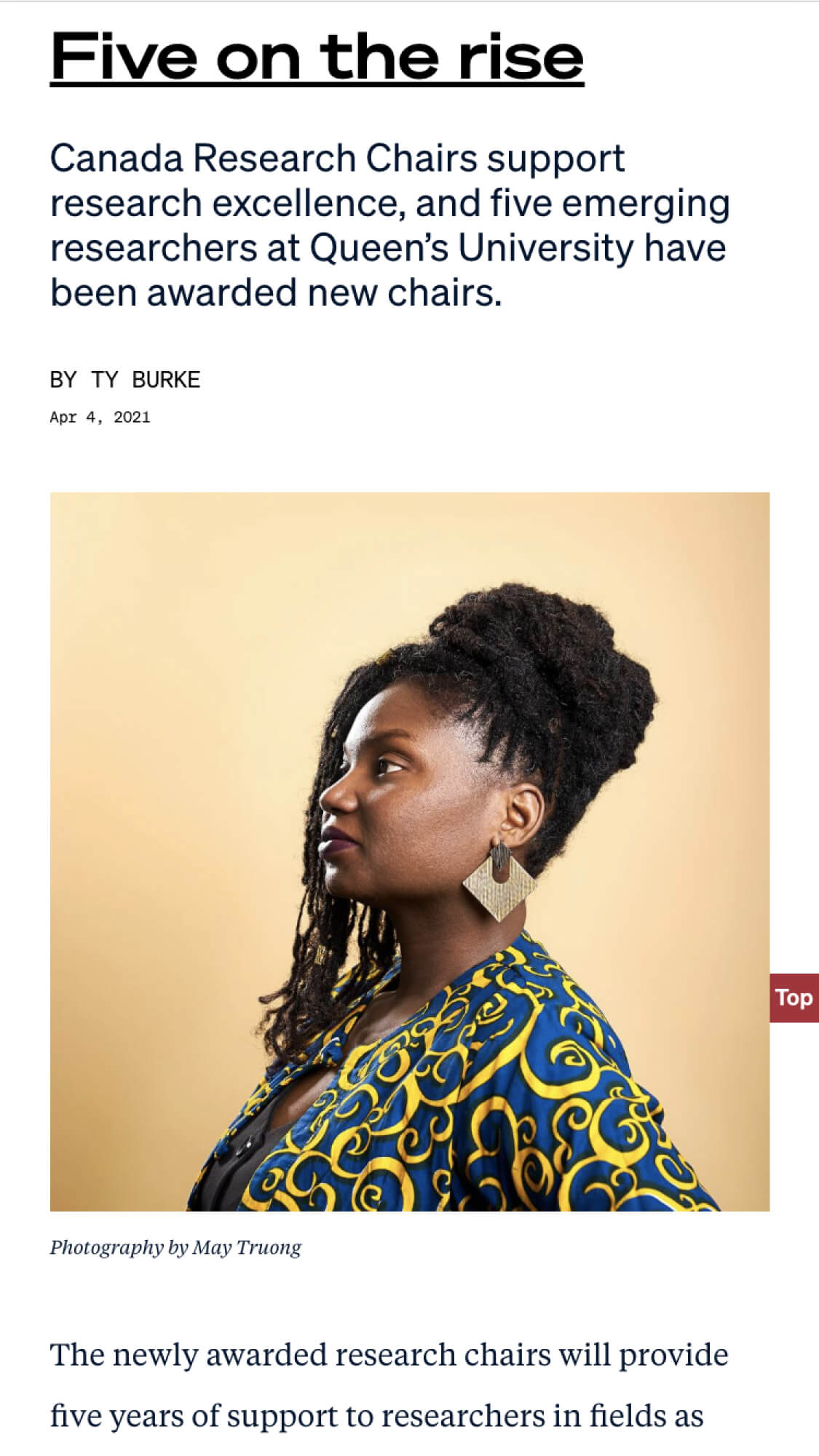
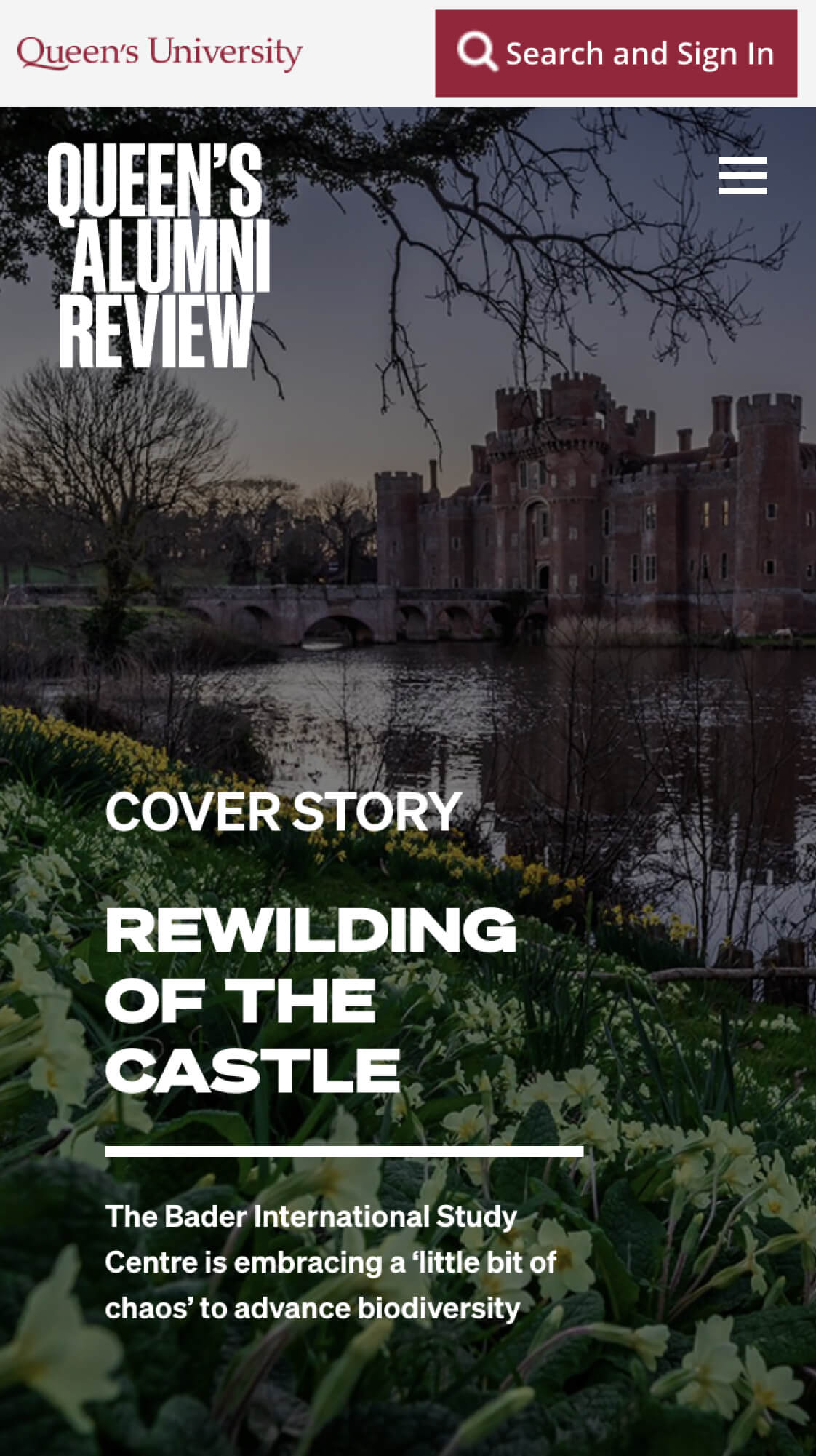
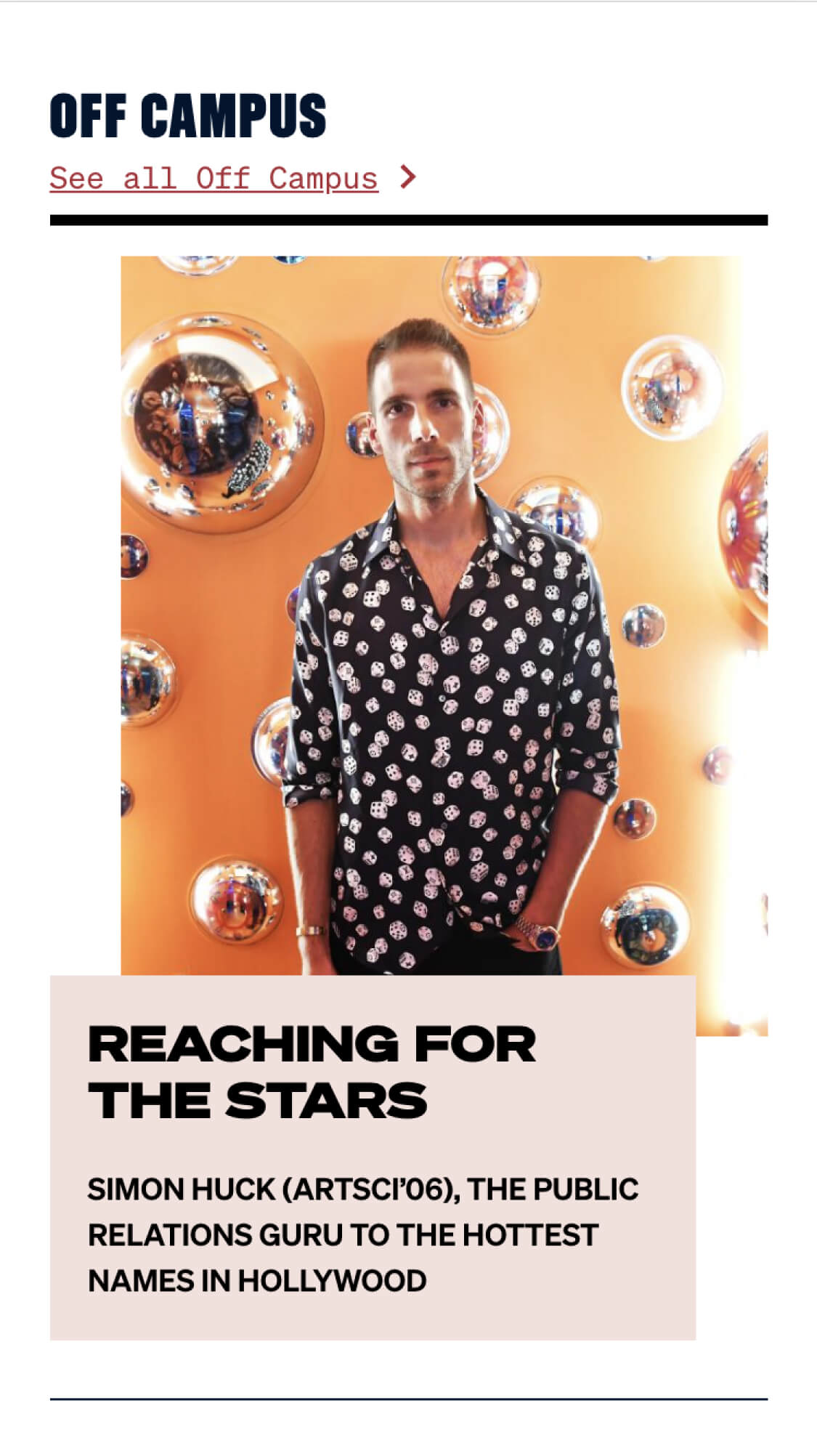
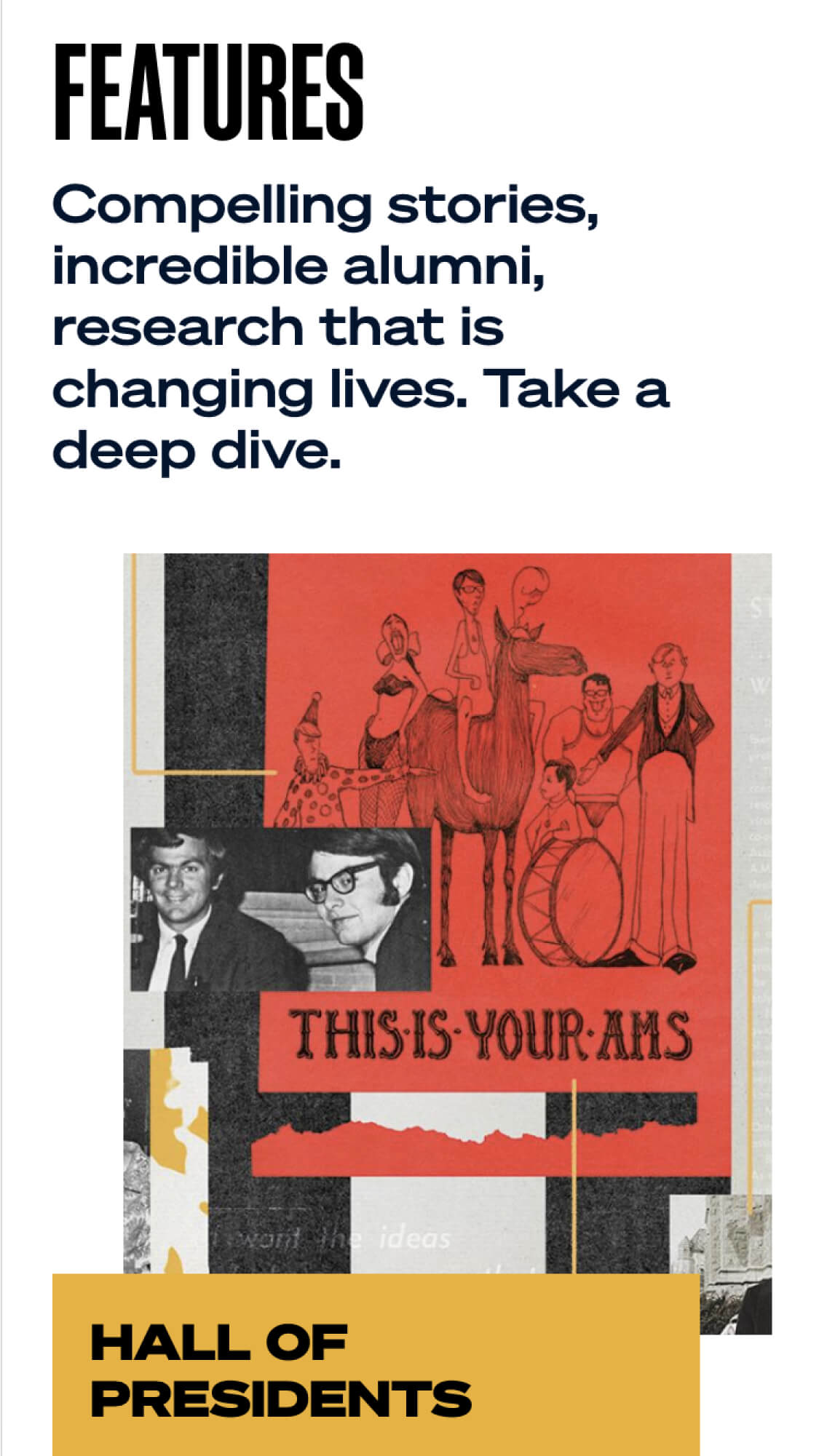
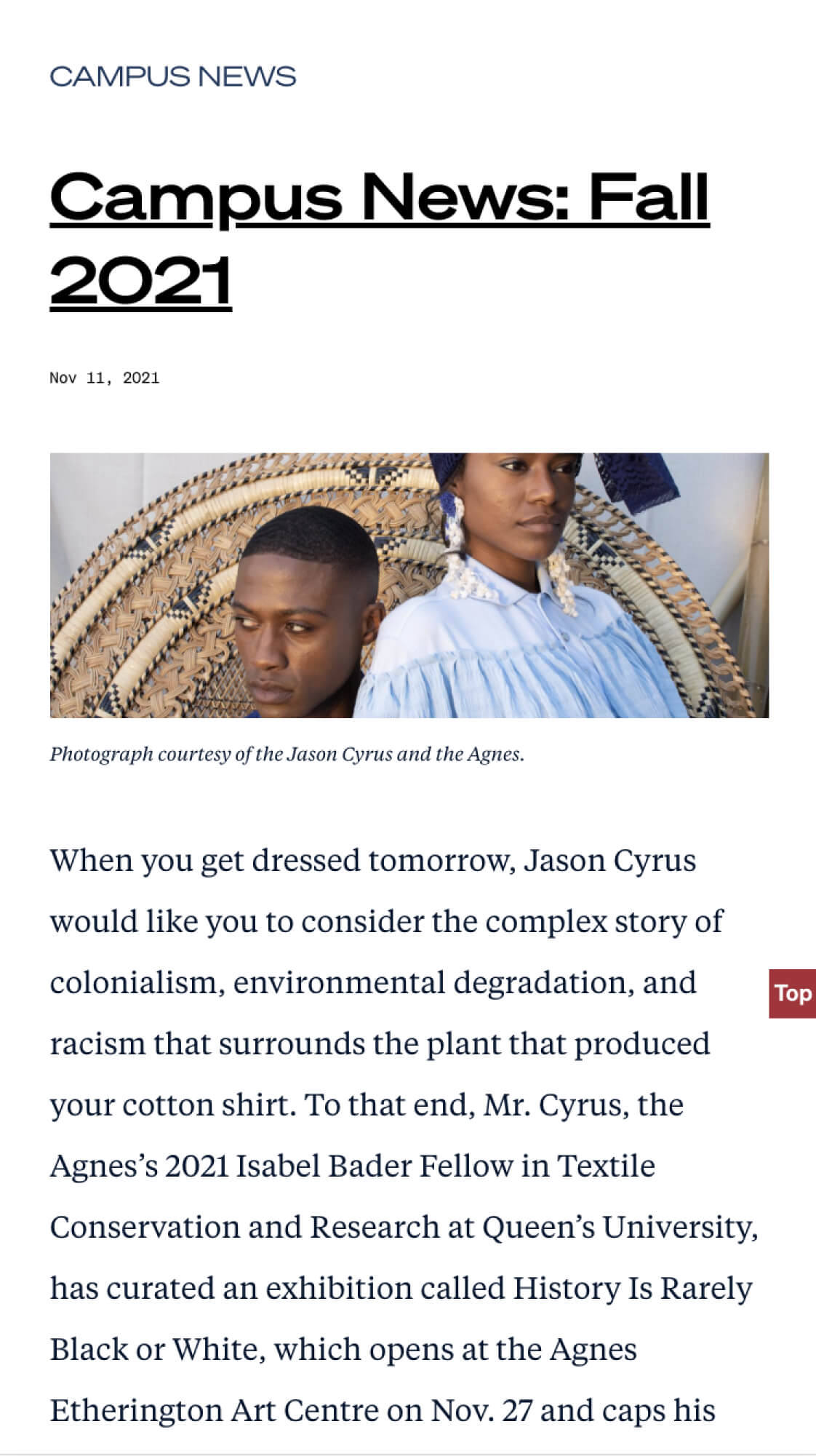
As a print publication, Queen’s Alumni Review is constrained to ink and parchment, a linear experience inherently limited in terms of interactivity. As an e-zine, we saw an opportunity to elevate QAR’s content with a platform that marries its reader’s insatiable appetite for high-quality content with all the advantages the web has to offer.
There’s no question the magazine’s print content was stunning, with editorial grids and blocks of text and imagery throughout its pages. However, these layouts didn’t lend themselves to digital. We needed a solution that kept the newly elevated design front and centre while working within the constraints of the responsive web.
Our design team adapted the magazine’s layout, retaining the text-block aesthetic and ensuring Queen’s brand was meaningfully sustained across both print and digital, beyond just color schemes and logos.
We’re talking dynamic, contextual content, buttery smooth animations, and high-res images that bring QARs content to life like never before.
An intuitive navigation, paired with a robust site search and manageable content categorization, offers a seamless user experience for readers. Guidelines for ongoing tagging and categorization by Queen’s internal team were also provided to ensure consistency over time.
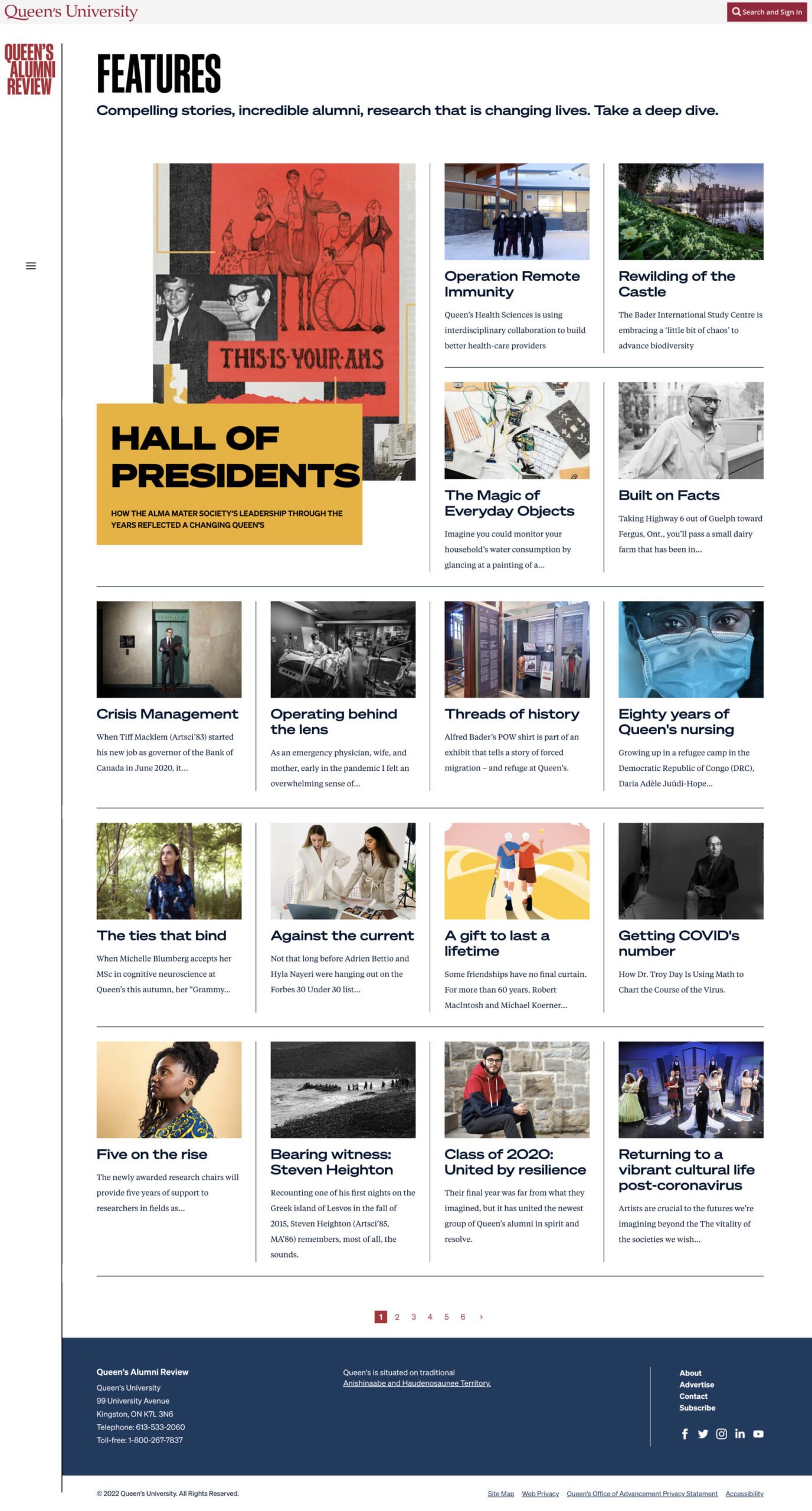
With the site’s information architecture and visual design complete, our development team went to work on the website’s technical infrastructure.
Not unlike many higher education institutions, Queen’s Alumni Review was set on maintaining its Drupal back-end, a platform made famous for its intuitive authoring experience, flexibility, and robust governance tools and workflows.
Developing the site in a modular fashion allowed Queen’s team the flexibility needed to grow its digital ezine without compromising its newly established design system. And, as with all Takt’s website design and development projects, the new site was built to adhere to WCAG (web accessibility) best practices, ensuring an intuitive and seamless user experience for everyone.
Additionally, our development team collaborated closely with Takt’s SEO strategist and Queen’s internal marketing team to ensure the new site was optimized for SEO from an overarching technical and development perspective. This meant ensuring the site’s metadata, URL structure, tagging, content types and mapping aligned with the e-zine’s overall objectives and keyword and SEO strategy.
Common questions about education website projects, answered from experience.
Our approach to brand building in education depends on the role an institution plays in its ecosystem, its network of relationships, and the influences around it. For example, community-based education brands resonate most when they reflect the real lived experiences and views of students and staff. We compare how people inside and outside the institution perceive it, set a clear, culturally relevant position, and track progress as messaging and identity evolve.
On the other end of the spectrum, for pioneering or future-defining institutions, brand strategy is more future-facing and directional, setting a path forward based on a distinctive vision. In these cases, we typically opt to lead with vision and belief, using research to test clarity and credibility.
Keeping content-heavy education websites fast starts with treating performance as a design constraint, not a technical afterthought. We structure content modularly, limit unnecessary animations that could impact page load times, and prioritize what loads first so users get clarity and value immediately.
At Takt, we pair thoughtful information architecture with modern development practices, performance budgets, and ongoing monitoring to ensure speed holds up as content grows. The result is a site that remains accessible, search-friendly, and responsive without sacrificing depth or scale.
Post-launch, effective content management needs to support the system that’s been built. To support this, we provide a Content Editing Guide as well as a recorded training session to teach our clients how to best add new pages and content to the website.
Decentralized publishing for education websites works well when authors have structured components and governance guardrails, not unlimited page-building freedom. A strong system combines modular templates, clear taxonomy rules, and content workflow support, so teams can move quickly and consistently. For Queen’s Alumni Review, we implemented a Drupal back end with governance workflows, paired with modular development and tagging guidance.
Education organizations maintain website accessibility by building it into the website’s system, rather than treating it as a post-launch audit. That means designing with semantic HTML, proper heading structures, keyboard navigation, colour contrast, and ARIA labels from the start, and then creating templates and modules that effectively maintain those standards whenever new content is published.
Key insight: Accessibility sustained through code and design decisions is durable. Accessibility that depends solely on individual content editors getting it right every time is a lot less dependable at scale.
The truth is that compliance is a score rather than a binary outcome. For example, a website can be 90% compliant when measured against a specific standard and still be considered highly accessible. Content updates will always introduce new variables (e.g., an image missing alt text, a heading level out of order, etc.), so what matters most is creating and maintaining a governance plan that consistently identifies and resolves these sorts of inevitable challenges.
We also work with institutions to determine the right compliance target:
For institutions that aren’t currently fully compliant, the most important deliverable often looks something like a strategic roadmap, i.e., a prioritized plan that catalogues what’s been addressed, what’s outstanding, and what the path to resolution looks like. Flagged items can be ranked by severity, and not all of them will require action. Some are minor, some aren’t applicable, and some reflect deliberate decisions the team has made with full awareness of the trade-off.
We’ve built accessibility-first systems for institutions like Queen’s University, New York University, Adler University, and Nunavut Arctic College, and work directly with campus accessibility offices to ensure educational websites meet both institutional standards and the specific needs of diverse user communities.